
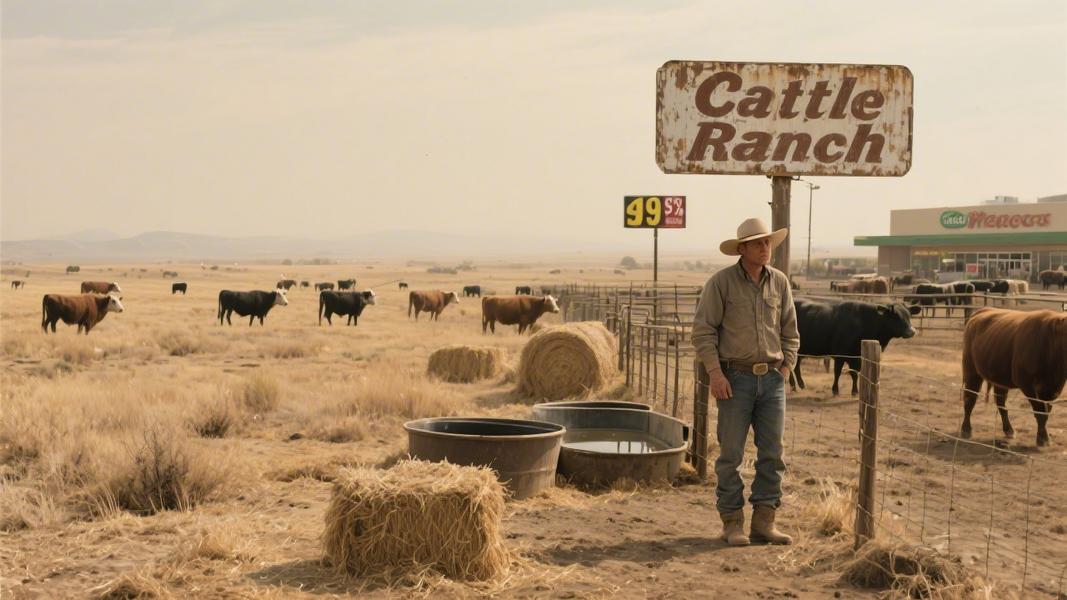
America’s cattle herds have shrunk to their lowest level since Harry Truman was president, with the latest industry figures confirming a multi-year downward trend that’s reshaping the nation’s beef supply chain.
The U.S. cattle inventory stood at 86.2 million head as of January 1, 2026, down from 86.5 million a year earlier, according to data released by federal agricultural authorities. This marks the lowest cattle population since 1951, continuing a pattern that has persisted for several years and challenging expectations that the industry might finally see signs of recovery.
“I would say the story continues,” notes Derrell Peel, extension livestock marketing specialist from Oklahoma State University. “I mean, it really doesn’t change the pattern that we’ve been in for the last three years now.”
Deeper Than Expected Declines
The beef cow herd, which forms the backbone of the nation’s beef production capacity, numbered 27.6 million head, down 1% from the previous year. This decline surprised some industry analysts who had anticipated the beginning of a recovery phase after years of contraction.
“Beef cow slaughter was down 18 percent last year, and so we thought, ‘OK, we could see a half a percent increase in beef cow numbers’,” James Mitchell explained on Tuesday. “Turns out beef cows are down another 1 percent.”
What’s behind this persistent decline? Drought conditions across key cattle-producing regions, combined with high input costs and market volatility, have pushed many ranchers to reduce their herds over multiple seasons. The slow pace of rebuilding reflects ongoing caution among producers despite strong cattle prices.
One potentially positive sign did emerge: beef replacement heifers — young female cattle being raised to join breeding herds — increased slightly to 4.71 million head, up 1% from last year. However, this modest uptick doesn’t necessarily signal immediate relief.
Recovery Still on Hold
“Although replacement heifer numbers increased slightly across the nation, herd expansion isn’t happening yet,” cautions Tracy Tomascik, Texas Farm Bureau associate director of Commodity and Regulatory Activities. “This signals that cattle supplies will remain thin throughout this year.”
The total number of heifers over 500 pounds declined 1% to 18.0 million head, according to the report, further indicating that broad expansion remains elusive.
Earlier projections had suggested the beef cow herd might begin 2026 approximately 150,000 head larger, approaching 28 million after six years of contraction. That forecast now appears to have been overly optimistic.
The implications? Consumers will likely continue facing relatively high beef prices at the meat counter, with tight supplies constraining production even as demand remains robust. For ranchers who maintained their operations through the contraction, the limited supply should support stronger prices for their cattle.
The 75-year low in inventory marks a striking milestone for an industry that has weathered numerous cycles of expansion and contraction. While the current situation presents challenges, the modest increase in replacement heifers suggests producers may be positioning themselves for eventual recovery — just not quite yet.
