
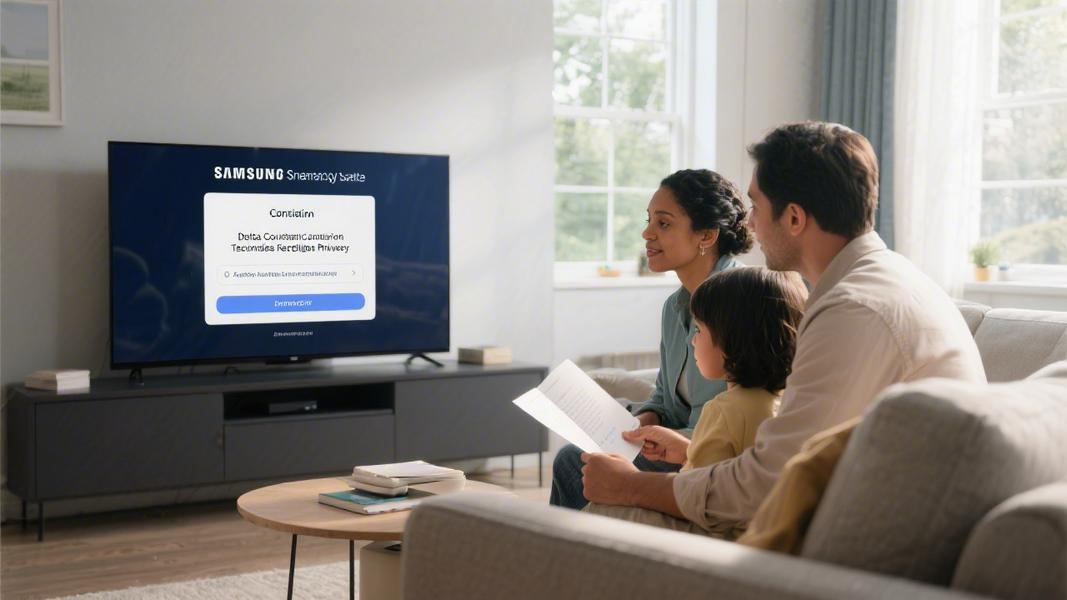
Samsung is changing how its smart TVs handle your viewing data — and it took a lawsuit from Texas to make it happen.
The South Korean electronics giant has agreed to overhaul its smart TV user interfaces to make Automated Content Recognition — better known as ACR — technology more visible to consumers and to require explicit user consent before any data collection begins. The move follows legal pressure from Texas Attorney General Ken Paxton, who filed suit against Samsung and four other major TV manufacturers in December 2025, alleging they had been quietly harvesting Americans’ viewing habits and monetizing that data without meaningful disclosure.
What Is ACR, and Why Should You Care?
Here’s the thing most people don’t realize: the smart TV sitting in your living room has almost certainly been watching you back. ACR technology works by continuously sampling what’s displayed on screen — whether it’s a streaming service, a cable broadcast, or a video game — and matching that content against a database to build a detailed profile of your viewing behavior. That profile is valuable. Advertisers, data brokers, and analytics firms pay handsomely for it.
Paxton’s December lawsuits targeted five manufacturers — Sony, Samsung, LG, Hisense, and TCL — accusing all of them of violating the Texas Deceptive Trade Practices Act through what the filings described as “dark patterns” buried inside privacy disclosures. The kind of legalese designed, critics say, not to inform consumers but to obscure what’s actually happening to their data. Paxton warned that two of those companies posed risks beyond simple privacy violations. Hisense and TCL, both headquartered in China, drew particular scrutiny over potential national security implications. “Companies, especially those connected to the Chinese Communist Party, have no business illegally recording Americans’ devices inside their own homes,” Paxton said.
Samsung Blinks First
Of the five companies named, Samsung moved quickest to reach an accommodation with Texas. The agreement requires the company to surface ACR disclosures in a way that’s actually noticeable — not tucked inside a 47-page privacy policy in 8-point font — and to obtain genuine consent before flipping the data collection switch on. Paxton didn’t hide his satisfaction. “I commend Samsung for being one of the first smart TV companies in the world to make these important changes,” he said, adding that “Texans must be fully informed about whether their data is collected and be in full control of how it’s used.”
That said, the legal road here wasn’t entirely smooth. A Texas state judge vacated a temporary restraining order against Samsung on January 5, 2026 — an order that had briefly and dramatically halted Samsung’s ACR data collection altogether. The TRO’s removal cleared the way for the negotiated settlement approach instead, suggesting the court wasn’t ready to pull the plug entirely while litigation played out.
A Broader Reckoning for the Industry
Still, Samsung’s agreement signals something larger than one company cleaning up its privacy settings. It’s an early indicator that the smart TV industry’s long-running data free-for-all may finally be attracting the kind of regulatory heat that other tech sectors have faced for years. Streaming platforms, social media companies, mobile apps — they’ve all been through this cycle. Smart TVs, somehow, largely escaped scrutiny until now.
How much of that data was actually sold? To whom? And what exactly were buyers doing with it? Those questions remain largely unanswered, and the lawsuits against Sony, LG, Hisense, and TCL are still very much alive. Samsung’s settlement may be the opening move in a much longer game — one that could reshape how the entire industry handles the intimate data it collects from inside people’s homes.
For now, at least, one of the world’s largest TV makers has acknowledged that watching what you watch — without telling you — isn’t something it can keep doing quietly. Whether the others follow suit, or dig in for a fight, will say a great deal about how seriously this industry takes the word “smart.”
