
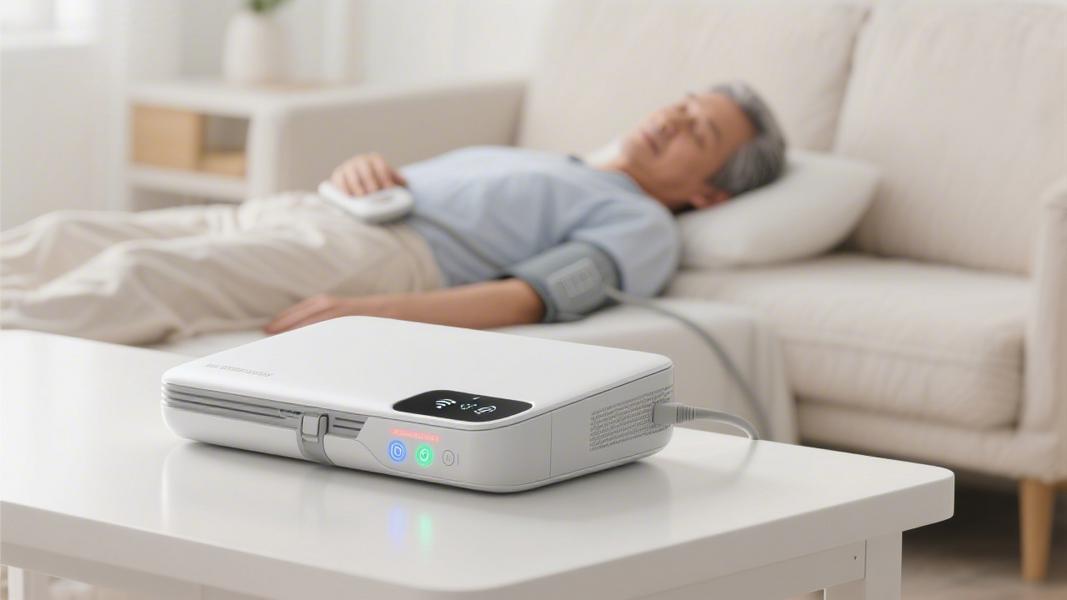
A new device just got a little lighter — and for the 6.7 million Americans living with heart failure, that might make all the difference. Abbott received FDA approval on February 27, 2026, for its next-generation CardioMEMS™ HERO reader, a redesigned pulmonary artery pressure monitor built to make daily disease management less of a burden and more of a habit.
The HERO reader is the latest evolution of Abbott’s CardioMEMS HF System, a remote monitoring platform that has become one of the more compelling tools in the fight against heart failure. The system works by pairing a small implanted sensor — placed in the pulmonary artery during a minimally invasive procedure — with an external reader that patients use at home. That reader transmits pressure data to clinicians, giving them an early window into worsening disease before symptoms spiral into a hospitalization. The HERO is the reader’s next chapter, and it’s been significantly rethought.
Lighter, Smarter, Better Connected
At its core, the HERO reader is 60% lighter than its predecessor. That might sound like a modest engineering tweak, but for elderly patients or those with limited mobility — who make up a significant share of heart failure sufferers — it’s not trivial. The device also features improved positioning guidance for more consistent readings and, perhaps most importantly, integrated Wi-Fi and cellular connectivity, replacing the clunkier data transmission methods of earlier versions.
“Abbott’s CardioMEMS HERO reader is modernizing a proven and effective remote patient management system, making it even more convenient for patients to use a device that has shown a 57% reduction in heart failure hospitalizations,” said Finn Gustafsson, M.D., Ph.D., chief medical officer and divisional vice president of Abbott’s heart failure business, in a statement released alongside the approval. That 57% figure isn’t marketing language — it’s drawn from clinical trial data and has become something of a north star for the entire CardioMEMS program.
The HERO reader is fully compatible with the existing CardioMEMS PA Sensor, meaning patients already implanted with the current device won’t need additional procedures to benefit from the upgraded reader. That’s a practical detail, but an important one.
A Crisis That Keeps Growing
How bad is the heart failure problem in America right now? Bad — and getting worse. Approximately 6.7 million people in the United States are currently living with the condition, a number that’s projected to climb to 8.5 million by 2030. Heart failure is a chronic, progressive disease — meaning the goal isn’t a cure so much as a managed slowdown. Hospitalizations are both a symptom of that failure and one of the system’s biggest cost drivers. Devices like CardioMEMS are designed to interrupt that cycle before it starts.
JoAnn Lindenfeld, M.D., director of advanced heart failure at Vanderbilt University Medical Center and primary investigator for the landmark GUIDE-HF study, put it plainly: “Data from CardioMEMS HF System clinical trials show the positive impact the device has on reducing the risk of heart failure hospitalizations and cardiovascular death. HERO is likely to significantly enhance data acquisition and patient interactions with this life-changing technology,” she noted.
The Road That Got Here
The HERO’s approval didn’t emerge in a vacuum. Abbott has been steadily expanding the CardioMEMS ecosystem for years. Back in February 2022, the FDA approved a major expansion of the system’s indications — broadening eligibility from more advanced heart failure patients to those classified as NYHA Class II, an earlier stage of the disease. That approval also covered patients with elevated natriuretic peptides who had been hospitalized in the previous year, confirmed by FDA records.
The 2022 expansion was driven by data from the GUIDE-HF trial, which — when adjusted for disruptions caused by the COVID-19 pandemic — showed a 19% reduction in composite endpoints and a 28% reduction in heart failure hospitalizations among monitored patients. That data, documented in clinical reporting, made a compelling case that earlier intervention produces measurably better outcomes. The expanded indication ultimately made an additional 1.2 million U.S. patients eligible for the system — a substantial leap in potential reach.
“Heart failure is a race against time where too often we’re behind because patients are not getting care early enough,” said Philip B. Adamson, M.D., former chief medical officer of Abbott’s heart failure business, at the time of that 2022 announcement. It’s a line that still hangs over the entire field.
Patients and Researchers in the Loop
Still, none of this happens without the patients who volunteered for the trials that made it possible. Laura Wrona, MSN, director of cardiovascular clinical trials at Advocate Aurora Health’s Research Institute, acknowledged as much when reflecting on her institution’s role in the GUIDE-HF study. “We’re grateful to our many patients who participated in the CardioMEMS GUIDE-HF clinical trials conducted at Advocate Aurora,” she said. Multicenter trials like GUIDE-HF depend on that kind of institutional breadth and patient trust — and the results have shaped policy in a meaningful way.
The full CardioMEMS HF System, including the HERO reader, is now indicated for NYHA Class II or III heart failure patients for the purpose of monitoring pulmonary artery pressure and heart rate to reduce hospitalizations, as outlined in FDA records. It’s a tightly defined indication built on a substantial evidence base — which, in the medical device world, is about as solid a foundation as you’re going to get.
What Comes Next
The HERO reader’s approval lands at a moment when remote patient monitoring is no longer a futuristic concept — it’s an expectation. Patients, payers, and health systems alike are looking for ways to manage chronic disease outside of hospital walls. A device that’s lighter, better connected, and clinically proven to cut hospitalizations by more than half fits neatly into that shift. Whether patients actually use it consistently — that’s always the real variable.
For now, Abbott has delivered an upgrade that addresses some of the most common friction points in remote monitoring: device weight, data connectivity, and ease of use. If the clinical evidence holds and patients adopt the HERO at scale, it won’t just be a hardware refresh. It could quietly become one of the more consequential tools keeping millions of Americans out of the hospital — one daily reading at a time.
