
Iran’s Supreme Leader is dead. The United States and Israel have confirmed it — and the Middle East may never look the same again.
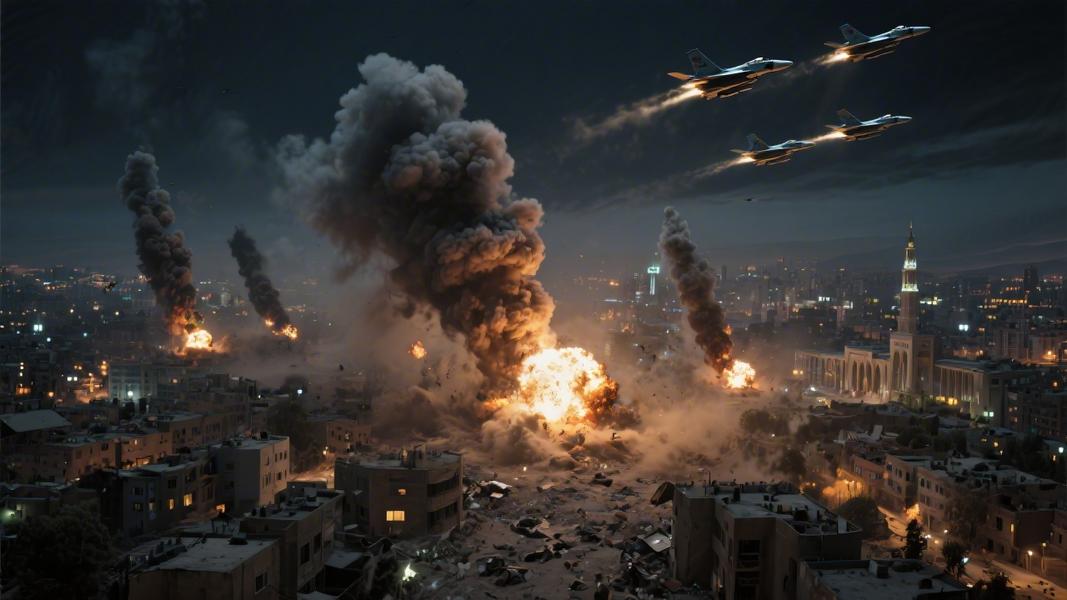
In the early hours of February 28, 2026, a coordinated aerial assault — codenamed Operation Roaring Lion by Israel and Operation Epic Fury by the United States — struck military installations, government compounds, and command facilities across Iran. Among those killed: Ayatollah Ali Khamenei, the man who had ruled the Islamic Republic with an iron grip for more than three decades. His death, confirmed by Iranian state media amid the chaos, marks the most seismic moment in the country’s modern history — and one of the most consequential military operations since the fall of Baghdad in 2003.
What Washington Said It Was Going After
This wasn’t a surgical strike with a single target. President Donald Trump laid out four sweeping military objectives for Operation Epic Fury: halting Iran’s path to a nuclear weapon, dismantling its ballistic missile arsenal and the factories that build them, degrading the web of proxy forces Tehran has spent decades cultivating across the region, and — bluntly — annihilating its navy. Regime change, officials noted, was also on the list. That’s not a footnote. That’s a war aim.
Trump, characteristically, didn’t mince words. The “heavy and pinpoint bombing,” he said, was set to continue through the week — or, in his phrasing, “as long as necessary.” It’s the kind of open-ended language that tends to make diplomats nervous and generals busy.
A Strike With Consequences — Including American Ones
How bad is it on the U.S. side? Bad enough that the Pentagon isn’t hiding it. Three American service members were killed in the operation, and five others were seriously wounded. Several more were hurt by shrapnel and concussive blasts — the kind of injuries that don’t always make the casualty count but don’t disappear either. These are the costs that tend to get buried in the larger strategic narrative. They shouldn’t be.
Still, the administration is framing this as a precision campaign, not a ground invasion. At least not yet. The distinction matters — politically, legally, and in terms of what comes next. But it’s not that simple. Khamenei’s death doesn’t just remove a figurehead; it decapitates a system of clerical authority that has no obvious, stable succession plan. Iran’s Revolutionary Guard, its proxies in Lebanon, Iraq, Yemen, and Gaza — none of them simply stand down because the man at the top is gone.
The Larger Gamble
What the U.S. and Israel have launched is, at its core, a bet — that enough targeted destruction, delivered fast enough, can reshape a nation of 90 million people without triggering the kind of prolonged regional war that has consumed American foreign policy before. It’s a bold theory. History has not always been kind to bold theories in this part of the world.
The joint operation — documented as one of the most ambitious bilateral military actions in recent memory — raises questions that won’t be answered this week, or probably this month. Who fills the vacuum in Tehran? How do Iran’s allies respond? And at what point does a campaign described as “pinpoint” start to look like something else entirely?
For now, the bombs are still falling. The answers are still forming. And the world is watching a chapter of history being written in real time — one that, whatever comes next, nobody is going to forget.
