
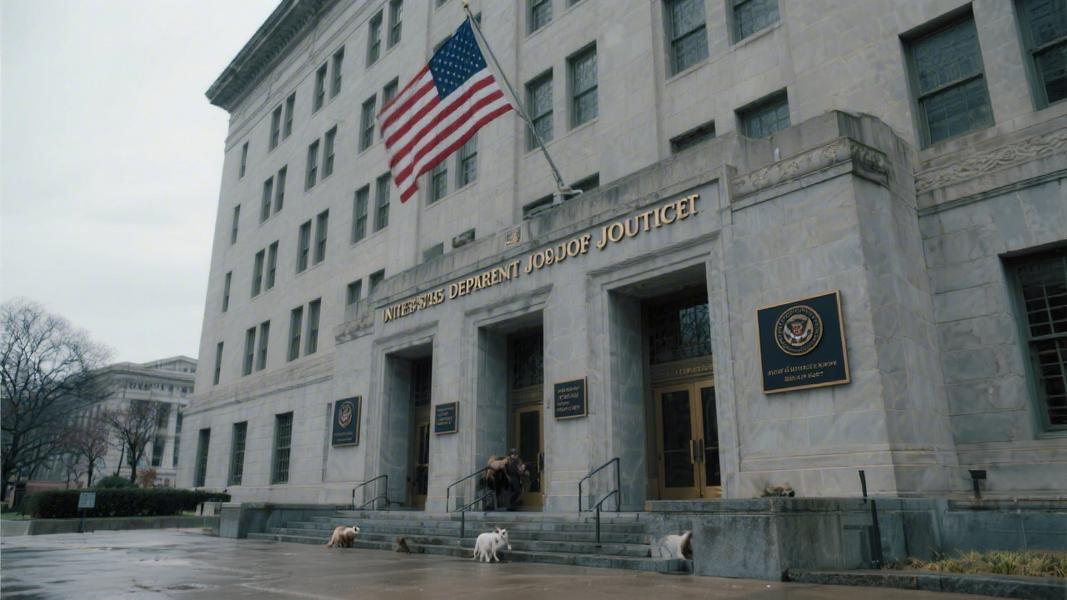
Federal prosecutors are sending a message, and it’s not a subtle one: the online trade in animal torture videos is being treated as a serious criminal enterprise, not a fringe curiosity for law enforcement to ignore.
A string of recent cases — stretching from South Florida to Ohio to New Jersey — has put a harsh spotlight on a deeply disturbing corner of the internet where sadistic videos depicting the torture, mutilation, and killing of animals are bought, sold, and shared among networks of like-minded offenders. The cases involve real victims, real money, and real prison time. Authorities say the crackdown is long overdue.
A Miami Case at the Center of It All
Francisco Javier Ravelo, 36, of Coral Gables, Florida, has pleaded guilty to distributing videos depicting the sexual torture of baby monkeys, the Department of Justice confirmed. It’s a case that, even by the grim standards of federal animal cruelty prosecutions, stands out for its depravity.
But Ravelo’s case doesn’t exist in isolation. The same Miami-area man was also linked to the sale of so-called “crush videos” — recordings in which animals, including dogs, are crushed to death to satisfy a specific and documented sexual fetish. Prosecutors charged him under the federal animal crushing statute, a law that’s still relatively new and, frankly, hasn’t been tested nearly enough in court.
How does something like this even operate? Quietly, mostly. These networks thrive in encrypted messaging apps, private online forums, and invite-only groups where content is exchanged for money or simply for social currency among people who share the obsession. It’s a market that law enforcement says is more organized than most people realize.
Two More Defendants, a Wider Web
Ravelo isn’t the only one facing federal charges. A grand jury has indicted two additional individuals for their involvement with online groups specifically dedicated to creating and distributing monkey torture and mutilation videos — a niche that investigators say has grown into an alarmingly active subculture.
Nicholas T. Dryden of Ohio and Giancarlo Morelli of New Jersey were both charged with conspiracy to create and distribute animal crush videos. The geographic spread of the defendants — Florida, Ohio, New Jersey — underscores something investigators have been saying for years: this isn’t a regional problem. It’s a networked one.
Still, prosecutions under the animal crushing law remain relatively rare, which is part of what makes this cluster of cases significant. Congress passed the Animal Crush Video Prohibition Act in 2010 after an earlier version of the law was struck down by the Supreme Court on First Amendment grounds. The revised statute has teeth — but using them requires prosecutors to build airtight cases in a digital environment designed to obscure identities and erase evidence.
The Sentence That Stopped Newsrooms Cold
And then there’s Michael Alton McMasters. The 45-year-old Florida man was sentenced to 20 life sentences for what prosecutors described as gruesome digital abuse crimes. Twenty. The sheer scale of that sentence reflects both the severity of what investigators found and the message the justice system appears determined to send.
That’s not a slap on the wrist. That’s the kind of sentence that signals a courtroom — and a country — that has run out of patience.
Why This Matters Beyond the Headlines
It would be easy to look at these cases as isolated aberrations — the work of a few disturbed individuals operating at the extreme edges of human behavior. But researchers and federal investigators have long noted a documented link between animal cruelty and other forms of violent or abusive behavior. The FBI tracks animal cruelty as a Category A felony for a reason. These cases don’t happen in a vacuum.
The defendants here aren’t just consumers of disturbing content. They’re alleged participants in an economy built around suffering — one that requires real animals to be harmed on camera, in real time, for paying audiences. The law calls it criminal. The sentences, increasingly, are starting to reflect that.
Whether these prosecutions represent a genuine turning point or a temporary surge in enforcement remains to be seen. But for now, at least, the federal government appears to be watching — and it’s watching closely.
As one legal observer might put it: the internet never forgets, and apparently, neither do federal grand juries.
