
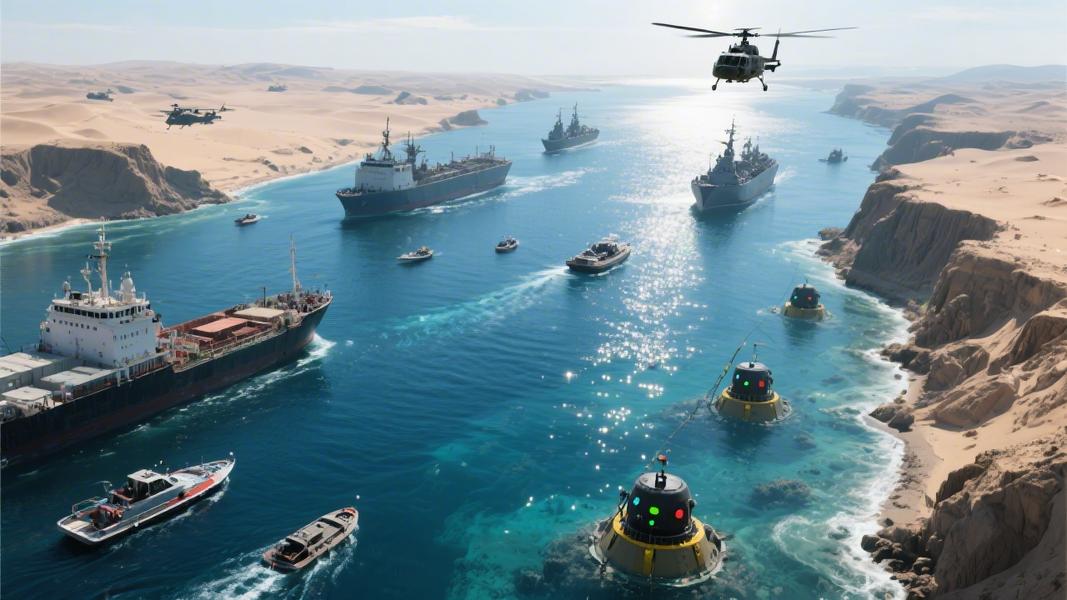
Iran has begun laying mines in the Strait of Hormuz, according to sources familiar with the matter — a dramatic escalation that has already drawn a sharp military response from the United States and a blistering public warning from the White House.
In recent days, Iran quietly placed several dozen mines in the strategically vital waterway, while holding back the vast majority of its minelaying fleet. Sources say the country is retaining between 80% and 90% of its small boats and mine layers — a posture that suggests what’s been deployed so far may be little more than a opening move. The potential for hundreds of additional mines remains very much on the table.
A Chokepoint the World Can’t Afford to Lose
Why does this matter so much? Because roughly one-fifth of the world’s oil supply passes through the Strait of Hormuz every single day. It’s one of the most consequential stretches of water on the planet — a narrow corridor between Iran and Oman where a disruption doesn’t just rattle energy markets, it shakes the entire global economy. Mines in that passage aren’t just a military threat. They’re an economic weapon.
The U.S. didn’t wait long to respond. U.S. Central Command has already destroyed 16 Iranian minelayers operating near the strait, a significant show of force that signals Washington’s intent to keep the waterway open at virtually any cost. That’s a lot of hardware to take out in a short window — and it suggests the situation on the water is moving faster than most public statements have let on.
Trump Weighs In — Loudly
Still, the most attention-grabbing moment may have come not from a military briefing, but from a social media post. In a characteristically blunt message, the president warned that “if Iran has put out any mines in the Hormuz Strait, and we have no reports of them doing so, we want them removed, IMMEDIATELY!” The all-caps finale was hard to miss. So was the tension at the heart of the statement — a public denial of confirmed intelligence that U.S. forces had already acted on.
That’s the catch. The administration appears to be threading a needle: responding militarily to what it knows is happening, while not yet formally acknowledging the full scope of the threat in public. It’s a posture that raises more questions than it answers — and leaves allies, markets, and shipping companies in an uncomfortable fog.
What Comes Next
How bad could this get? If Iran deploys the bulk of its remaining mine-laying capacity, the Strait of Hormuz could become genuinely impassable for commercial traffic — at least until an extensive and dangerous clearing operation is complete. That’s not a hypothetical nightmare scenario. It’s a documented possibility that naval planners have war-gamed for decades. The fact that Iran is holding most of its assets in reserve isn’t reassuring. It’s a threat being held in plain sight.
International shipping lanes, oil futures, and diplomatic back-channels are all in motion right now. The footage of destroyed Iranian minelayers has already circulated widely, offering a rare, visceral glimpse of just how active this confrontation has become beneath the surface of official statements.
The mines may be few in number — for now. But in one of the world’s most irreplaceable waterways, even a handful of them has a way of changing everything.
