
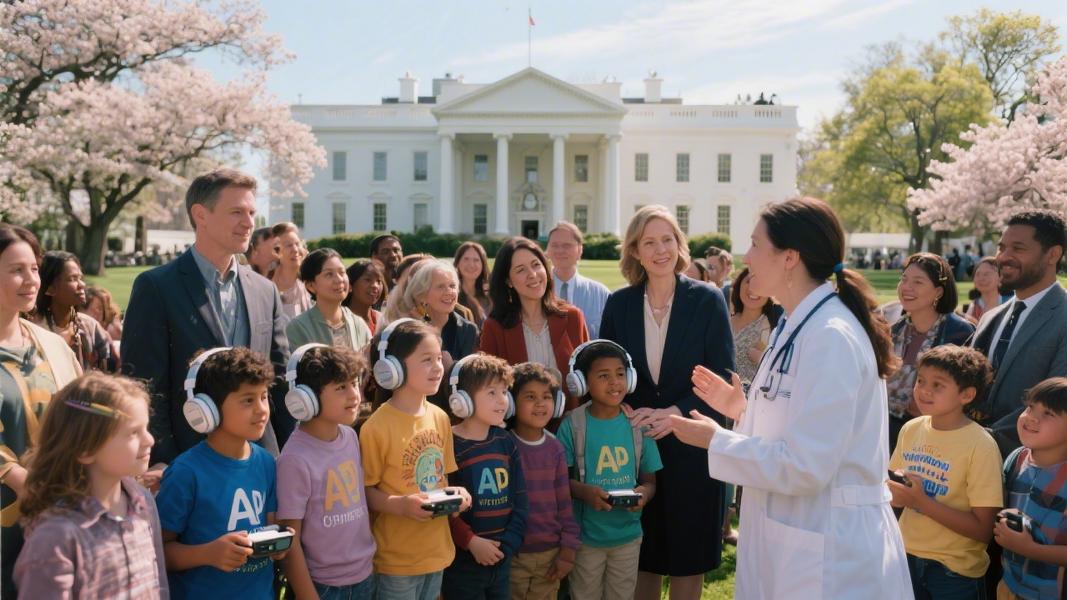
The world paused Thursday to mark World Autism Awareness Day — and for once, nearly every major government and international body had something to say about it. Not all of them agreed on what, exactly, that something should be.
April 2, 2026 brought a flood of official statements, presidential proclamations, and UN addresses focused on autism spectrum disorder, a condition that now touches hundreds of millions of lives globally. But beneath the shared language of dignity and inclusion, a sharper debate is playing out — over rising diagnosis rates, research funding, and whether official messaging is helping or quietly doing harm.
The Numbers Are Hard to Ignore
Start with the data. The White House released a Presidential Message marking the occasion, noting that 1 in 32 children in the United States are now identified as being on the autism spectrum. The message struck a tone of reverence, declaring that “every child is made in the image and likeness of God, with inherent dignity, purpose, and worth.” That framing — spiritual, affirming — was clearly intentional.
But the administration has also leaned into alarm. President Trump has noted that “autism now affects 1 in 36 children in the United States, a staggering increase from the 1980s, when the disorder was found in only 1 to 4 out of every 10,000 individuals.” The gap between the 1-in-32 and 1-in-36 figures reflects different data sources and reporting windows — a small but telling sign of how unsettled even the baseline statistics remain. Trump has also pointed to the creation of the Make America Healthy Again Commission as part of his administration’s response.
Globally, the World Health Organization puts the figure at 1 in 127 people diagnosed with autism worldwide, ranking it among the top ten brain health conditions contributing to measurable health loss. The WHO used this year’s awareness day to push for neuroinclusive policies and earlier identification — a message that, notably, doesn’t frame autism as a crisis so much as a challenge of systems and support.
A Chorus of Voices, Not All Harmonizing
The international response was broad. UN Secretary-General António Guterres, speaking at the 2026 World Autism Awareness Day event, kept his message straightforward and human: “This World Autism Awareness Day, we celebrate the inherent dignity and worth of all autistic people.” Short. Deliberate. It’s the kind of line that sounds simple until you realize how often official language manages to say the opposite.
Burhanettin Duran, Turkey’s Head of Communications, offered a framing that diverged meaningfully from the deficit-focused language that tends to dominate Western policy circles. “Autism is not a deficiency, but a difference that forms the foundation of our social richness,” he said, calling for early recognition and lasting social awareness. It’s a distinction — difference versus deficiency — that autism advocates have been pushing governments to adopt for years, with mixed results.
President Dr. Patrick Herminie of Seychelles also expressed solidarity with individuals on the spectrum, adding his country’s voice to a growing chorus of heads of state marking the day with public statements — a sign, if nothing else, that the conversation has gone genuinely global.
Where Advocates Draw the Line
Not everyone is satisfied. Not even close. The Autistic Self Advocacy Network has been blunt in its criticism of the Trump administration’s approach to autism policy, taking particular aim at last year’s Autism Awareness Day announcement. ASAN criticized the White House for promoting debunked vaccine research, cutting federal autism research funding, and threatening critical services including Medicaid and Social Security — programs that millions of autistic Americans depend on to live independently.
That’s the tension no proclamation can paper over. You can release a statement celebrating the dignity of autistic people on April 2 and then, on April 3, advance budget proposals that strip away the supports that make that dignity possible. Advocates have noticed. They’ve been noticing for years.
Still, the sheer volume of official attention the day now receives represents something real — a shift, however incomplete, in how governments talk about neurodiversity. Whether the messaging translates into meaningful policy is a different question entirely, and one that autistic people and their families will be living with long after the awareness ribbons come down.
What Comes Next
The WHO’s call for neuroinclusive policies and the ASAN’s pointed critique of funding cuts point in the same direction: awareness, on its own, isn’t enough. The emphasis from global health officials is increasingly on early identification and structural inclusion — building societies that don’t require autistic people to constantly adapt to environments that were never designed with them in mind.
How bad is the gap between rhetoric and reality? Ask the families navigating years-long waitlists for diagnosis. Ask the adults who aged out of school-based services only to find almost nothing waiting for them. A presidential message, however warmly worded, doesn’t fill that gap. But it does, at minimum, set a standard — one that advocates will hold governments to, loudly, every April 2 until the work is actually done.
As Guterres put it simply: dignity and worth. The question isn’t whether world leaders believe that. It’s whether they’re willing to fund it.
