
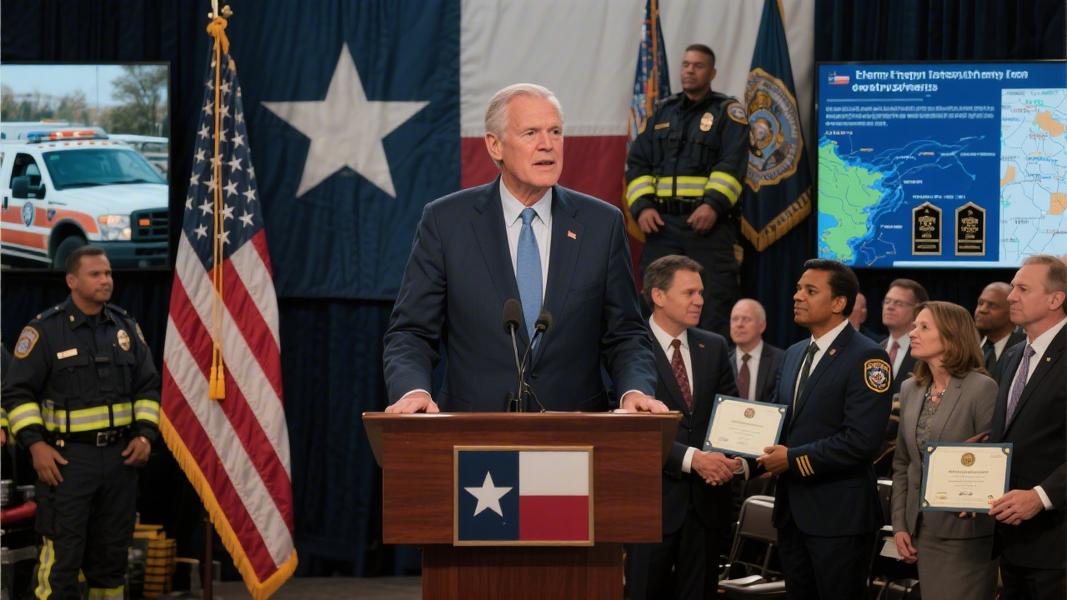
Greg Abbott didn’t just win Tuesday night — he dominated. The Texas governor cruised to victory in the Republican primary for a fourth term, turning what might have been a competitive field into something closer to a coronation.
With 100% of precincts reporting, Abbott captured roughly 82% of the vote — approximately 1.76 million ballots out of 2.15 million cast statewide — in the March 3, 2026 primary, according to results compiled by election trackers. His nearest challenger, Pete “Doc” Chambers, pulled in just 11%. Evelyn Brooks registered a distant 2%. It wasn’t close. It was never going to be close.
A Fourth Term in Sight
Abbott has held the governorship since 2014, making him one of the longest-serving governors in modern Texas history. Tuesday’s result sets him up for the general election, scheduled for November 3, 2026, where he’ll seek to extend that run even further. If he wins in November, it would be an extraordinary four-term tenure in a state that doesn’t exactly hand out political longevity for free.
The governor didn’t shy away from reading the room. “Texans made their voices heard loud and clear tonight,” Abbott said after the results came in, according to local coverage out of the Panhandle. It’s the kind of line that writes itself after an 82-point performance — but that doesn’t make it wrong.
Still, landslide primaries can obscure as much as they reveal. A Republican incumbent rolling over low-profile challengers in Texas tells you something about the party’s consolidation around Abbott — but it doesn’t necessarily tell you much about November. The general election is a different animal entirely, and the Democratic nominee will have months to define the contrast.
The Challengers Who Weren’t
So who exactly was running against him? Pete “Doc” Chambers, who finished second with 240,342 votes — just over 11% — was the most visible of Abbott’s opponents, but never mounted a serious threat. Chambers’ campaign struggled to gain traction in a state where Abbott’s name recognition and fundraising operation are essentially unmatched within the GOP. Evelyn Brooks, meanwhile, barely registered at 43,998 votes, per returns posted by San Antonio’s KSAT.
That’s the thing about Texas Republican primaries in the current era — they’re less about intraparty competition and more about ratification. Abbott’s critics exist, but they haven’t coalesced around a credible alternative. Not yet, anyway.
Abbott and Patrick: The Ticket Holds
Abbott wasn’t alone in his dominant showing. Lt. Gov. Dan Patrick also won his Republican primary decisively that same night, according to the Texas Tribune, beating back lesser-known challengers to continue his own reelection bid. The two have governed in tandem for years — sometimes in sync, sometimes in tension — and both now advance to November with their political footing intact.
It’s a reminder that Texas Republicans, whatever their internal debates, tend to close ranks when it counts. The primary results, as broadcast Tuesday night, reflected a party that isn’t fracturing — at least not visibly, and at least not yet.
November will be the real test. But on a Tuesday night in early March, Greg Abbott looked exactly like what he’s always been in Texas Republican politics: essentially untouchable.
