
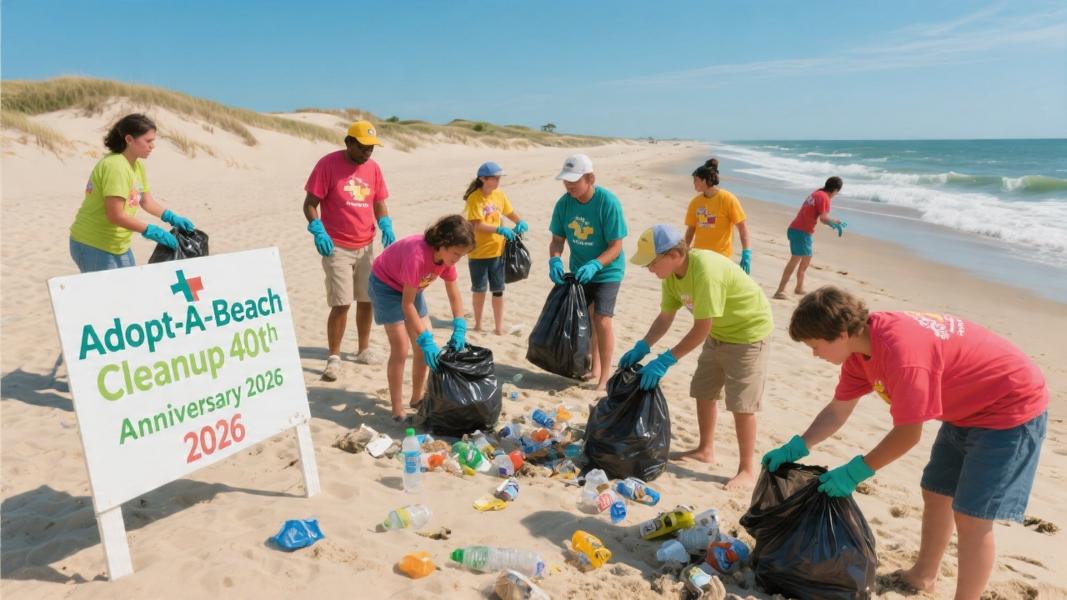
Forty years of picking up after ourselves — and Texas isn’t done yet. The state’s beloved Adopt-A-Beach Program is marking a milestone anniversary in 2026, and officials are calling on a new generation of volunteers to help keep the Gulf Coast as clean as the day they found it.
Texas Land Commissioner Dawn Buckingham, M.D., is urging residents to sign up for the 2026 Adopt-A-Beach Spring Coastwide Cleanup, set for Saturday, April 18, 2026, at 21 locations stretching from Sea Rim State Park all the way down to Boca Chica. Check-in begins at 8:30 a.m., with the cleanup running from 9:00 a.m. to noon. It’s a half-day commitment with a very long legacy behind it — one that dates back to a single beach cleanup in 1986.
A Commissioner With Sand in Her Shoes
Buckingham isn’t just speaking from a policy position on this one. “The Texas Coast was my home for over a decade, and as Land Commissioner, I am dedicated to ensuring our beautiful beaches are preserved for future generations,” she said in a statement encouraging participation. She went further, tying the anniversary to the people who’ve made it possible: “From that very first beach cleanup in 1986 to now, I want to thank the volunteers who have made this an incredible event year after year.”
It’s the kind of quote that sounds rehearsed until you remember she actually lived on that coastline. Whether or not you find the politics compelling, the sentiment tracks.
Texas and the Art of Adopting Its Own Mess
The beach cleanup doesn’t exist in a vacuum. Texas has a long, only-in-Texas tradition of asking its own citizens to clean up its roads and shorelines — and remarkably, they keep showing up. The Adopt-a-Highway program, a Texas-born initiative that launched in 1985, lets volunteers claim two-mile stretches of state-maintained roadways and commit to clearing litter at least four times per year. The state provides safety vests, bags, training, and those roadside recognition signs that have become almost a cultural fixture.
That program is hitting its own milestone. The Don’t Mess With Texas Adopt-a-Highway campaign is celebrating 40 years in 2025 — a parallel anniversary that underscores just how deeply this ethos of civic cleanup has embedded itself into the state’s identity. The numbers back it up: in 2024 alone, Adopt-a-Highway volunteers cleaned 1,540 miles of roadways and hauled away 84,080 pounds of trash during events including the annual Trash-Off, according to TxDOT data.
So How Does It Actually Work?
Good question. For anyone who’s driven past those green highway signs and wondered what it actually takes to get one, the process is more accessible than it sounds. Volunteers typically apply to their state DOT for a designated two-mile section, commit to cleanups of at least two hours each, and follow basic safety protocols. In return, they receive supplies — vests, bags, sometimes water and sunscreen — and the quiet satisfaction of knowing exactly which stretch of road is theirs to protect.
Some municipalities layer on additional requirements. Plano, for instance, asks all volunteers — businesses, groups, and nonprofits alike — to complete a Hold Harmless Release Form before any cleanup begins. It’s a small administrative hurdle, but one that reflects how seriously local governments take liability when people are crouching near traffic with trash bags.
Coordination matters, too. Groups like the League of Women Voters of South Central Texas show how organized the volunteer side can get — their Adopt-a-Highway coordinator distributes maps, assignments, water, sunscreen, bug spray, vests, and bags before each event. That’s not volunteerism as an afterthought. That’s logistics.
The Movement Is Still Growing
Beyond the coast and the highways, the adopt-a-something model is expanding into new corners of civic life. Volunteer Garland has announced plans to launch a new Adopt-A-Program in 2026, open to individuals and groups alike. The details are still coming together, but the intent is clear: the model works, and other communities want a piece of it.
Forty years is a long time for anything to stay relevant — especially a volunteer program built on the premise that people will willingly spend their Saturday mornings picking up strangers’ litter. But here we are. The April 18th cleanup is open to anyone willing to show up at 8:30, and if the last four decades are any indication, plenty of Texans will.
As Buckingham put it, it’s “a day full of fun and giving back to our coast and its communities.” Whether or not you’d call hauling trash bags across a beach in April fun is a matter of perspective. But forty years of volunteers apparently think so — and that, more than any press release, tells you something real about the Texas coastline and the people who refuse to let it go.
