
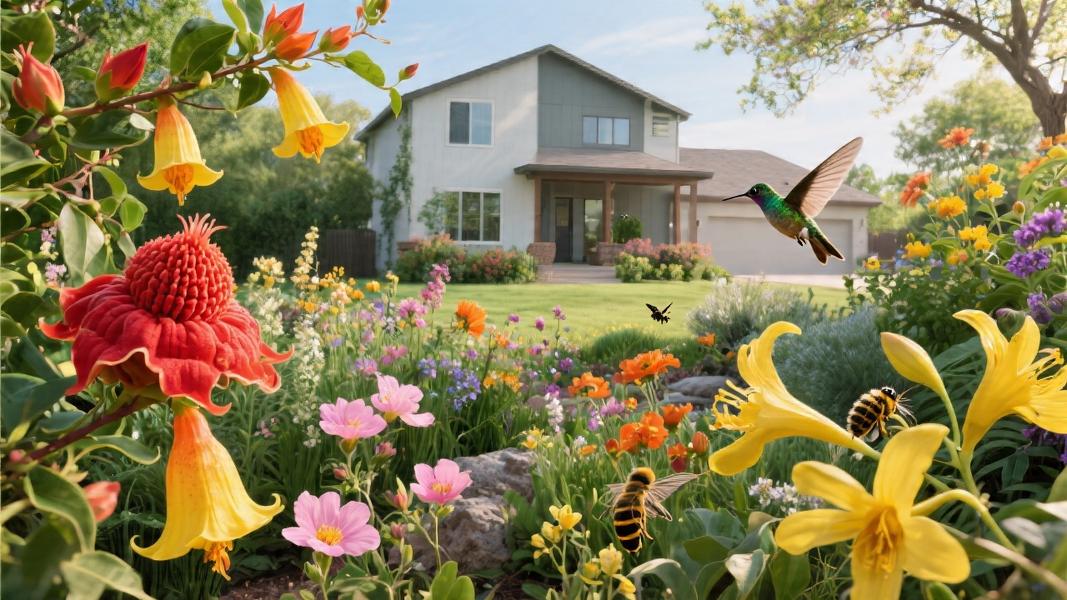
Texas is blooming — and this Earth Day, the state’s native plant communities are finally getting their moment in the sun.
From the fog-laced stream banks of East Texas to the sun-scorched flats of the Permian Basin, a growing coalition of conservationists, gardeners, and state agencies is rallying around one deceptively simple idea: that the plants already here, the ones that evolved over millennia in this soil and under this sky, are exactly what the land needs right now. Events, workshops, and guided walks are scheduled across Texas this April, with the 2026 theme “Our Power, Our Planet” setting the tone for what organizers hope will be a turning point in how everyday Texans think about their yards, their water, and their wild spaces.
A Rare Beauty and a Warning Sign
Not every native plant story is a feel-good one. Consider Stewartia malacodendron, the silky camellia — a member of the tea family that haunts the understory along southern stream corridors with white, almost porcelain flowers. It’s gorgeous. It’s also in serious trouble. A disjunct population in East Texas is considered critically imperiled, a quiet reminder that “native” doesn’t always mean “thriving.” Meristem Horticulture has documented the plant’s precarious foothold in the region, and its story frames the larger stakes of this year’s Earth Day push.
That’s the catch, really. You can’t celebrate native plants without confronting why so many of them need celebrating in the first place.
What’s Happening on the Ground
At the Davis Mountains State Park, the day kicks off with a Chihuahuan Desert Plant Walk from 10 to 11 a.m., guiding visitors through spring blooms and the park’s pollinator garden. A seed planting activity follows from 11 a.m. to noon — low-key, hands-on, and exactly the kind of thing that tends to stick with people long after they’ve driven home. Texas Parks and Wildlife has outlined the full schedule for those planning to attend.
Meanwhile, in Dallas, the annual Native Plants and Prairies Day is drawing attention back to the Blackland Prairie — one of the most endangered ecosystems in North America and, ironically, one of the most built-over. The event features speakers, exhibits, walking tours, and children’s activities centered on the ecological value of North Texas prairies as habitat for insects, birds, and mammals. Green Source Texas has highlighted the event as a cornerstone of the region’s conservation calendar.
The Prairie Beneath the Pavement
What did the Blackland Prairie look like before the cities arrived? Think sweeping grasslands dominated by little bluestem, Indian grass, and switchgrass, threaded through with salvias, penstemons, and silphiums, all sustained by 30 to 40 inches of annual rainfall. The Native Plant Society of Texas has noted the ecoregion’s remarkable botanical diversity — diversity that most Texans drive over every day without knowing it was ever there.
Still, restoration efforts are gaining real momentum. The same organization recently released The Texas Native Plant Primer, a guide featuring 225 plants suited for earth-friendly gardens across the state. It’s a practical document — the kind of thing you keep on the potting bench, not the coffee table. NPSOT has published the guide as part of a broader push to make native gardening accessible, not just aspirational.
Water, West Texas, and the Case for Xeriscaping
Head west toward the Permian Basin and the conversation shifts fast. Out here, water isn’t just a resource — it’s an argument. Xeriscaping with plants like yucca, desert willow, native sage, and wildflowers such as black-eyed Susans can cut outdoor water use by up to 60 percent, according to landscaping advocates in the region. Manor Park has explained how ornamental grasses and drought-adapted species are reshaping what a “nice yard” even means in communities where aquifer levels are a front-page concern.
It’s not just aesthetics. It’s arithmetic.
Shrubs, Seeds, and Getting Your Hands Dirty
For gardeners looking to start small, native shrubs like Coralberry offer an almost unfair return on investment — drought-tolerant, low-maintenance, pollinator-friendly, and genuinely useful to wildlife as both food source and shelter. Nativo TX has described plants like these as the backbone of a zero-waste garden approach that doesn’t require a horticulture degree or a large budget.
Earth Day workshops this year are also leaning into the basics: choosing the right species, understanding soil, planting with purpose. I Dig Green Acres has offered hands-on programming that walks participants through the full arc — from seed to established tree — with a focus on the environmental benefits that compound over time.
The Bigger Picture
What ties all of this together — the silky camellia clinging to an East Texas creek bank, the prairie grasses pushing through Dallas soil, the desert willow standing stoic in the Permian heat — is a recognition that ecological identity matters. Texas has one of the most biologically diverse landscapes in the country, and a lot of it is quietly disappearing under sod, concrete, and imported ornamentals that don’t feed a single bee.
Earth Day 2026 won’t fix that. But maybe that’s not the point. As conservationists have long understood, the work isn’t a single event on the calendar — it’s what you plant the week after.
