
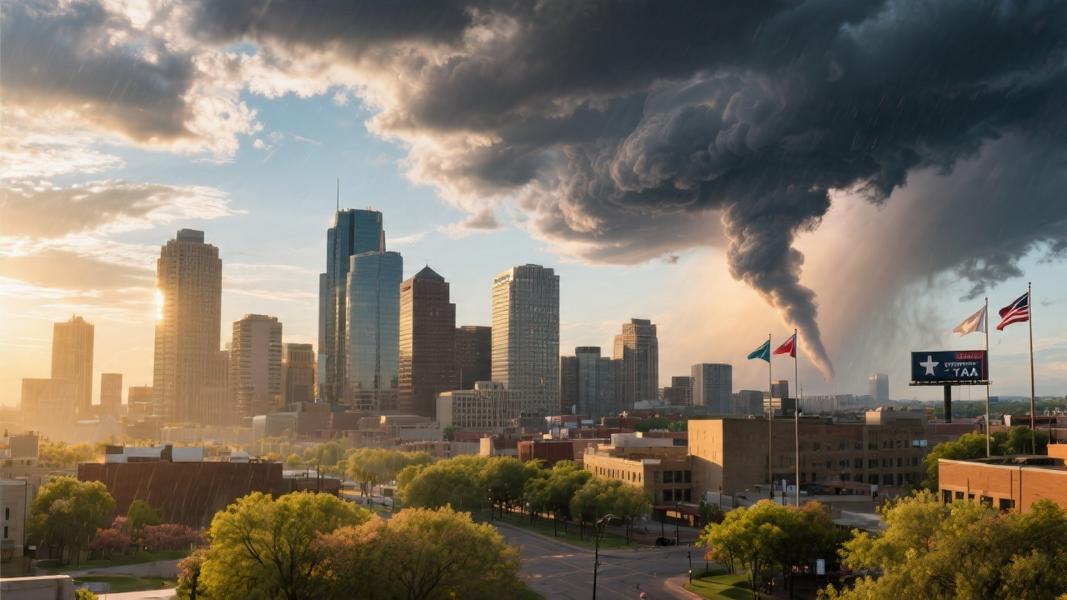
Severe weather is bearing down on North Texas, and forecasters aren’t mincing words: this isn’t just a stormy Friday. It’s the start of a dangerous stretch that could last through the beginning of next week.
A Tornado Watch is in effect through 9 p.m. on Friday, April 24, 2026, covering a wide swath of counties including Rains, Rockwall, Collin, Hunt, Hopkins, Lamar, Delta, Fannin, and Cooke. The watch, issued by the U.S. National Weather Service and confirmed by AccuWeather, went active for Rockwall County at 1:55 p.m. That’s not a drill — it’s a signal that conditions are ripe for tornado development, and residents across the region need to be paying attention right now.
What’s Driving the Threat
The culprit, as it often is in spring across North Texas, is a dryline pushing in from the west. Warm, moist air colliding with that boundary is creating the fuel for explosive storm development. Dallas is sitting in the mid-70s at the moment — the Victory Park Station clocked in at 74°F earlier Friday, tracked by Weather Underground — but afternoon heating will push temperatures into the mid-80s to low 90s. That kind of warmth, combined with the atmospheric setup in place, is exactly what meteorologists lose sleep over.
The primary hazards today are large hail and damaging wind gusts, though tornadoes can’t be ruled out. The Storm Prediction Center has placed Level 1 and Level 2 risks across North Texas for the weekend, with the most volatile conditions expected along and north of I-20 and along and east of I-35.
Not Just Friday
Here’s where it gets more sobering. One meteorologist put it plainly in a forecast video: “We have chances for strong tornadoes for today, also for Sunday, also for Monday.” That assessment underscores what the National Weather Service has also been signaling — this isn’t a one-and-done event. Isolated severe storms are expected each afternoon and evening through the weekend, with the same ingredients cycling back through the region repeatedly.
Three days of tornado chances. In a row. That’s the kind of forecast that demands more than a passing glance at your phone.
Who Needs to Be Watching
Still, it’s worth being precise about geography. The threat isn’t uniform across the Metroplex. Forecasters note that the severe storm risk is highest along and north of I-20 and east of I-35 — meaning communities like Rockwall, Greenville, Paris, Bonham, and Gainesville are in the crosshairs more than, say, Fort Worth’s western suburbs. That said, dryline-driven storms have a habit of moving fast and wide. Don’t assume distance means safety.
FOX 4’s weather team has been tracking the alerts as they evolve throughout the day. Conditions are fluid, and the watch area could expand or shift as storms develop.
What You Should Do Now
If you’re in any of the counties under the Tornado Watch, the message is straightforward: have a plan, know where your shelter is, and keep a way to receive emergency alerts nearby — whether that’s a weather radio, your phone, or both. Storms this time of year can go from “developing” to “dangerous” in minutes, and afternoon heating will only intensify the instability already baked into the atmosphere.
A Level 2 risk sounds manageable on paper. But three consecutive days of tornado-capable storms across one of the most densely populated regions in Texas is not something to sleep through — figuratively or literally.
Spring in North Texas has always come with a cost. This weekend, that bill is coming due early.
