
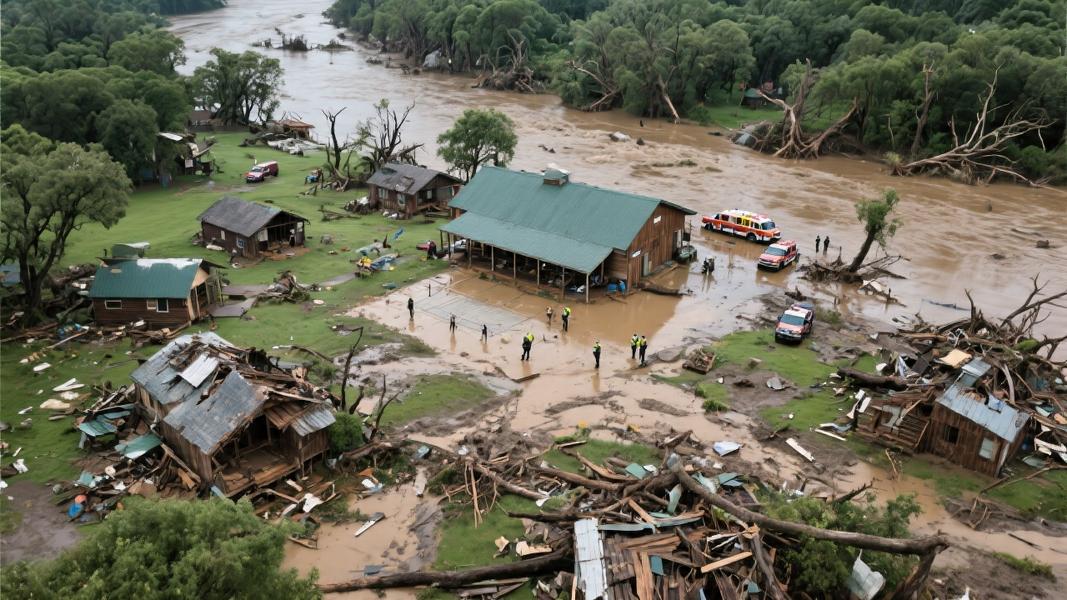
A Texas summer camp at the center of one of the state’s deadliest flood disasters is now facing regulatory scrutiny, a federal lawsuit, and mounting questions about whether anyone was minding the gate — long before the waters rose.
Camp Mystic, the storied Christian girls’ camp on the Guadalupe River, has been ordered by the Texas Department of State Health Services to revise its emergency plans before it can be relicensed for summer operation. The directive follows revelations that the camp’s flood emergency protocol — the document meant to keep children safe — amounted to a single page telling campers to stay in their cabins. No evacuation routes. No muster zones. Just: stay put.
A Deficiency Letter and a Century-Old Mission
Camp Mystic isn’t alone in receiving the state’s scrutiny. The camp recently confirmed it received what DSHS called a “deficiency letter” tied to its application for licensure at its Cypress Lake campus. In a written statement, the camp said it is “carefully reviewing the notice” and working with the agency “through the appropriate process,” adding that its priority “remains the safety and well-being of our campers.” The camp expressed hope to continue what it described as a “nearly century-long mission and ministry.”
That mission, and the community it has built across generations of Texas families, makes the story harder — not easier — to tell. But the facts don’t soften easily.
What the State Actually Checked
Here’s what’s particularly striking. A state inspection conducted on July 2, 2025 — days before the disaster — did confirm that Camp Mystic had a written disaster plan on file and that staff had been trained on it. But investigators found that inspectors only verified the plan’s existence and whether training had occurred. They did not evaluate the plan’s actual content.
That distinction matters enormously. Because the content, it turns out, was almost nothing. The camp’s emergency flood document instructed that “all campers on Senior Hill must stay in their cabins,” and that “those on the flats must also stay in their cabins unless told otherwise by the office.” That’s it. No evacuation procedures. No designated coordinator. No chain of command for a fast-moving flood on a Texas river that’s flooded before and will flood again.
The Law That Came Too Late
Texas lawmakers have since moved to close that gap. C.S.S.B. 1, known as the Heaven’s 27 Camp Safety Act, now requires youth camps to develop detailed emergency plans that include muster zones, evacuation procedures, notification protocols, and a designated safety coordinator. The bill’s name is a grim accounting — twenty-seven lives lost, many of them children.
Still, legislation passed after a tragedy doesn’t undo what came before it. And for the families of nine victims, the question isn’t just what the camp failed to do — it’s what the state allowed to go unchecked.
The Lawsuit: Officials “Looked the Other Way”
Parents of nine Camp Mystic victims have filed suit against Texas health officials, alleging a deliberate failure to enforce the very evacuation plan requirements that were already on the books. Their attorney, Paul Yetter, didn’t mince words. “The DSHS officials responsible for licensing youth camps deliberately looked the other way,” Yetter said in a written statement. “While Camp Mystic bears responsibility and is also being sued, state officials knew the camp’s emergency plan lacked a required evacuation component and still licensed the camp as safe.”
That’s a serious allegation — that regulators weren’t just asleep at the wheel, but saw the problem and waved it through anyway. DSHS has not publicly responded in detail to those specific claims.
What Camp Mystic Says It’s Doing Now
For the 2026 summer season at Cypress Lake, Camp Mystic says it’s building something more substantive. According to the camp’s own website, plans include a dedicated safety coordinator, updated emergency plans, regular drills, enhanced security measures, and ongoing consultation with outside safety experts.
Whether that’s enough — whether it’s the right framework, properly implemented and rigorously enforced — is precisely what regulators are now tasked with determining before any campers arrive this summer.
A century of tradition won’t mean much if the next storm comes and the plan still says: stay in your cabin.
