
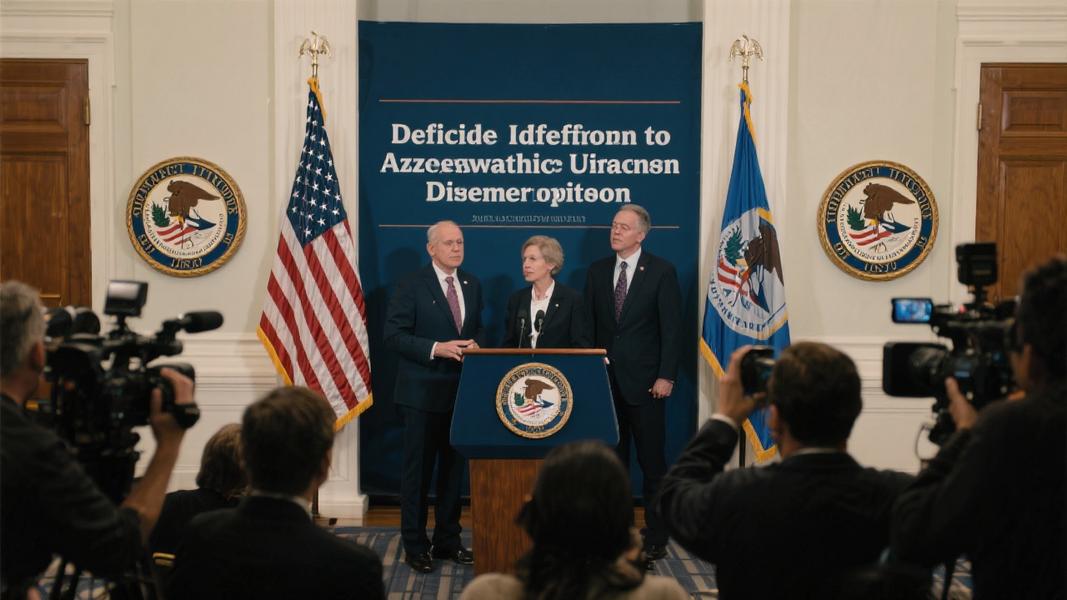
The Department of Justice has determined that George Washington University violated federal civil rights law by failing to protect Jewish students from antisemitic harassment, marking a significant development in the ongoing national debate about discrimination on college campuses.
In findings released Monday, DOJ investigators concluded GWU acted with “deliberate indifference” to antisemitic discrimination targeting Jewish, American-Israeli, and Israeli students and faculty — a violation of Title VI of the Civil Rights Act of 1964, which prohibits discrimination based on race, color, or national origin in programs receiving federal funding.
A Campus in Conflict
“Every student has the right to equal educational opportunities without fear of harassment or abuse,” said Assistant Attorney General Harmeet K. Dhillon of the Justice Department’s Civil Rights Division. “No one is above the law, and universities that promulgate antisemitic discrimination will face legal consequences.”
The investigation follows a Title VI complaint filed by Jewish students who alleged antisemitism had become entrenched on campus. According to the complaint, GWU administrators allowed an antisemitic environment to persist through negligence, with alleged support from campus entities including the Middle East Studies Association and the Institute for Middle East Studies.
Jason Torchinsky, Partner at Holtzman Vogel representing the students, emphasized that “GWU has obligations under Title VI and other laws to protect its Jewish students and faculty, and our complaint demonstrates that GWU failed its obligation. We look forward to this case and to protecting current and future Jewish students at GWU.”
How did the university respond? Earlier this year, GWU revised its campus protest and nondiscrimination policies following a separate civil rights complaint that alleged anti-Palestinian discrimination alongside antisemitism. However, the university notably rejected the International Holocaust Remembrance Alliance (IHRA) definition of antisemitism that has been promoted by Israel advocacy groups — a decision that has itself sparked controversy.
Federal Oversight Intensifies
The DOJ’s findings come amid growing federal scrutiny of how universities handle discrimination complaints. Advocacy groups have criticized GWU for showing “disregard for the federal standards for such complaints” in handling antisemitic discrimination claims, citing a 2019 Executive Order addressing campus antisemitism.
Congress has also taken an active interest. On July 15, the House Committee on Education and the Workforce held a hearing specifically focused on evaluating antisemitism at colleges and universities, as documented in GWU’s own federal update reports.
Meanwhile, the Senate Committee on Health, Education, Labor and Pensions (HELP) has launched its own investigation into antisemitic threats and violations at GWU, with particular attention to groups such as Students for Justice in Palestine. The committee is seeking detailed records about complaints and safety threats, as part of what it describes as an investigation into “Hamas-linked groups on college campuses to determine what, if any, additional legislative action may be required to protect students.”
The dueling complaints — one alleging anti-Palestinian discrimination and another alleging antisemitism — highlight the complex tensions universities face when trying to navigate speech and safety concerns around the Israeli-Palestinian conflict. In January, Palestine Legal reported that GWU was “forced to revise campus protest policies, nondiscrimination policies, and rejects Israel lobby definition of antisemitism after civil rights complaint.”
Broader Implications
The DOJ’s finding against GWU signals that federal authorities are increasingly willing to intervene when they believe universities have failed to protect students from discrimination. It also underscores the challenges universities face in balancing free speech protections with their obligation to maintain environments free from harassment and discrimination.
For GWU, the determination could potentially lead to mandated policy changes or even threaten federal funding if the university fails to address the issues identified by investigators.
As campus tensions continue to simmer nationwide over Middle East politics, the GWU case may serve as a bellwether for how federal authorities will approach similar complaints at other institutions — putting universities on notice that failure to address antisemitism could bring serious legal consequences.
