
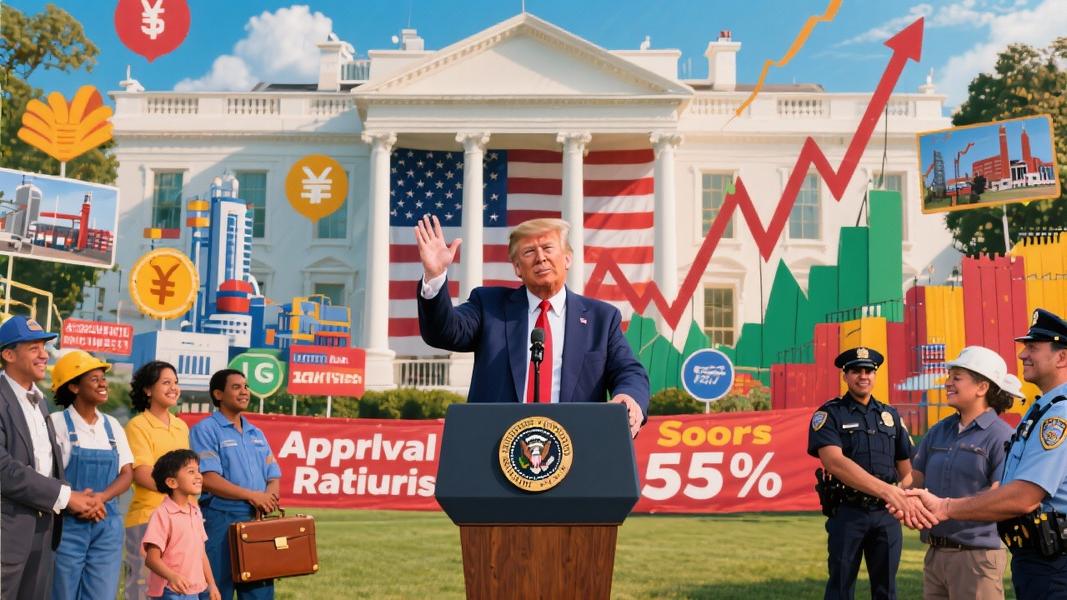
Confusion reigns over Trump’s actual approval rating, with the White House and independent pollsters painting dramatically different pictures of where the president stands with the American public.
The White House claimed on September 5 that President Trump’s approval rating has soared to an all-time high of 55%, attributing the surge to widespread support for his America First agenda. “This is the highest approval figure we have ever shown for Donald Trump,” pollster James Johnson said, praising what he called the president’s “transformative leadership and enduring connection with the American people.”
But independent polling experts tell a starkly different story.
Just a day before the White House announcement, renowned polling analyst Nate Silver reported Trump’s approval rating at a much more modest 44.1%, with disapproval at 51.7%. “As of today, 44.1 percent of Americans approve of the job Trump is doing and 51.7 percent disapprove,” Silver noted, placing Trump’s numbers below those of most modern presidents at the same point in their terms.
How could these numbers be so far apart?
The discrepancy highlights the ongoing battle over polling methodology and political narratives that has intensified during Trump’s return to office. While the White House touts record approval, multiple independent polling aggregators consistently show the president underwater with voters.
Intensity of Disapproval
An analysis published on September 3 paints an even bleaker picture for the administration, suggesting Trump faces not just disapproval but intense opposition. “Trump’s approval rating in our average is hovering near the low point for his term, around 41.9% approval with all adults. And he scores a 53.7% disapproval rating — making him the most unpopular president ever at this point in a president’s term,” the report states.
The polling site ActiVote shows numbers that closely align with other independent analyses, finding that Trump’s approval has actually slipped slightly from 44.5% to around 44% in their September 1 survey — a far cry from the White House’s 55% figure.
Silver has also explained that polls vary widely on Trump’s popularity due to methodological differences, though most aggregates show similar patterns. “Pollsters don’t just ask about Trump’s overall job approval, they also ask about how well he’s dealing with different issues,” Silver writes. His tracking reveals nuanced public opinion on specific policies including the economy, immigration, and the cost of living.
That said, the Trump administration has consistently challenged unfavorable polling data, often pointing to what it describes as “silent supporters” who don’t register in traditional polling methods. The White House has also criticized sampling methods used by many polling organizations.
For now, Americans seem as divided about the president’s performance as pollsters are about his approval rating — a fitting reflection of the nation’s polarized political landscape eight months into Trump’s historic second term.
