
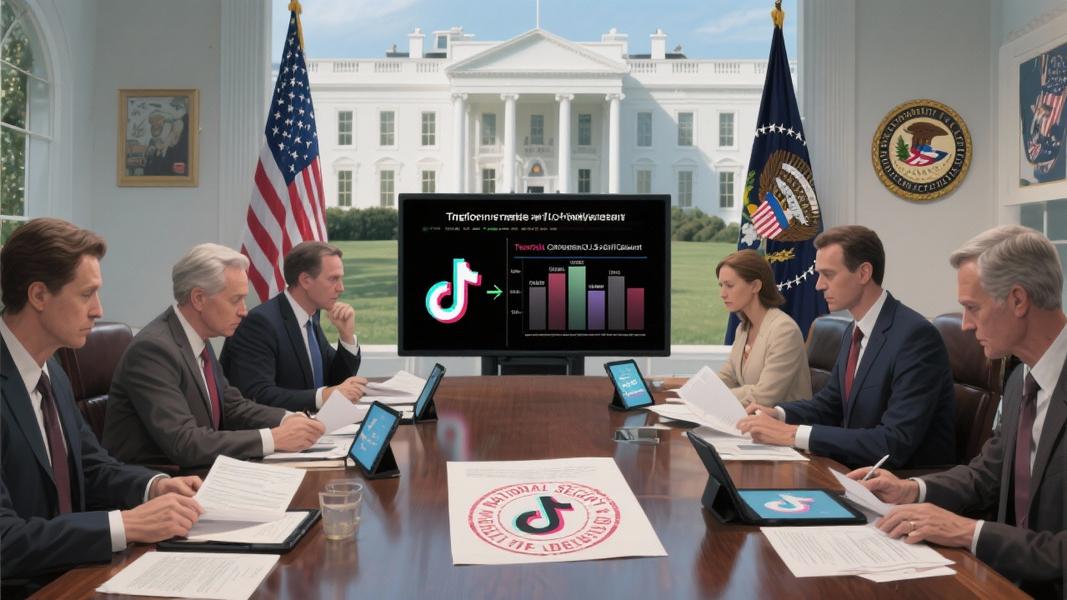
TikTok’s U.S. Future Secured: Trump Administration Approves Historic Divestiture Deal
The popular social media platform TikTok will remain available to its 170 million American users following President Trump’s approval of a landmark divestiture agreement that removes Chinese control of the app’s U.S. operations. The deal, finalized yesterday, ends nearly nine months of uncertainty since restrictions first took effect in January.
“This agreement represents a balanced approach that protects national security while preserving a platform that millions of Americans use daily,” said a senior White House official who requested anonymity to discuss the sensitive negotiations.
A Dance with Deadlines
The Protecting Americans from Foreign Adversary Controlled Applications Act, signed into law last year, had set January 19, 2025, as the deadline for TikTok’s parent company ByteDance to sell its U.S. operations or face a nationwide ban. But the implementation date was repeatedly postponed through a series of executive orders while negotiations continued behind the scenes.
President Trump issued four separate delays throughout 2025, pushing the final enforcement deadline to December 16. The delays gave negotiators crucial time to craft what the administration now describes as a “qualified divestiture” that satisfies the law’s requirements.
What does this mean for everyday users? The app they’ve come to rely on for entertainment, business promotion, and even livelihood will continue operating without interruption. TikTok had voluntarily suspended its services in the United States earlier this year when the restrictions first took effect, creating significant disruption for content creators and advertisers alike.
The New Ownership Structure
Under the framework agreement, TikTok’s U.S. operations will transfer to a newly established joint venture based in the United States. This new entity will be majority-owned and controlled by U.S. persons, with ByteDance and its affiliates retaining less than 20% ownership.
A consortium led by software giant Oracle, alongside private equity firm Silver Lake and UAE state-owned investment firm MGX, will hold approximately 45% of the new venture, according to sources familiar with the deal. This structure aligns with the national security requirements established by the Act.
Beyond just ownership changes, the agreement puts critical technological and operational controls in American hands. The new venture will control:
– Algorithm operations and code
– Content moderation decisions
– Storage of sensitive U.S. user data (which must be housed with an American cloud provider)
– Software updates and data flows
These measures directly address longstanding concerns about potential Chinese government access to Americans’ data and influence over content shown to U.S. users.
The National Security Calculus
How serious were the national security concerns? Serious enough that the interagency process involved the Vice President, National Security Council, Office of Science and Technology Policy, Department of the Treasury, Department of Justice, Department of Commerce, and the Office of the Director of National Intelligence.
“The divestiture removes the TikTok application from the control of a foreign adversary,” states the official determination. This addresses worries about ByteDance’s obligations under Chinese law to share data with authorities in Beijing.
The Committee on Foreign Investment in the United States (CFIUS) will also enter into agreements with investor parties to ensure economic incentives align with national security compliance requirements. These measures further resolve concerns related to ByteDance’s original acquisition of Musical.ly, which formed the foundation of TikTok’s U.S. presence.
Still, some critics question whether the 20% ByteDance ownership stake is truly sufficient to eliminate Chinese influence over the platform. The administration contends that the comprehensive monitoring provisions in the agreement provide adequate safeguards.
Implementation Timeline
Under the order signed by President Trump, the Attorney General will refrain from enforcing the Act or imposing penalties for 120 days from September 25, 2025. This grace period allows for the complex transition of ownership and operations to take place smoothly.
The Justice Department will issue formal guidance to app stores like those operated by Apple and Google, confirming that distributing TikTok during this transition period does not violate the law. Both companies had previously blocked the app from their platforms in compliance with the initial restrictions.
The divestiture agreement covers not just TikTok but also other ByteDance-owned applications popular in the U.S. market, including Lemon8 and CapCut, a video editing tool frequently used in conjunction with TikTok.
Economic Implications
The stakes of this decision extended far beyond geopolitics. For thousands of American content creators who have built businesses on TikTok, the platform’s continued operation represents economic salvation. Many had begun migrating to alternative platforms during the uncertainty, but found the audience reach and monetization opportunities lacking in comparison.
“This isn’t just about an app — it’s about livelihoods,” said one content creator with over 2 million followers who requested anonymity because they weren’t authorized to speak about the deal. “The last nine months have been incredibly stressful for those of us who depend on TikTok for income.”
American businesses that advertise on the platform also stand to benefit from the resolution. TikTok’s unique algorithm and engaged user base have made it a valuable marketing channel, particularly for reaching younger demographics.
The deal represents one of the most significant forced corporate restructurings in recent U.S. history, with implications for future cases involving foreign-owned technology companies operating in sensitive sectors of the American economy.
As the 120-day implementation period begins, all eyes will be on how smoothly the transition unfolds — and whether users notice any changes to the platform they’ve come to know so well.
