
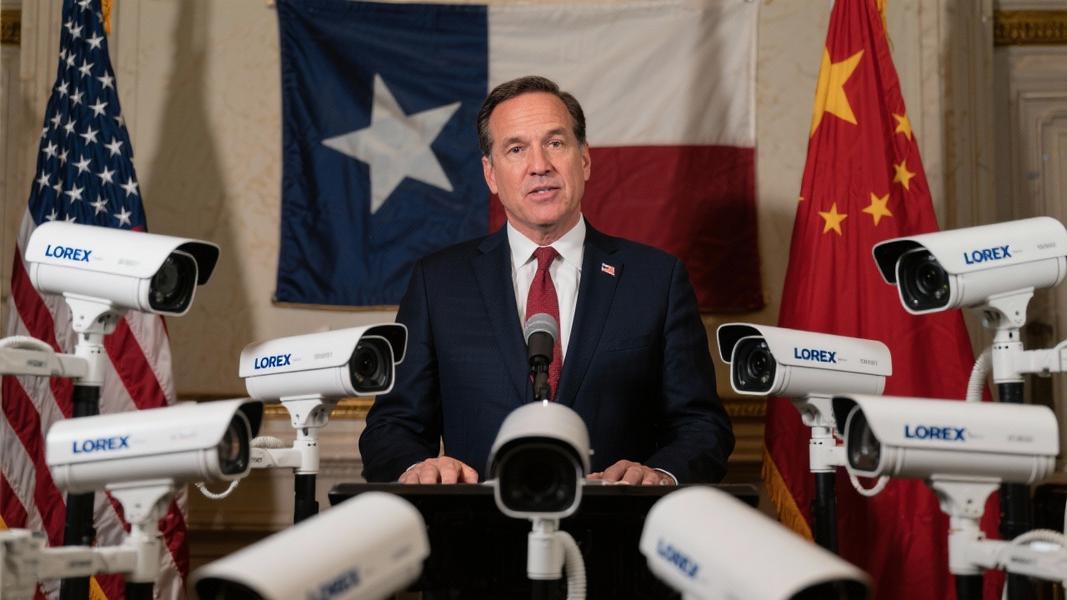
Texas Attorney General Ken Paxton has launched an investigation into Lorex Technology Inc., probing whether the security camera company’s alleged ties to China present undisclosed risks to consumers who believe they’re simply protecting their homes.
“Texans should never have to worry that the devices protecting their homes could be tied to foreign adversaries,” Paxton said in a statement. “Any company that gives the CCP a foothold in American life will face the full force of Texas law.”
Chinese Connections Raise Red Flags
The investigation centers on Lorex’s complex ownership history and supply chain. Founded in 1991, the company was acquired by Chinese firm Dahua in 2012, then later sold to Taiwan-based Skywatch in 2022. But here’s the catch — despite the ownership change, Dahua reportedly continues supplying critical components for Lorex cameras, according to reports.
That connection has set off alarm bells because Dahua isn’t just any Chinese company. The U.S. Department of War has designated it as a “Chinese military company,” and both the Commerce Department and the Federal Communications Commission have imposed restrictions on its products, citing serious national security concerns.
Yet despite these federal red flags, Lorex security cameras remain widely available to Texas consumers through major retailers including Amazon, Costco, and Best Buy, investigators found.
Not the First Legal Challenge
Texas isn’t blazing a completely new trail here. Nebraska Attorney General Mike Hilgers has already filed a lawsuit against Lorex, alleging the company deliberately misled consumers by marketing its products as “safe and secure” while concealing ongoing ties to Dahua. That case highlights concerns about transparency in an industry where trust is paramount.
What exactly are officials worried about? The fear is that these cameras, installed in homes across Texas, could potentially be compromised through their Chinese-made components, creating backdoors for surveillance or data collection that consumers never consented to.
Paxton’s investigation aims to determine whether Lorex has engaged in deceptive marketing by presenting its surveillance cameras as secure for residential use while downplaying or concealing potential security and privacy risks tied to their supply chain, sources familiar with the probe explained.
The scrutiny comes amid broader tensions between the United States and China over technology, espionage, and national security. Home security cameras represent a particularly sensitive category — devices specifically designed to monitor private spaces that could, ironically, become monitoring tools themselves if compromised.
For Texas homeowners who’ve installed these systems believing they were enhancing their security, the investigation raises uncomfortable questions about who might be watching the watchers.
