
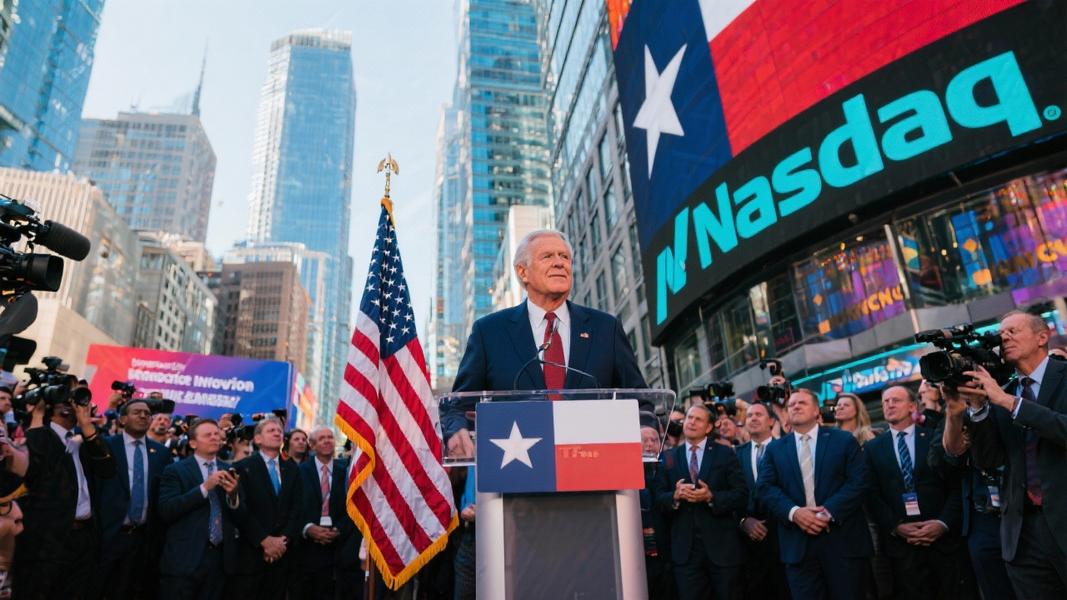
Texas is stepping onto the national financial stage in a big way. The Lone Star State has secured approval for what could become a major challenger to Wall Street’s long-established dominance of American securities trading.
The Securities and Exchange Commission has approved the Texas Stock Exchange (TXSE) to operate as a national securities exchange on September 30, 2025, paving the way for the Dallas-headquartered trading platform to launch in 2026. With approximately $161 million in committed investment from institutional heavyweights including Charles Schwab, Fortress, BlackRock, and Citadel Securities, TXSE stands as the most well-capitalized exchange to ever submit a registration to the SEC.
Financial Power Shift?
The exchange has only gained momentum since its initial approval. TXSE has secured an additional $250 million in a second capital round and brought J.P. Morgan aboard as a strategic partner, further cementing its financial foundation.
“Texas is swiftly becoming America’s financial hub,” Governor Greg Abbott declared following the SEC’s decision to grant TXSE national exchange status. It’s a bold claim, but one that’s increasingly backed by tangible shifts in the American financial landscape.
Is Wall Street’s era of unchallenged dominance finally coming to an end? The numbers suggest a significant realignment might be underway. According to a statement from Governor Abbott’s office, Texas has attracted more than 325 corporate headquarters during his tenure and now boasts “the financial services capital of America,” having surpassed New York in financial services workforce size.
The rise of TXSE doesn’t represent an isolated development. NYSE Texas also launched in 2025 as a fully electronic equities exchange based in Dallas, suggesting the city is rapidly emerging as a genuine financial center with multiple major trading venues.
Big Money Backing
What makes TXSE particularly notable is the caliber of its backers. The exchange has assembled a coalition of Wall Street titans that spans traditional investment management, retail brokerage, and market-making — creating a powerful consortium with deep experience in market structure and operation.
The timing couldn’t be more significant. As remote work continues to reshape where financial professionals can base their operations, and as states compete ever more aggressively for corporate relocations, Texas appears to be capitalizing on broader economic trends that have accelerated since the pandemic.
For a state already renowned for its energy industry and technology hubs, the addition of a robust financial exchange ecosystem represents yet another pillar in an increasingly diversified economy. Whether TXSE can eventually challenge the trading volumes of the NYSE or Nasdaq remains to be seen, but the foundation being laid in Dallas suggests Wall Street might want to keep a wary eye on its southern competitor.
