
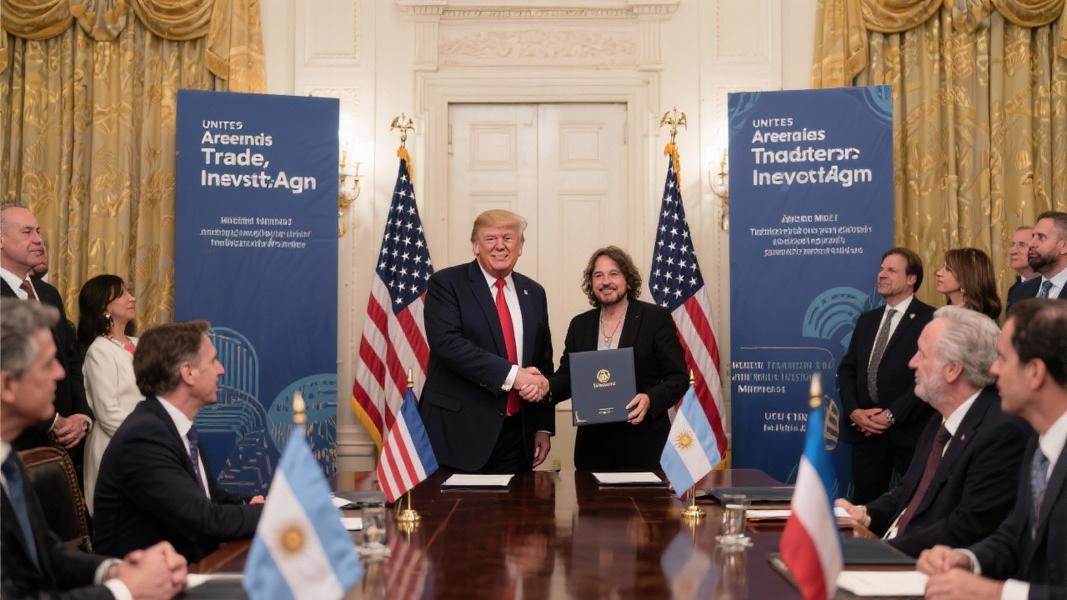
Argentina’s long-awaited trade deal with the United States appears to be on the verge of finalization, with officials describing the agreement as “practically complete” and awaiting only the formal announcement from both governments.
Argentina’s ambassador to the United States confirmed the imminent signing while speaking to reporters this week, though remained cautious about sharing specific details. “I’ve signed a confidentiality agreement, so I can’t comment in detail, but the agreement is moving forward. It’s practically complete; now it’s a matter of finding the right moment for both sides to, in simple terms, tie it up with a bow and announce it,” the ambassador stated.
The breakthrough comes after months of negotiations between the two nations, culminating in a bilateral trade and investment cooperation framework that both sides have now agreed to in principle.
Digital Trade Takes Center Stage
What’s in it for both countries? For starters, the deal prominently features provisions for digital commerce, with Argentina set to recognize the United States as an “adequate jurisdiction” for data transfer under Argentine law. This technical-sounding provision actually represents a significant step forward in facilitating cross-border digital business between the two nations, as reported earlier this month.
American exporters stand to gain substantial benefits as well. The agreement will grant preferential access to Argentina’s domestic market for U.S. exports, with pharmaceuticals and chemical products specifically mentioned as key sectors that will see improved trade conditions.
Behind the scenes, the discussions between Argentine President Javier Milei and his American counterpart Donald Trump appear to have secured crucial backing from the U.S. Treasury, suggesting the deal has cleared major hurdles within the American administration.
Timing and Politics
Why now? The timing of this agreement aligns with President Milei’s economic liberalization agenda, which has sought to open Argentina’s historically protected markets to greater international competition. For the United States, expanding trade relationships in South America represents a strategic priority amid growing Chinese influence in the region.
The careful language around the announcement — noting that officials are seeking “the right moment” to formalize the deal — hints at the political sensitivities still at play. Both administrations likely want to maximize the domestic political benefits of the announcement while minimizing potential criticism from protectionist voices within their respective countries.
Critics might question whether Argentina’s struggling domestic industries are prepared for increased American competition. That said, the agreement’s supporters argue that preferential access to American markets could provide a much-needed boost to Argentina’s export sector at a time when the country is desperately seeking foreign currency inflows.
As both sides prepare for the formal signing, the business communities in Buenos Aires and Washington are watching closely. For Argentina, battling chronic inflation and economic instability, the deal represents not just expanded trade opportunities but a vote of confidence from the world’s largest economy — something President Milei will undoubtedly highlight when the ribbons are finally cut.
