
Justice Department Cracks Down on Elder Fraud, Targeting Schemes That Bilked $2 Billion from America’s Seniors
The financial exploitation of America’s elderly has reached alarming proportions, with criminals targeting more than one million older Americans and attempting to steal over $2 billion during the past year alone. The Department of Justice has responded with unprecedented force, pursuing more than 280 enforcement actions against over 600 defendants in what officials describe as a comprehensive effort to combat the growing crisis.
These numbers come from the Justice Department’s 2025 Annual Report to Congress, which details an aggressive campaign against both domestic and international perpetrators, including many defendants who were extradited to face charges in U.S. courts.
A Crisis of Staggering Proportions
Just how vast is the problem? A recent study estimates annual losses suffered by older Americans due to financial exploitation at an astounding $28.3 billion. Financial institutions appear to be picking up on the trend, having filed more than 155,000 reports related to elder financial exploitation between June 2022 and June 2023, associated with over $27 billion in suspicious activity.
The schemes targeting seniors fall into two distinct categories, according to the Financial Crimes Enforcement Network (FinCEN). “Elder theft involves the theft of an older adult’s assets, funds, or income by a trusted person,” while “elder scams involve the transfer of money to a stranger or imposter for a promised benefit or good that the older adult did not receive,” the agency explains.
But the Justice Department isn’t just prosecuting cases—it’s recovering stolen funds. During the reporting period, the Department recovered or froze millions of dollars stolen from older victims, offering a glimmer of hope for those who’ve been victimized.
A Multi-Pronged Approach
Recognizing that prosecution alone isn’t enough, the Department has embraced a more comprehensive strategy. In a first-of-its-kind initiative, it organized the National Elder Abuse Multidisciplinary Team Summit, bringing together nearly 400 team members from across the country to share best practices for coordinated enforcement and improved services for older Americans.
“The collaborative approach seems to be paying dividends,” says one senior official involved in the effort. “We’re seeing unprecedented cooperation between federal, state, and local agencies.”
The Department has also thrown considerable weight behind victim support services. Through Victims of Crime Act (VOCA) formula grants to states, it has supported more than 4,000 victim assistance organizations, which provided services to nearly 200,000 older victims nationwide.
Prevention Through Education
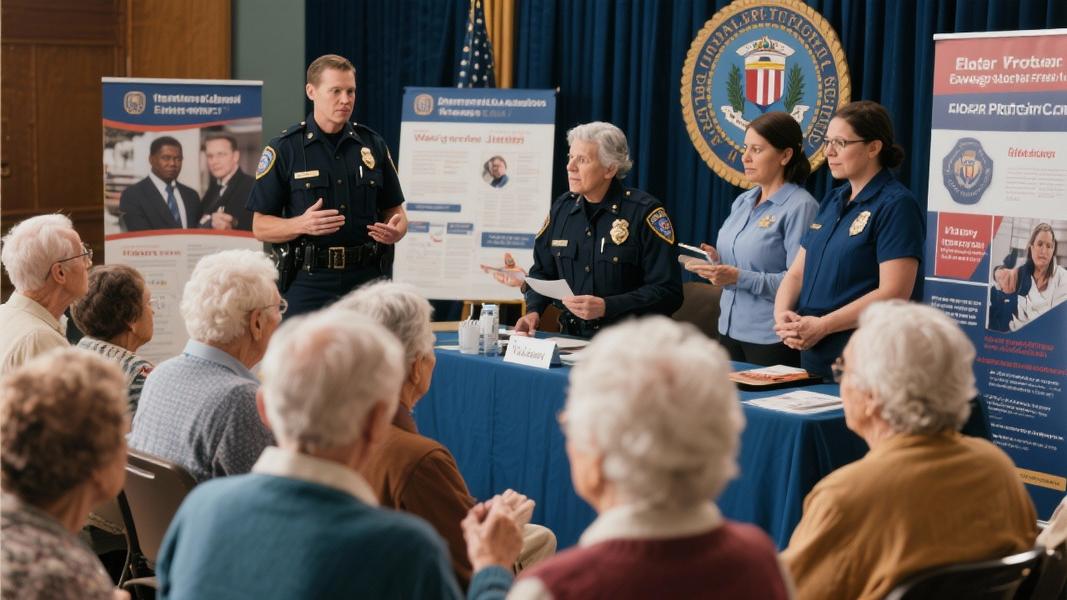
What about stopping these crimes before they happen? The Justice Department has made public education a cornerstone of its strategy, holding nearly 1,200 elder-focused public awareness and training events that reached nearly 15 million Americans with crucial information about prevention, intervention, and available resources.
“We can’t just prosecute our way out of this problem,” noted one Department official who requested anonymity to speak candidly. “Education and prevention have to be part of the equation.”
In another forward-looking move, the Department initiated the first National Elder Abuse Victim Services Needs Assessment, a comprehensive resource that will help identify and address gaps in services for older victims in the coming years.
For the millions of older Americans who remain vulnerable to financial predators, these efforts can’t come soon enough. As one victim advocate put it: “Every dollar recovered, every scammer prosecuted, and every potential victim educated represents a small victory in what will likely be a very long fight.”
