
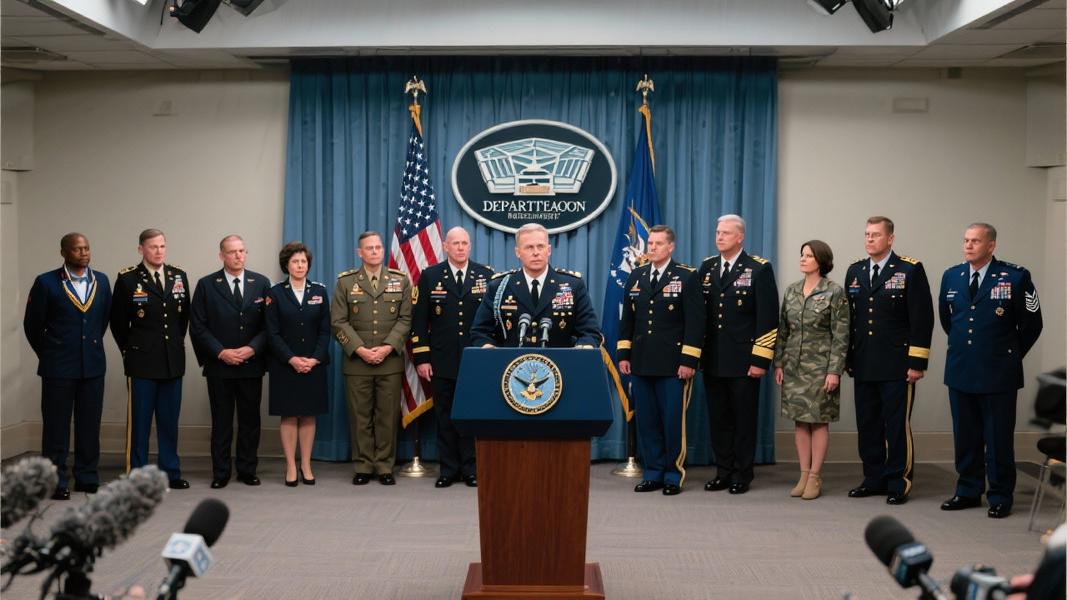
Secretary of War Pete Hegseth announced a slate of high-level military nominations on Sunday, continuing the administration’s reshaping of top defense leadership positions as strategic priorities shift toward emerging threats.
The nominations, put forward by the President and revealed on November 17, 2025, include appointments across multiple branches of the armed services, with particular emphasis on command positions in technology, space, and budgetary operations.
Navy and Army Leadership Shifts
Among the most notable promotions is Navy Rear Admiral (lower half) Benjamin G. Reynolds, tapped for appointment to the grade of rear admiral. Reynolds currently serves as deputy assistant secretary of the Navy for Budget and Director of Fiscal Management Division at the Pentagon — a critical role as the department navigates increasingly complex funding priorities.
“These nominations reflect our commitment to positioning the right leaders for tomorrow’s challenges,” Hegseth stated when unveiling the appointments. The timing comes as defense budgets face heightened scrutiny amid competing domestic priorities.
For the Army, Lieutenant General Christopher O. Mohan received nomination for reappointment to his current rank, but with a significant new assignment as commanding general of U.S. Army Materiel Command at Redstone Arsenal, Alabama. The Materiel Command oversees the Army’s global supply chain and logistics operations — a behemoth responsibility managing billions in resources.
Space and Missile Defense Leadership
Perhaps the most strategically significant promotion? Major General John L. Rafferty Jr., nominated for appointment to lieutenant general, will take command of U.S. Army Space and Missile Defense Command/U.S. Army Forces Strategic Command if confirmed.
Rafferty, who currently serves as chief of staff at U.S. European Command in Germany, would assume control of the Army’s primary space and missile defense organization at a time of heightened global tensions and rapid technological advancement in those domains. His transition from European operations to space-based defense signals the administration’s evolving strategic focus.
The nominations also include Brigadier General Jason B. Nicholson for promotion to major general. Nicholson’s current role as senior defense official and defense attaché at the U.S. Defense Attaché Office in Ukraine places him at the center of one of America’s most sensitive diplomatic-military relationships. His promotion suggests continued prioritization of that theater.
Air National Guard Recognition
Rounding out the nominations is Air Force Colonel Edward J. Fink Jr., selected for appointment to brigadier general while serving as director of A5 for the Pennsylvania Air National Guard at Fort Indiantown Gap. The promotion highlights the increasing integration of National Guard leadership into broader defense planning.
What do these nominations tell us about military priorities? The focus on space, missile defense, and European operations points to continued concerns about traditional adversaries, while budget-focused appointments like Reynolds’ suggest an emphasis on fiscal discipline.
All nominations require Senate confirmation before taking effect, a process that has grown increasingly contentious in recent years as military appointments have become caught in broader political disputes.
The nominations come at a pivotal moment for the Department of War, as it continues to navigate evolving threats while maintaining readiness across multiple domains and theaters — a balancing act that these officers, if confirmed, will help orchestrate from their new positions of authority.
