
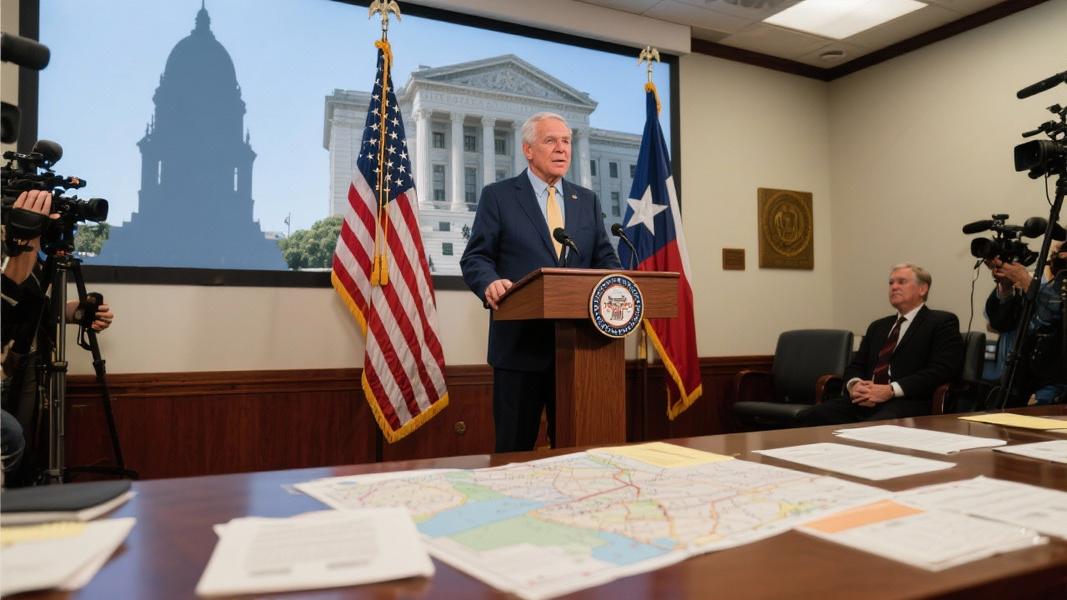
Texas Republicans were dealt a major blow Monday when a three-judge federal panel ruled the state cannot use its controversial new congressional map for the 2026 elections, finding that lawmakers had engaged in racial gerrymandering when redrawing district lines earlier this year.
The decision forces Texas to revert to its 2021 congressional map in what could be a significant setback for Republican hopes of maintaining control of the U.S. House of Representatives. The ruling comes just three months after the GOP-controlled legislature pushed through the mid-decade redistricting plan that would have likely increased Republican seats from 25 to 30 of the state’s 38 congressional districts.
“Substantial evidence shows that Texas racially gerrymandered the 2025 Map,” the court stated in its ruling, following a nine-day trial in El Paso that examined whether race was a predominant factor in drawing the new districts.
Abbott vows immediate appeal
Governor Greg Abbott wasted no time announcing the state would challenge the ruling, calling the court’s decision “clearly erroneous” and promising swift action. “The Legislature redrew our congressional maps to better reflect Texans’ conservative voting preferences – and for no other reason,” Abbott declared in a statement. “Any claim that these maps are discriminatory is absurd and unsupported by the testimony offered during ten days of hearings.”
The redistricting plan, passed during a special legislative session in August and quickly signed into law by Abbott, faced immediate legal challenges from multiple advocacy groups who alleged it intentionally diluted the voting power of Black and Hispanic Texans. The case represents just “the opening gambit in what promises to be a yearslong legal battle” over Texas’ congressional boundaries, according to legal experts.
What makes this redistricting effort particularly unusual? The mid-decade timing. Redistricting typically occurs once every ten years following the U.S. Census, but Texas Republicans pushed forward with new maps after former President Donald Trump urged the state to maximize GOP representation ahead of the 2026 midterms.
Federal courts find discriminatory intent
The three-judge panel’s ruling highlighted concerns that the 2025 maps perpetuated discrimination present in earlier redistricting efforts. The court determined that the plan “was enacted with discriminatory intent because it retained certain discriminatory districts present in the legislature’s 2011 plan,” specifically citing District 25 in Central Texas and District 27 in the Nueces County region as violating both Section 2 of the Voting Rights Act and the Fourteenth Amendment.
The U.S. Justice Department had previously signaled its concerns about the new maps, with the judges referencing a July letter from the DOJ that threatened legal action over the state’s handling of coalition districts.
Political fallout from the ruling has been immediate. Democrats who faced potential retirement or difficult primaries against fellow incumbents can now run in their current districts. Meanwhile, Republican candidates who had already begun campaigning in newly favorable districts “will now have to hope for an intervention from the Supreme Court or face far more difficult election prospects,” according to political analysts.
Legal battles ahead
The path forward remains complicated. Legal challenges to the 2021 maps—which will now be used for the 2026 elections—are still ongoing, creating a parallel track of litigation. The judges may also wait for upcoming U.S. Supreme Court decisions on voting rights before proceeding further with additional remedies.
Texas Republicans’ aggressive redistricting strategy reflects broader national tensions over voting rights and representation. The ruling comes at a particularly sensitive time, with control of Congress hanging in the balance and both parties positioning themselves for the 2026 midterm elections.
For now, the decision stands as a significant check on what critics viewed as an extraordinary attempt to redraw electoral boundaries outside the normal census cycle. But with Governor Abbott’s promised appeal to the Supreme Court, this battle over Texas congressional districts appears far from over.
