
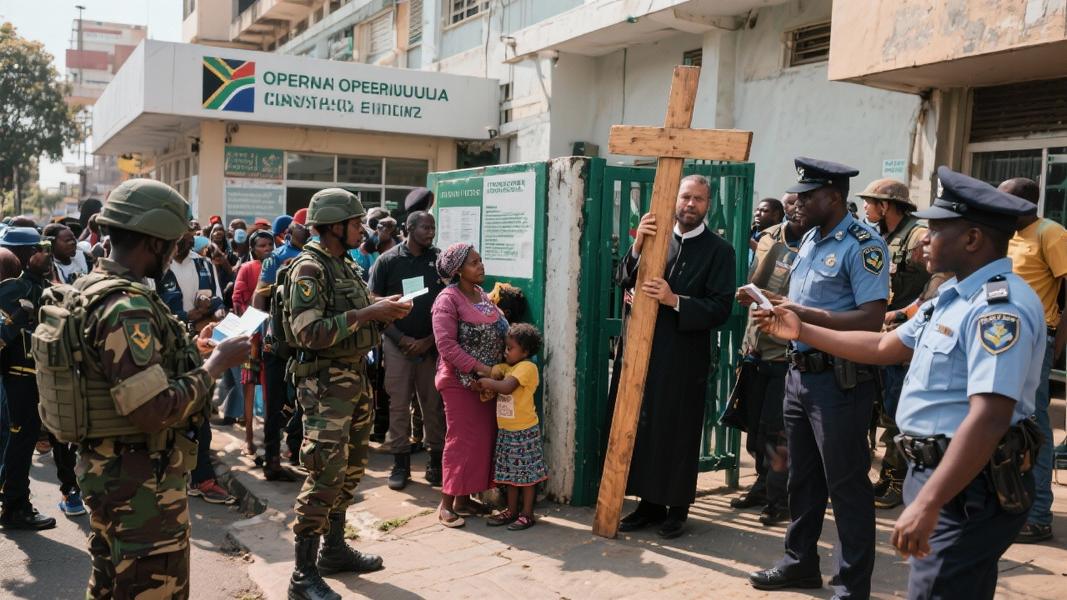
Tensions have reached a dangerous boiling point at South African healthcare facilities as anti-immigrant groups block foreign nationals from accessing vital medical services. Doctors Without Borders is now warning that these actions could cost lives.
The humanitarian organization has sounded the alarm about Operation Dudula, a group whose members have physically prevented immigrants from entering hospitals and clinics across the country. “Doctors Without Borders has warned that an anti-immigrant group in South Africa, known as Operation Dudula, could be endangering lives as it blocks immigrants from accessing health care,” the organization stated.
Operation Dudula members have stationed themselves at hospital entrances, demanding identification documents from patients seeking care. “If you are not South African, from today you will not be allowed into any South African hospital,” members have declared to those seeking treatment. The group justifies these actions with claims that foreign nationals collect medication to manufacture nyaope, a street drug, or to sell in their home countries.
Constitutional Rights vs. Street Justice
What’s particularly troubling is that these actions directly contradict South Africa’s legal framework. Section 27 of the Constitution explicitly “guarantees each and every individual’s right to access health care services, including reproductive health care and emergency medical treatment,” regardless of nationality, as the Democratic Alliance (DA) emphasized in their call for intervention.
The DA has urged the South African Police Service to deploy public order policing units at affected healthcare facilities to protect individuals’ constitutional rights. But it’s not just happening in one city — HIAS South Africa has documented that Operation Dudula and another group called March for March have blocked entrances to multiple hospitals, including Addington Hospital in Durban.
“Healthcare is a basic human right,” HIAS South Africa stated, highlighting the fundamental principle being violated by these actions.
The crisis reflects deeper tensions in a country where immigration remains a contentious issue, though official data from the Scalabrini Centre of Cape Town indicates migrants make up only about 4 percent of South Africa’s population — a figure seemingly at odds with the intensity of the anti-immigrant sentiment.
Real-World Consequences
For patients turned away at clinic doors, these ideological battles have immediate, sometimes life-threatening implications. Pregnant women, children, and those with chronic conditions like HIV or tuberculosis face particular risk when unable to access medication or care.
The standoff between constitutional protections and street-level enforcement has created a dangerous gap where vulnerable populations fall through. Healthcare workers find themselves caught in the middle, often unable to fulfill their medical duties amid the confrontations.
Despite South Africa’s post-apartheid constitution being hailed as one of the world’s most progressive, the reality on the ground suggests a troubling disconnect between constitutional rights and their practical implementation. As tensions continue to mount, the question remains whether authorities will step in to enforce the law before more lives are endangered in what has become a frontline in South Africa’s immigration debate.
