
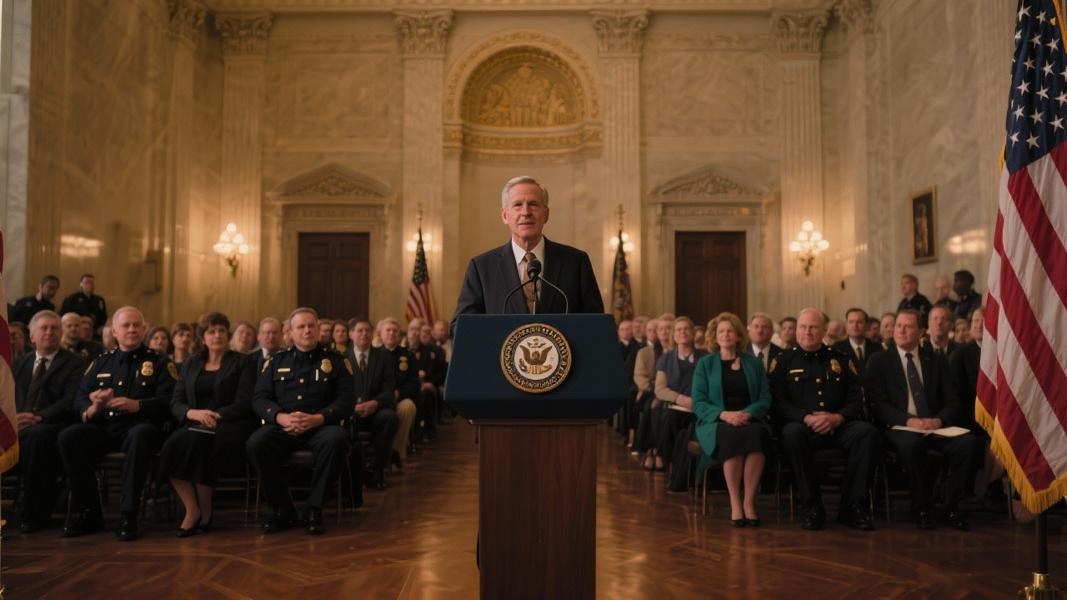
Supreme Court Wraps 2021-2022 Term, Honors Century-Spanning Service of Retiring Staff
Court Enters Summer Recess After Consequential Term
The Supreme Court has officially closed the books on its 2021-2022 term, Chief Justice John Roberts announced Thursday, bringing an end to what many legal observers consider one of the most consequential sessions in recent history.
“I am authorized to announce that the Court has acted upon all cases submitted to the Court for decision this Term,” Roberts stated in a press release, noting that final orders from Wednesday’s conference would be released at 10:45 a.m. before the Court enters its traditional summer recess until the first Monday in October.
Behind the marble columns and heightened security that have marked this tumultuous term, the Chief Justice took a moment to recognize something rarely seen in headlines: the dedicated workforce that keeps the nation’s highest court functioning.
Five Centuries of Combined Service
In a remarkable testament to institutional stability during politically volatile times, Roberts highlighted the retirement of numerous employees whose collective service to the Court spans more than 500 years — a figure that underscores the quiet continuity that exists behind the Court’s public-facing decisions.
“Collectively, these individuals have rendered more than five centuries of Supreme Court service,” the Chief Justice noted, a staggering figure that averages to decades of institutional knowledge per retiring employee.
Who are these long-serving guardians of the Court’s operations? The list reads like a testament to public service rarely seen in modern American institutions.
From the Clerk’s Office, Michael Duggan concluded more than three decades of service, while Gary Kemp retired after nearly 30 years. The Marshal’s Office bids farewell to Dannie Veney after 38-plus years, Earnest Hicks following 36 years, and Willie Clayton after more than a quarter century of service.
Technology and Knowledge Stewards Step Down
Two particularly notable departures come at department leadership levels. Robert J. Hawkins, the Court’s Director of Information Technology, is stepping down after more than 27 years — a period that saw the Court navigate from paper-dominant operations into the digital age.
“Mr. Hawkins ably led a department that provides key support to nearly every aspect of Court operations,” Roberts noted. “He and his team were creative, agile, and essential in allowing us to discharge the public’s work through the coronavirus pandemic.”
The pandemic era, which forced even the tradition-bound Court to conduct historic telephonic arguments, might have been unimaginable without such technological leadership.
Equally significant is the retirement of Linda S. Maslow, only the 11th Librarian of the Court since its establishment. After nearly 34 years of service, including a decade as head librarian, Maslow leaves behind a modernized institution that Roberts praised for “embracing digital tools and resources while safeguarding its unique collection.”
Remembering Those Lost
The Court’s announcement took a somber turn in acknowledging employees who passed away during the term. Virginia Singletary died after more than 41 years of service, while Supreme Court Police Officer Raymond Billeaud passed following 21-plus years protecting the institution. Moses Humes died shortly after retiring from 22 years at the Court and a total federal service record exceeding 47 years.
How does an institution process such losses? For the Court, it seems to be through public acknowledgment of these contributions that, while largely invisible to the public, maintain the continuity of American justice.
Beyond the Headlines
This recognition of staff comes during what has been, by any measure, an extraordinary term. The Court overturned long-standing precedents, faced unprecedented leaks, and operated amid heightened security concerns.
Yet Thursday’s announcement serves as a reminder that beneath the heated public discourse surrounding controversial decisions, the Court remains an institution of people — many who have dedicated their entire careers to its operation.
“The Court thanks our retiring employees for dedicated public service to Court and Country,” Roberts concluded. “We wish each of you well in your retirement.”
As the justices scatter for summer writing and speaking engagements before regrouping in October, these departures mark a significant transition in institutional knowledge at a time when the Court itself faces intense scrutiny over its role in American governance.
