
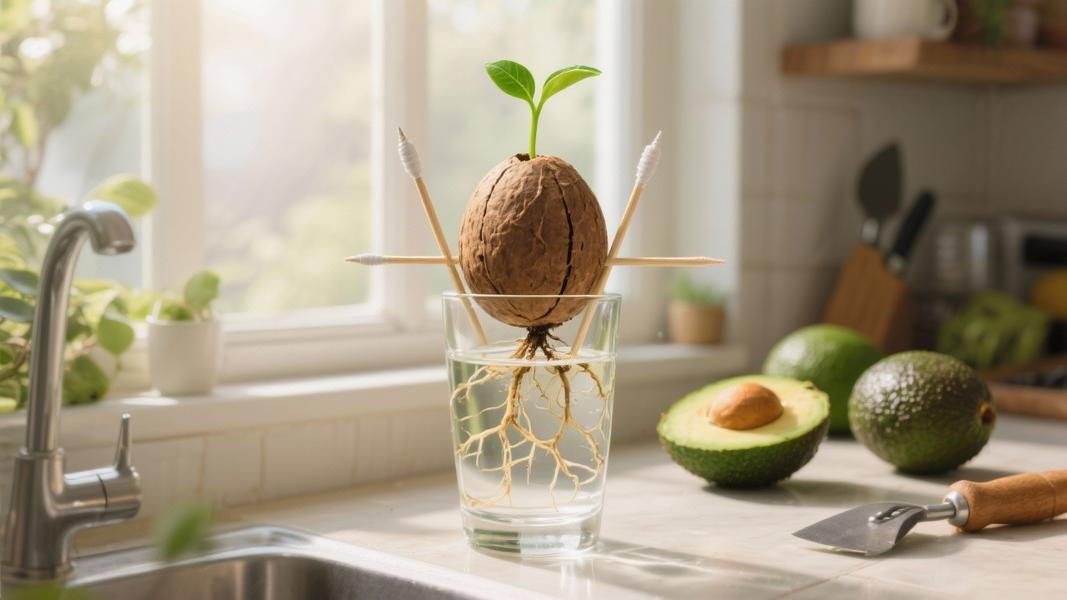
Want your avocado seed to sprout faster? Peel it, science says.
Home gardeners growing avocado trees from pits have long debated the best germination method, but new research provides a clear answer: removing the brown seed coat significantly improves success rates and speeds up the process. According to a controlled experiment, peeled avocado seeds have a 70.4% germination success rate compared to just 55.6% for unpeeled seeds, and they sprout an average of 7.2 days faster when using the popular water and toothpick method.
The Science Behind Seed Peeling
“Our results showed that peeled avocado seeds have both a higher probability of germination, and a higher speed of germination than their unpeeled counterparts,” concluded researchers who tested multiple seed preparation techniques. The data is compelling — peeled seeds germinated in approximately 37.3 days on average, while unpeeled seeds took about 44.5 days to sprout.
What’s behind this difference? The seed coat contains natural germination inhibitors that slow down the sprouting process. In nature, these compounds would be gradually broken down by environmental factors, but for home growers, manually removing this barrier gives seeds a head start.
Another effective technique is soaking the seed in warm water overnight before planting. “As soon as you remove the pit from the avocado fruit, clean it and soak it in warm water overnight. Deep soaking the seed removes germination inhibitors (which happens in nature with rain and wind), and provides the moisture levels needed to trigger germination,” explains gardening experts. Using filtered or mineral water rather than tap water is also recommended for optimal results.
From Pit to Plant: Managing Expectations
While getting an avocado seed to sprout is relatively straightforward, growing a fruit-bearing tree presents a different challenge entirely. “If you’re looking for a tree that makes edible avocados, your success rate will be near 100%. If you’re looking for a tree that makes avocados that are as good as the best ones, your success rate will be down near 1%,” notes horticulturist Greg Alder.
The genetic lottery of seed propagation means most home-grown avocado trees will produce fruit that differs significantly from their parent. Commercial avocado varieties like Hass are almost exclusively grown through grafting to maintain consistent quality.
Still, even if your homegrown avocado never produces premium fruit, the growing process itself can be rewarding. Under optimal conditions of 75-80°F, avocado seeds typically reach grafting size in about two months, making them satisfying houseplants with their glossy leaves and distinctive growth pattern.
Beyond Gardening: Hidden Value in Avocado Seeds
Interestingly, those brown pits many of us discard represent 13-17% of the avocado fruit and contain valuable compounds that extend beyond gardening applications. “Seeds of avocados represent a substantial percentage (13%–17%) of the avocado fruit and are rich in various functional and bioactive components,” states a recent study published in the National Library of Medicine.
Could we be throwing away something valuable? Research indicates that avocado seeds contain significant bioactive compounds and proteins important for plant development. Some studies have even shown that fermentation can enhance their antioxidant properties, suggesting potential applications as food additives or supplements.
For the average home gardener, however, the practical takeaway is clear: if you want to see results faster, take a few minutes to carefully peel your avocado seed before suspending it over water. That extra step could be the difference between watching a thriving seedling emerge within a month or waiting nearly seven weeks for signs of life.
