
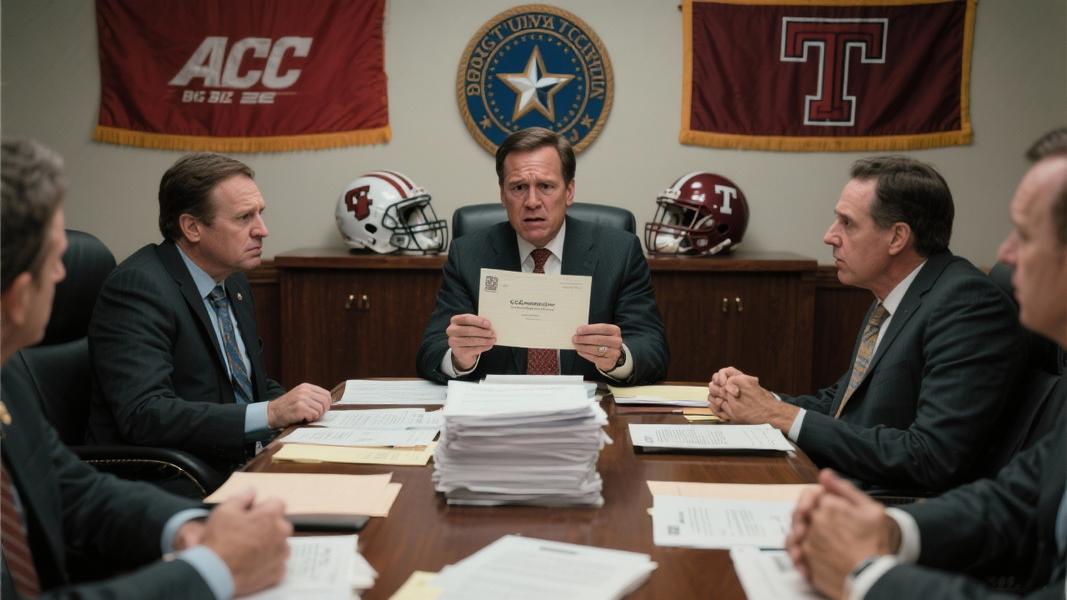
Texas Attorney General Ken Paxton has launched a direct challenge against the College Sports Commission (CSC), warning universities across multiple athletic conferences that signing the organization’s participation agreement could strip them of their autonomy and subject them to unchecked authority.
In a bold move that could reshape collegiate sports governance, Paxton sent letters to universities in the ACC, Big 12, and SEC conferences urging them to reject what he characterized as a power grab. “To protect the integrity of collegiate athletics, this power grab by the CSC must be stopped,” Paxton wrote in his communication to schools including Baylor University and Texas A&M.
What’s at stake?
The agreement, according to Paxton’s analysis, would grant the CSC sweeping authority with minimal accountability. Universities that sign would be subject to arbitrary fines and sanctions, with what Paxton describes as “minimal appeal process” — essentially giving the commission carte blanche to enforce rules however it sees fit.
Perhaps most concerning for university administrators is the requirement that schools comply with any future policies adopted by the CSC — a blank check of sorts that would bind institutions to rules not yet written or even conceived. The agreement also attempts to grant the commission legal immunity, raising what Paxton calls “serious Texas constitutional issues.”
“The CSC would gain authority to fine and sanction participating schools at its discretion with minimal appeal process,” Paxton warned in his letter.
A legal shield with teeth
The agreement contains what might be its most controversial provision: schools that sign would face severe penalties if they cooperate with legal challenges brought against the CSC by their own state’s Attorney General. Those penalties wouldn’t be minor — they include loss of revenue and ineligibility for postseason and playoff competition.
In other words, universities would be forced to choose between their state government and their athletic future. Schools “would lose revenue and be deemed ineligible for post-season and playoff competition for cooperating with any suit, action, or legal claim brought against the CSC by their home state’s Attorney General,” Paxton stated.
This provision effectively insulates the CSC from legal challenges, creating what critics might call a moat around its authority — cross it, and your athletic programs pay the price.
Building a coalition
But Paxton isn’t limiting his fight to Texas. He’s reached out to Attorneys General across the country, encouraging them to oppose the agreement by contacting universities in their states that belong to the affected conferences, as well as the Big Ten.
“I will stand shoulder to shoulder with any school working to change this agreement and call on State Attorneys General across the nation to work with their home universities to oppose what the CSC is trying to do,” Paxton pledged.
The standoff highlights growing tensions between traditional collegiate governance structures and newer regulatory bodies attempting to address the rapidly changing landscape of college sports. With issues like name, image, and likeness compensation and transfer portal rules already transforming the competitive environment, this jurisdictional battle adds another layer of complexity.
What happens next? Schools now face a difficult calculus: maintain their independence and potentially risk conference relationships, or accept the CSC’s terms and potentially surrender significant autonomy. For university presidents and athletic directors, it’s a choice with no easy answer — and with the weight of their state’s top legal officer now in the mix, the stakes have only gotten higher.
