
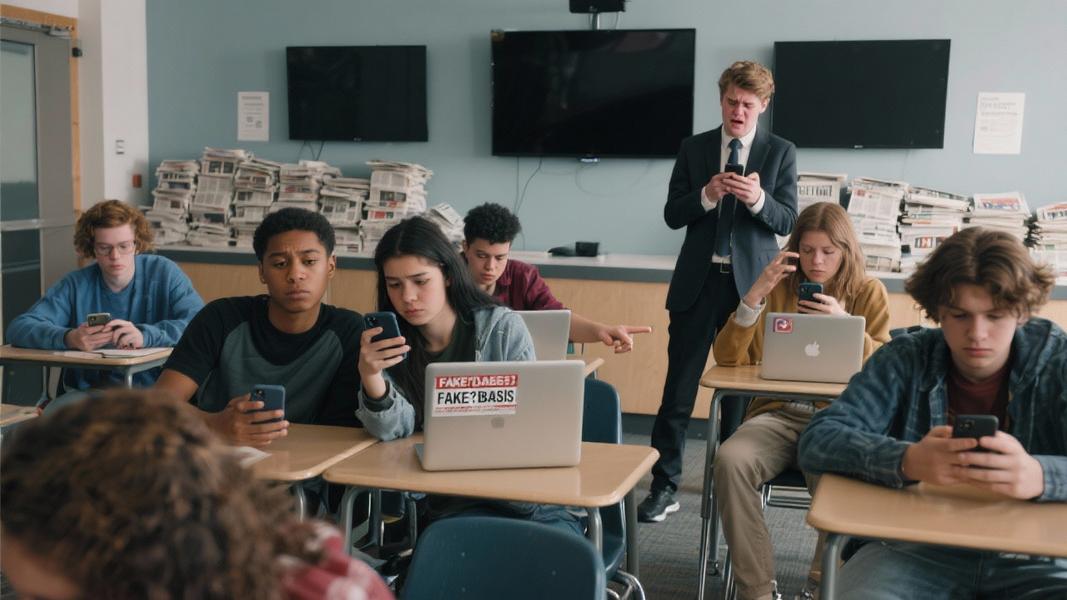
Trust in news media among American teenagers has plummeted to alarming levels, with 84% of teens describing today’s journalism with negative words like “biased,” “fake,” and “depressing,” according to a recent survey by the News Literacy Project.
The findings paint a troubling picture: more than half of American teens believe journalists regularly engage in unethical practices — making up quotes, paying sources, or doing favors for advertisers. Less than a third think reporters bother to correct errors, confirm facts, or gather information from multiple sources.
A Generation Lost to News?
How did we get here? The erosion of trust appears rooted in both real industry challenges and widespread misperceptions. Financial troubles have hollowed out newsrooms across America, leaving fewer journalists on duty and creating what Peter Adams, senior vice president of research at the News Literacy Project, calls a vacuum of visible legitimate journalism for young people.
“Some of this attitude is earned, but much of it is based on misperception,” Adams noted, pointing to the impact of political rhetoric labeling news as “fake.”
Even cultural touchpoints have vanished. Unlike previous generations who learned about journalism through films like “All the President’s Men,” which detailed how Washington Post reporters exposed the Watergate scandal, two-thirds of today’s teens can’t name a single movie or TV show depicting journalism.
Many teens mistakenly believe journalists work to protect powerful interests rather than hold them accountable. This perception persists despite evidence that student journalism has produced significant outcomes, including the removal of a football coach following investigative reports on hazing and racism.
Digital Natives, Different Expectations
The disconnect extends to how teens consume information. A 2023 Pew Research Center study of 1,453 U.S. teens found YouTube dominates as their primary platform, with 70% visiting daily and 16% reporting “almost constant” use. TikTok follows closely with 58% daily users, while traditional news sources barely register.
Research from the Reuters Institute reveals young people predominantly absorb news through social platforms, preferring video content and infotainment over traditional outlets they view as irrelevant to their lives.
“There’s very little movement in the direction of going to where people are, as opposed to expecting them to come to where you are,” said Cat Murphy, a 21-year-old University of Maryland journalism student. “The only way to turn it around is going to be to switch to doing things that captivate people today, as opposed to captivating people 20 years ago.”
Parents’ Influence and Education’s Impact
Howard Schneider, executive director of SUNY Stony Brook’s Center for News Literacy, sees another factor at play: family influence.
“The negativity, the feeling that news is biased, is just a reflection of how their parents feel,” Schneider explained. “The more exposed to news, legitimate news, the more their attitudes turn positive.”
That said, there’s evidence that education can shift perceptions. Students who participate in news literacy programs often develop more nuanced views of journalism and its role in society.
One 16-year-old student who completed such a program admitted his perspective had changed: “I’ve learned that there is definitely fact-checking in journalism. You guys are professionals and you have to tell the truth or you’d be fired. I thought you guys just did whatever you wanted and chose what to say about a topic.”
Rebuilding Trust
For aspiring journalists like Ogburn, who had to constantly explain her work to skeptical classmates, the crisis of confidence has only strengthened her resolve. “I want to be a journalist that people trust,” she said, “and I want to report news that makes people believe and trust in the media.”
Schneider has developed news literacy programs for school districts to help bridge this gap. When students tell him they get their news from YouTube, his response is direct: “No, you don’t.” He then explains where news originates and how to evaluate information critically.
The challenge for traditional media outlets remains formidable. Meeting young audiences where they already gather—on TikTok, Instagram, and YouTube—requires not just platform shifts but fundamental changes in presentation and engagement strategies.
For a generation raised on algorithms and endless scrolling, the future of news may depend less on whether journalists can maintain traditional standards and more on whether they can translate those standards into formats that resonate with an audience that’s already decided the old ways aren’t worth their attention.
