
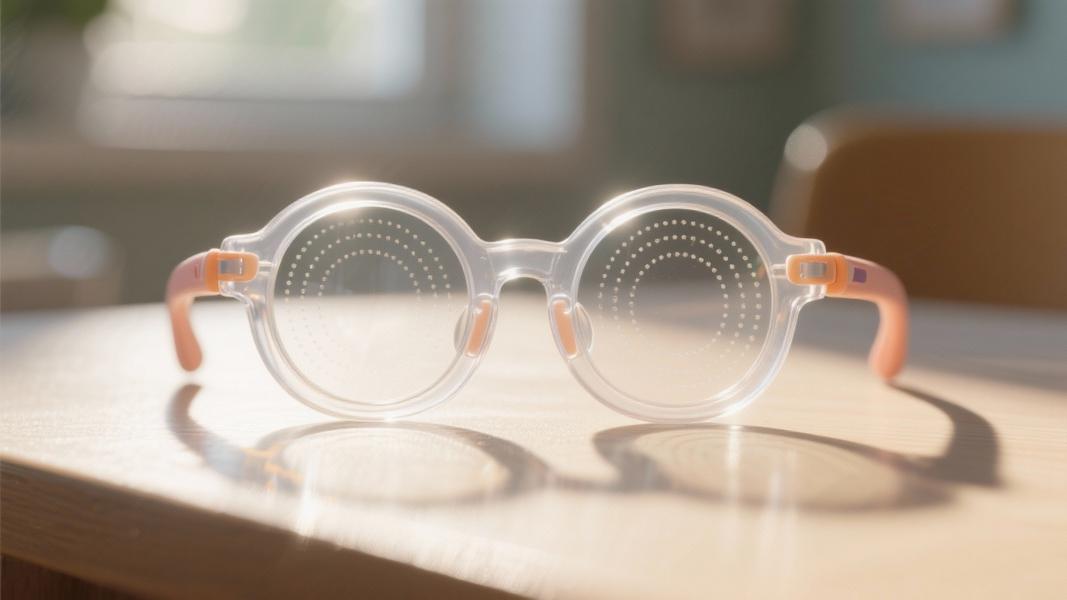
A groundbreaking solution for childhood nearsightedness has finally reached American shores. The FDA has authorized the first-ever eyeglass lenses specifically designed to slow the progression of myopia in children, potentially changing how we approach this common vision problem.
In September 2025, Essilor’s Stellest spectacle lens received FDA authorization for children aged 6 to 12, marking a significant milestone in pediatric eye care. The innovative lenses are the first of their kind approved in the United States to address the growing concern of myopia progression in young people.
How These Lenses Work
The Stellest lens features a unique design that goes beyond traditional vision correction. At its core is a 9mm clear central zone surrounded by concentric rings of tiny lenslets that create what experts call peripheral defocus. This specialized structure is believed to slow eye elongation — the physical process behind myopia progression.
What makes these lenses so promising? Clinical trial data shows remarkable results: a 71% reduction in myopia progression and a 53% reduction in axial length elongation over two years compared to traditional single-vision lenses. Perhaps just as importantly, researchers documented no serious adverse events during testing.
“This represents a significant advancement in how we approach childhood myopia,” said one eye care specialist familiar with the technology. “Until now, parents had limited options beyond traditional glasses that correct vision but don’t address progression.”
Fast-Tracked to Market
The FDA didn’t treat this as just another eyewear product. The agency granted the Stellest lens Breakthrough Device designation in April 2021, a status that expedited its development and review due to its potential for more effective treatment of a debilitating condition.
The authorization came through the De Novo premarket review pathway, establishing special controls for labeling and performance testing that reflect the lens’s status as a novel, low- to moderate-risk device. These regulatory steps highlight both the innovative nature of the technology and the FDA’s confidence in its safety profile.
Real-World Impact
For parents of myopic children, these numbers translate to meaningful differences in their children’s vision health. The FDA cited a 70% reduction in myopia progression after two years based on company data, with children also experiencing a 50% reduction in eye lengthening.
Could this be the turning point in pediatric myopia management? Experts think so. The Stellest lens offers the first spectacle lens option in the U.S. proven to slow myopia progression, providing a safe alternative to specialized contact lenses that might be challenging for younger children to manage.
“The approval of Stellest lenses represents a significant milestone for children with myopia and their families,” noted one pediatric ophthalmologist. “These lenses offer a non-invasive, easy-to-use option that integrates seamlessly into most children’s daily lives.”
For many families, the most appealing aspect might be the simplicity — the technology is embedded in what looks and functions like normal eyeglasses, requiring no special care routines beyond typical glasses maintenance. This practical approach makes it an attractive option for parents concerned about their children’s eye health but wary of more complex interventions.
With childhood myopia rates climbing worldwide, Stellest lenses arrive at a critical moment — offering a glimpse of how innovative approaches might help address what some health experts have described as an epidemic of nearsightedness among young people.
