
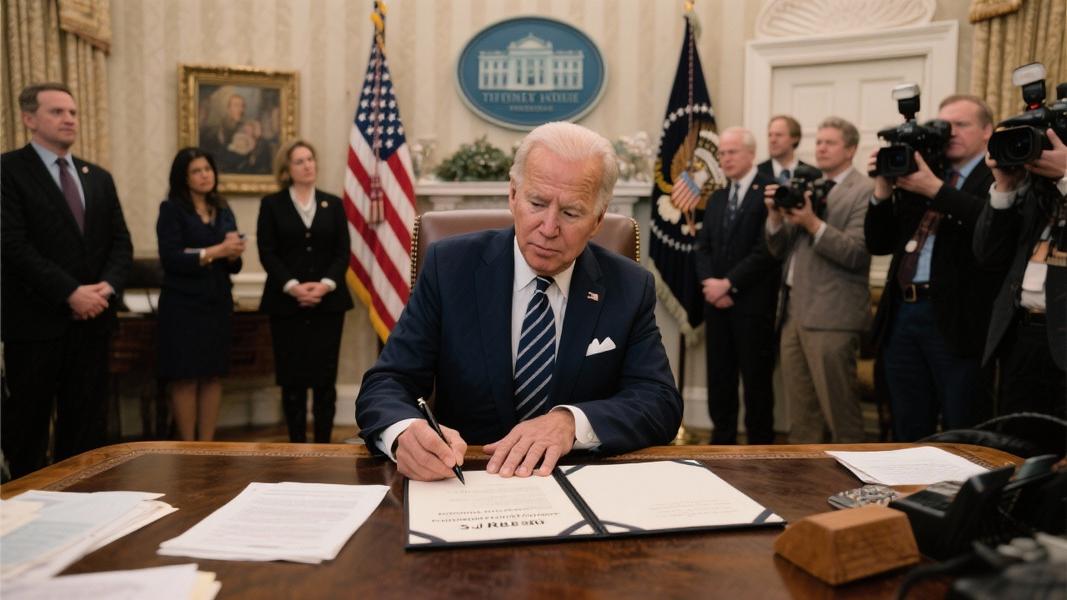
President Signs Resolution Nullifying BLM Rule on Alaska Petroleum Reserve
In a move that will reshape federal land management policies in Alaska, President Biden signed S.J.Res. 80 into law on Friday, December 5, 2025, effectively nullifying a Bureau of Land Management rule concerning the National Petroleum Reserve in Alaska Integrated Activity Plan Record of Decision. The signing marks the culmination of a months-long effort by congressional Republicans and some Democrats to overturn restrictions on oil and gas development in the 23-million-acre reserve.
Congressional Action Using Review Act Powers
The joint resolution, which passed the Senate on October 30 with a vote of 52-45, utilized the Congressional Review Act (CRA) to disapprove the BLM’s regulatory action. The CRA gives Congress a powerful tool to overturn federal rules with a simple majority vote in both chambers, bypassing the filibuster in the Senate.
“This resolution represents a significant shift in how we’ll manage one of America’s largest petroleum reserves,” said Senator Lisa Murkowski of Alaska, who championed the measure. “The previous BLM rule created unnecessary obstacles to responsible resource development that Alaska’s economy depends on.”
What exactly does this mean for Alaska’s petroleum landscape? The nullification effectively reverts management policies for the reserve to earlier, less restrictive guidelines that had been established before the Biden administration’s rule.
Timeline and Process
The resolution had a somewhat unusual timeline. Although it was presented to the President on March 10, 2025, the final approval didn’t come until early December — a delay that had some energy industry observers concerned about its fate.
Environmental groups had lobbied intensely against the resolution, arguing that the BLM’s original rule provided necessary protections for sensitive Arctic ecosystems and indigenous communities. Sierra Club Executive Director Dan Chu called the signing “a significant setback for climate policy” in a statement released shortly after the announcement.
The White House Office of Management and Budget had previously listed S.J.Res. 80 among key joint resolutions providing for congressional disapproval of rules, specifically identifying it as targeting the BLM’s activity plan for the Alaska reserve.
Implications and Reactions
Industry representatives have praised the move as a win for American energy independence. “This decision will help ensure continued access to critical energy resources while maintaining strong environmental standards,” said American Petroleum Institute President Mike Sommers.
But it’s not that simple. The nullification creates potential legal uncertainties, as federal agencies must now determine how to implement permitting and environmental review processes under the previous management framework.
Conservation advocates expressed dismay at what they view as a rollback of environmental protections. “The Arctic is already warming at four times the global average,” noted Kristen Miller, executive director of the Alaska Wilderness League. “Opening more of this sensitive area to drilling moves us in exactly the wrong direction on climate.”
With the 2026 midterm elections approaching, the decision also carries political significance. Several vulnerable senators from energy-producing states who voted for the resolution will likely highlight their role in overturning the BLM rule during their campaigns.
As Alaska prepares for potential new drilling activity, the question remains: will this resolution truly accelerate petroleum development in the state, or will market forces and the ongoing energy transition ultimately determine the fate of these Arctic reserves?
