
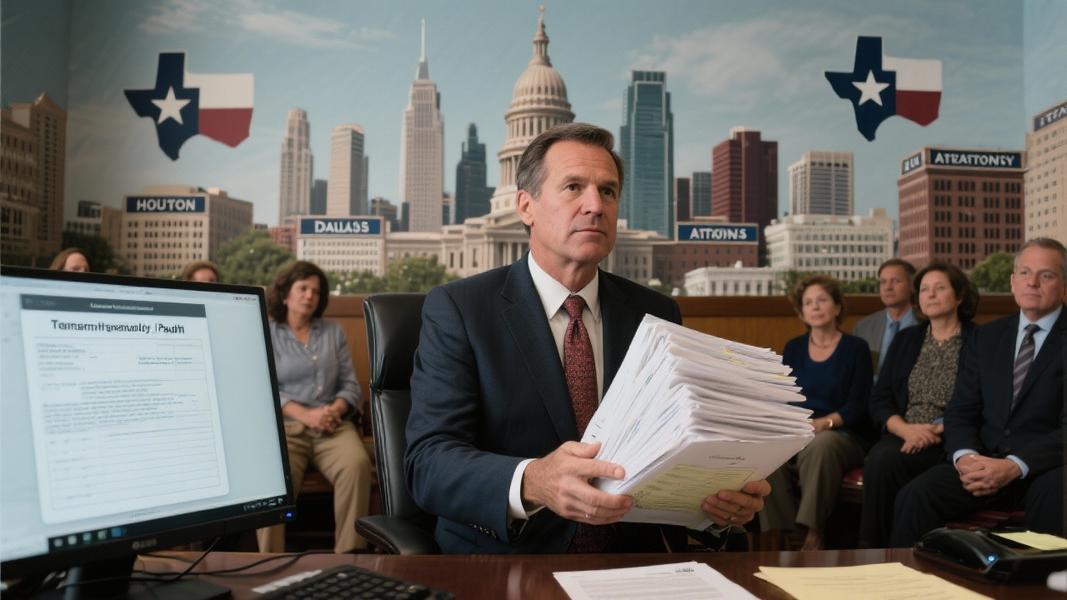
Texas Attorney General Ken Paxton is putting nearly 1,000 cities across the state under the microscope, launching a sweeping investigation into whether local governments are following financial transparency laws or illegally hiking property taxes.
The massive review, announced this week, targets municipalities of all sizes — from major metropolitan areas like Houston and Dallas to smaller towns — as Paxton’s office enforces Senate Bill 1851, legislation that restricts cities from raising property taxes above the no-new-revenue rate if they’ve failed to comply with audit requirements.
Financial Transparency Push
“Local officials will not be allowed to ignore the law, cover up their finances, and burden Texans with never-ending tax increases,” Paxton said in a statement. “Our cities and municipalities must prioritize transparency and minimizing the tax burden of every citizen across the state.”
The attorney general’s office has begun proactively requesting financial documents and audits from cities to ensure compliance. Texas law requires municipalities to file annual reports and financial statements by specific deadlines, but investigations have revealed that multiple cities have either missed these deadlines or submitted incomplete documentation.
This isn’t Paxton’s first move in this arena. Earlier this year, his office sent letters to four Texas cities — Odessa, La Marque, Tom Bean, and Whitesboro — ordering them to halt what he described as potentially illegal property tax increases due to noncompliance with audit requirements.
Cities Push Back
Not everyone is taking the attorney general’s actions lying down. The City of Odessa has publicly challenged Paxton’s approach, stating it was never provided a copy of the complaint that triggered the investigation nor given any opportunity to respond.
“It seems odd that the Attorney General would reach a conclusion prior to examining the documents,” Odessa officials said in a statement. “That is not the conduct that the people of Odessa expect from the Attorney General.”
The city also raised questions about the retroactive enforcement of SB 1851, noting the law should apply only to tax years starting after the legislation’s effective date.
High Stakes for Texas Cities
What happens if cities are found non-compliant? The consequences could be significant. Paxton has the authority to freeze a city’s tax rate for an entire year if he determines they’ve failed to meet audit requirements.
The investigation’s scope is remarkable, encompassing virtually all of Texas’s urban centers. Houston, Galveston, San Antonio, Dallas, Fort Worth, Lubbock, Wichita Falls, McAllen, Beaumont, Amarillo, El Paso, Corpus Christi, Laredo, Texarkana, Brownsville, Waco, and Tyler are all under review.
Beyond official investigations, Paxton’s office has created a complaint form that allows Texas residents to report suspected violations of SB 1851’s audit requirements, potentially turning citizens into watchdogs of their local governments.
Taxpayer Relief or Political Move?
While Paxton frames the investigation as a protection for taxpayers, the timing and scale have raised eyebrows among some municipal leaders. Is this a genuine effort to enforce transparency, or a broader political strategy?
“While many cities have already complied with these requirements, I’m launching this review to ensure that the law is universally followed, taxpayers are respected, and local government is accountable to all Texans,” Paxton said.
For now, nearly a thousand Texas cities find themselves under the attorney general’s watchful eye — with both their financial practices and potential future tax rates hanging in the balance.
