
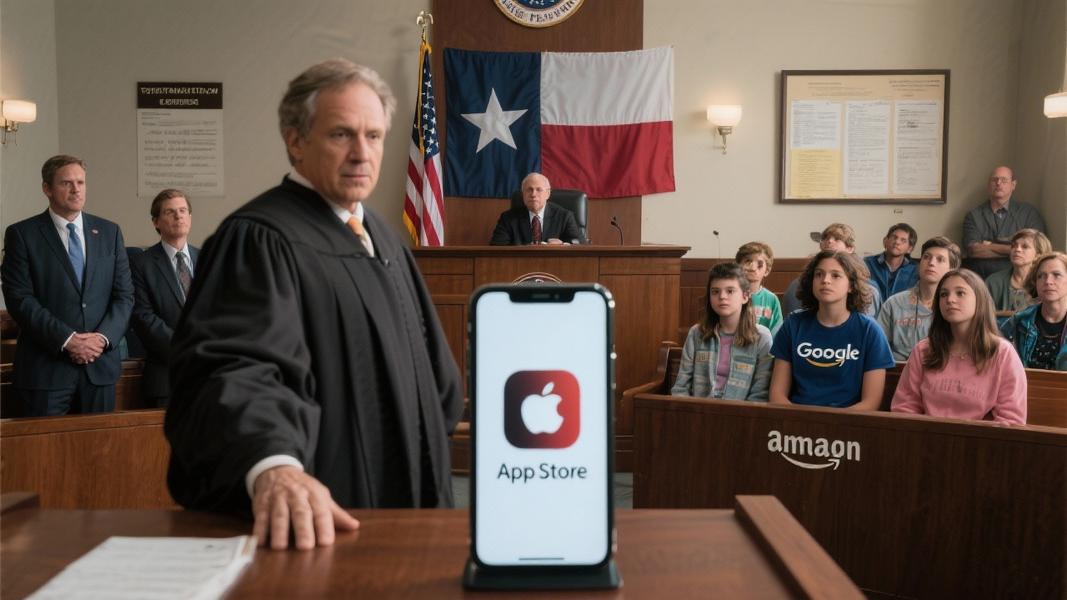
Federal Judge Blocks Texas App Store Age Verification Law on First Amendment Grounds
A federal judge has halted implementation of Texas’ controversial app store age verification law just weeks before it was set to take effect, ruling the measure likely violates the First Amendment rights of tech companies.
U.S. District Judge Robert Pitman issued a preliminary injunction against Texas Senate Bill 2420 — known as the App Store Accountability Act — which would have required app stores to verify the age of every Texas user and obtain parental consent for minors’ downloads beginning January 1, 2026. In his ruling, Pitman determined the law constitutes a content-based speech regulation subject to strict scrutiny, a high legal standard the state failed to meet, according to court documents.
What the law would require
The Texas legislation represents one of the most aggressive attempts yet to regulate how minors interact with mobile applications. Under the law, app marketplaces would be forced to verify every Texas user’s age, link children’s accounts to their parents’, and obtain explicit parental permission for each app download or in-app purchase — with potential civil penalties reaching a staggering $10,000 per violation, legal analysts note.
But Texas isn’t alone in this regulatory push. Three other states — California, Louisiana, and Utah — have enacted similar App Store Accountability Acts, creating a growing patchwork of state-level regulations governing how tech platforms interact with minors. These laws generally require platforms to implement age verification systems and create mechanisms for parental oversight of children’s digital activities.
What’s particularly controversial about these requirements? They mandate that app stores must not only verify users’ ages but also pass age range information (such as under 13, 13-15, 16-17, or 18+) directly to app developers, raising privacy concerns even as they aim to protect children, privacy experts have indicated.
Constitutional questions
Judge Pitman’s ruling highlights the tension between child protection goals and constitutional rights. By requiring companies to categorize and restrict content based on age, the law appears to function as a content-based speech regulation — exactly the kind of government intervention that typically faces the highest level of judicial scrutiny.
The injunction doesn’t permanently strike down the law, but it prevents enforcement while the legal challenge proceeds through the courts. Tech industry representatives have praised the decision as a victory for digital liberty, while supporters of the legislation argue it merely extends existing parental consent frameworks to the digital realm.
Could this ruling affect similar laws in other states? That remains unclear, but legal experts suggest Pitman’s First Amendment reasoning could provide a template for challenges to comparable legislation across the country.
The case underscores America’s ongoing struggle to balance technological innovation with child safety concerns — all while navigating constitutional protections that were crafted long before smartphones and app stores existed. As digital platforms continue evolving and children’s online presence grows, these legal battles may ultimately shape how the next generation experiences the digital world.
