
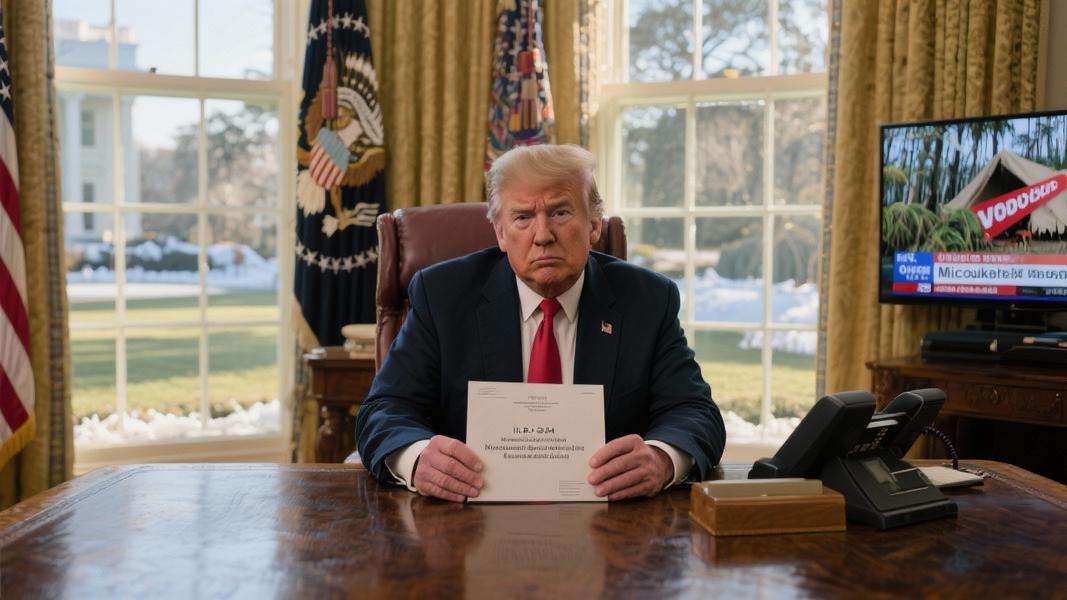
President Trump vetoed a bill that would have expanded protected tribal lands in Everglades National Park on Friday, citing both fiscal concerns and the tribe’s opposition to his immigration policies in an unusual blend of budgetary and political justification.
“I am returning herewith without my approval H.R. 504, the Miccosukee Reserved Area Amendments Act,” Trump wrote in his December 29 veto message, rejecting legislation that would have granted federal protection and flood mitigation for an unauthorized tribal settlement known as Osceola Camp.
Tribal Land and Political Tensions
The bill, which had passed through Congress with bipartisan support, aimed to amend the 1998 Miccosukee Reserved Area Act to include Osceola Camp within the tribe’s officially designated lands in the national park and require the Department of Interior to protect its structures from flooding — a project previously estimated to cost up to $14 million, according to White House statements.
But what might have been a straightforward land management decision quickly took on political dimensions. In his veto message, Trump specifically highlighted the Miccosukee Tribe’s stance on immigration policy as a factor in his decision.
“Despite seeking funding and special treatment from the Federal Government, the Miccosukee Tribe has actively sought to obstruct reasonable immigration policies that the American people decisively voted for when I was elected,” the president stated.
Unauthorized Development History
The Osceola Camp site has a complicated backstory. The settlement was constructed without authorization in 1935 in a low-lying area of what would later become Everglades National Park. The area was initially raised with fill material to serve as a family residence and gift shop, later becoming a site for air-boat rides, according to official documentation.
When Congress passed the Miccosukee Reserved Area Act in 1998, it authorized the tribe to permanently occupy a specific area within the national park — but that designation deliberately excluded Osceola Camp, where the tribe has since developed an unauthorized residential community with water supply and wastewater infrastructure that regularly faces flooding issues.
None of the current structures at Osceola Camp are over 50 years old, nor do they meet other criteria for listing in the National Register of Historic Places, the White House noted in its justification.
Political Fallout
Is this the first time a presidential veto has explicitly cited a tribe’s political positions as justification? The unusual move has already drawn criticism from tribal advocates and some lawmakers who see it as retaliatory rather than policy-driven.
The previous administration had developed plans to address the infrastructure challenges at Osceola Camp, with potential costs reaching up to $14 million, according to White House records. Trump’s veto effectively halts those plans.
The bill, formally titled the Miccosukee Reserved Area Amendments Act, would have expanded the tribe’s reserved area to include Osceola Camp within Everglades National Park, as outlined in congressional documents.
Congressional leaders have not yet indicated whether they will attempt to override the president’s veto, which would require a two-thirds majority in both chambers. For now, the Miccosukee Tribe’s Osceola Camp remains in legislative limbo — caught between environmental concerns, budget priorities, and the increasingly tangled web of immigration politics.
