
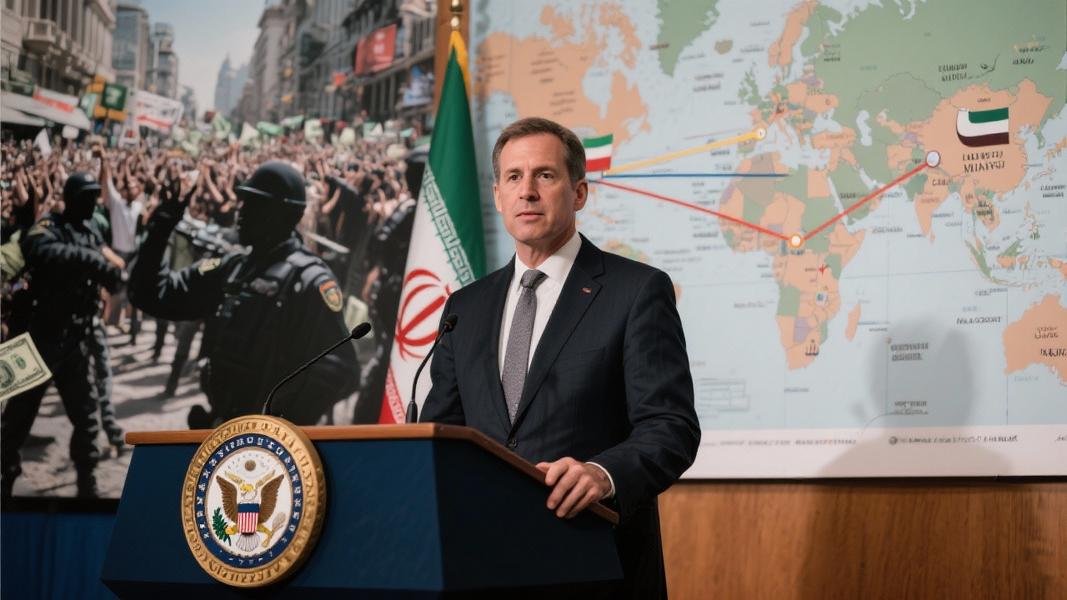
The Trump administration has slapped a new round of sanctions on Iranian officials and financial networks, targeting those involved in the violent crackdown on nationwide protests that have rocked the country since late December.
The U.S. Treasury Department’s Office of Foreign Assets Control (OFAC) announced Wednesday it had sanctioned several high-profile Iranian security officials, including Ali Larijani, Secretary of the Supreme Council for National Security, who allegedly coordinated the brutal suppression of demonstrations that began on December 28.
Treasury Secretary Scott Bessent didn’t mince words about the administration’s stance. “The United States stands firmly behind the Iranian people in their call for freedom and justice,” he stated. “At the direction of President Trump, the Treasury Department is sanctioning key Iranian leaders involved in the brutal crackdown against the Iranian people.”
The sanctions extend beyond individual officials. Eighteen people and companies involved in laundering money from Iranian oil sales through shadow banking networks tied to Bank Melli and Shahr Bank have been targeted, effectively cutting them off from U.S. property and business dealings.
Capital Flight and Maximum Pressure
What’s happening behind the scenes in Tehran? According to Treasury officials, there’s been a notable surge in capital flight by Iran’s ruling elite as protests intensify and tensions with the U.S. escalate. Bessent specifically highlighted this financial exodus amid growing unrest and threats of potential U.S. military action.
The sanctions are part of what appears to be a revived “maximum pressure” campaign against the Iranian regime, with the Trump administration targeting shipping, trading, and energy companies that support the government’s operations. Eleven individuals and the notorious Fardis Prison have also been blacklisted in this latest round.
Particularly troubling are reports from Fars province, where hospitals have been overwhelmed with gunshot victims following the government’s violent response to protesters. Four regional commanders in Lorestan and Fars provinces were sanctioned for their direct role in the crackdown.
“Treasury will use every tool to target those behind the regime’s tyrannical oppression of human rights,” Bessent added in his statement, emphasizing that the action came at President Trump’s direct instruction.
Symbolic Punishment?
But how effective will these sanctions really be? While the measures block U.S. assets and prohibit Americans from doing business with the designated individuals and entities, analysts note they remain largely symbolic since many targets likely have limited or no U.S. financial holdings to begin with.
The French newspaper Le Monde characterized the sanctions as part of a broader strategy by the Trump administration to isolate Iran economically and politically on the world stage.
Still, the public rebuke sends a clear message of support to protesters who have faced deadly force from security forces. Human rights groups have documented numerous cases of excessive violence against demonstrators since the protests began.
The Treasury’s move comes at a particularly volatile moment in U.S.-Iran relations, with regional tensions already heightened following a series of confrontations in the Persian Gulf and ongoing concerns about Iran’s nuclear program.
For ordinary Iranians caught between their government’s repression and international isolation, the sanctions represent yet another chapter in their country’s tumultuous relationship with the West — one that shows no signs of improving anytime soon.
