
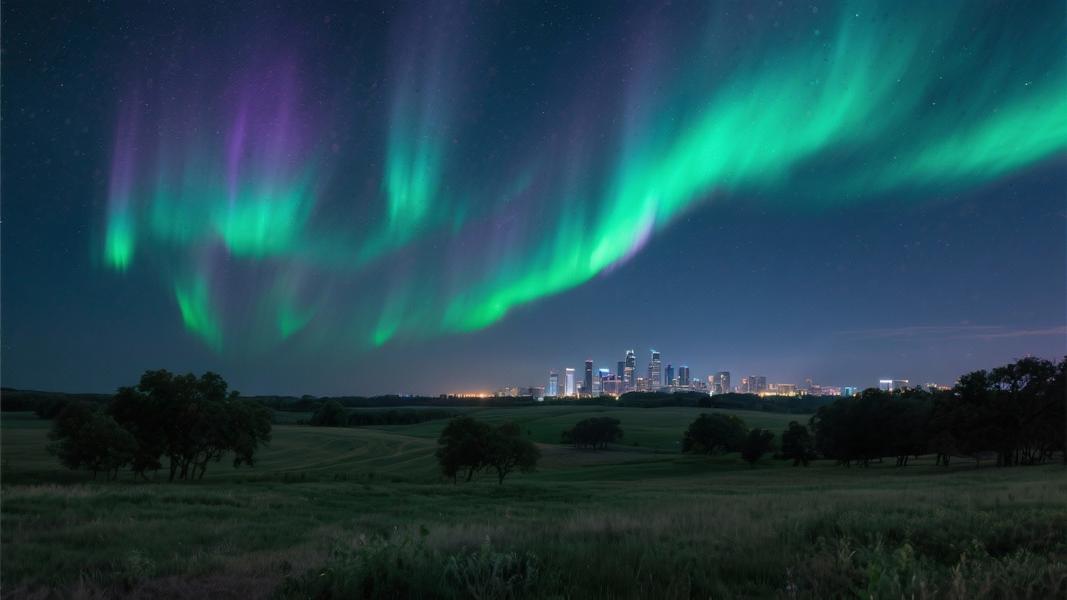
Look to the skies tonight — that mysterious glow on the horizon isn’t your imagination. A rare and powerful G4-level geomagnetic storm is currently battering Earth’s magnetic field, potentially bringing the spectacular northern lights to regions that almost never see this celestial phenomenon.
The National Oceanic and Atmospheric Administration (NOAA) has confirmed that a massive coronal mass ejection (CME) from the Sun is responsible for the unusual auroral activity that could be visible as far south as Alabama and northern Texas on Monday evening, according to weather forecasts.
Once-in-a-generation Solar Event
Professional Aurora Chaser Vincent Ledvina has been tracking this storm with growing excitement. “This is potentially the strongest solar radiation storm in over 20 years,” he explained, noting that more than 25 U.S. states have a chance to witness the northern lights tonight — a truly exceptional occurrence.
The storm’s unusual strength has created a perfect opportunity for millions of Americans who would typically need to travel thousands of miles north to witness this natural light show. Residents across much of the continental United States are now scrambling to find dark viewing spots away from city lights.
When exactly should sky-watchers be on alert? The peak viewing time is expected on Monday, January 19, 2026, with the most vibrant displays likely occurring after sunset and continuing into the early morning hours, according to meteorologists tracking the event.
Texas in the Aurora Zone
Perhaps most surprising is the potential for the northern lights to make a rare appearance in the Lone Star State. Texans — particularly those in northern regions of the state — may want to find a dark spot away from urban light pollution for a chance to witness this uncommon celestial display, meteorologists have advised.
This isn’t just a pretty light show. Geomagnetic storms of this magnitude can potentially disrupt satellite operations, power grids, and radio communications. NOAA officials have been monitoring potential infrastructure impacts, though no major disruptions have been reported so far.
What makes this particular storm so special? The G4 classification places it near the top of NOAA’s geomagnetic storm scale, which ranges from G1 (minor) to G5 (extreme). These classifications indicate both the visual reach of auroras and potential technological impacts.
The brilliant colors typically associated with auroras — greens, pinks, purples, and blues — are created when charged particles from the sun interact with gases in Earth’s atmosphere. The more powerful the solar storm, the more vibrant and widespread the resulting light display.
For those hoping to catch a glimpse tonight, experts recommend finding locations with minimal light pollution, keeping an eye on local weather conditions for cloud cover, and bringing patience — auroral displays can be unpredictable and may come in waves throughout the night.
As millions of Americans prepare to look skyward tonight, many for their first-ever chance to witness the northern lights, this rare solar event serves as a vivid reminder of our planet’s place in a dynamic solar system — and the spectacular shows that occasionally result when the sun flexes its electromagnetic muscle.
