
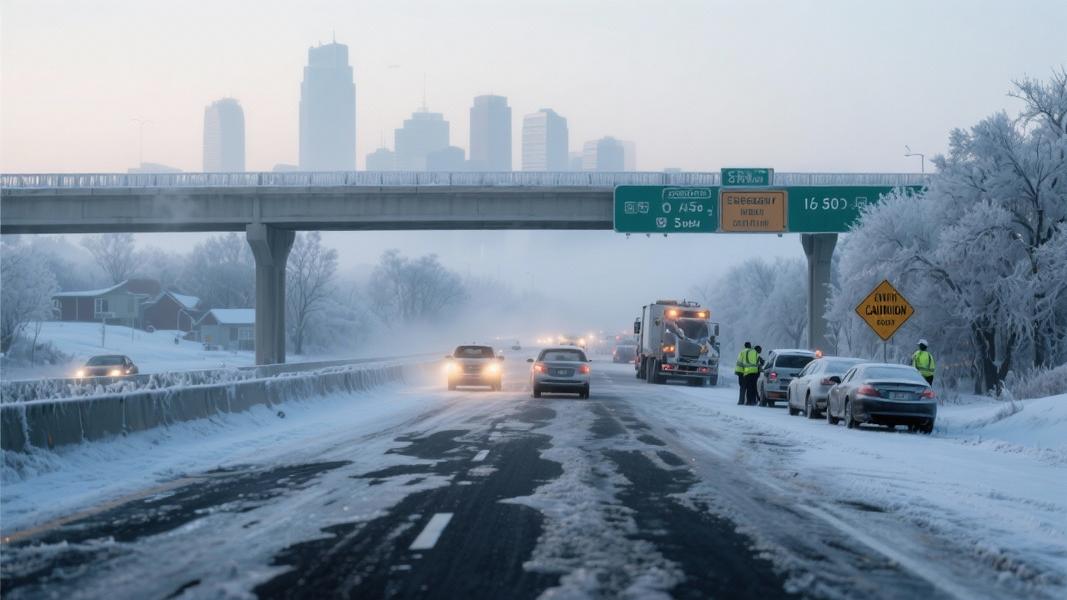
North Texas roads remain treacherous as ice lingers from weekend storm, officials warn drivers to stay home
Dangerous conditions persist across DFW metroplex
Patches of black ice and slick roads continue to plague North Texas Tuesday morning, creating hazardous driving conditions in the aftermath of the weekend winter storm that blanketed the region.
The Texas Department of Public Safety has urged residents to stay off roads entirely if possible, with particular caution advised for bridges and overpasses where ice accumulation is most severe. For those who must venture out, officials recommend checking real-time conditions through DriveTexas before departing.
How bad is it? Despite some melting that occurred Monday afternoon as temperatures briefly rose, overnight refreezing has made Tuesday morning commutes especially treacherous with conditions varying widely throughout the Dallas-Fort Worth area.
Specific trouble spots identified
Traffic is crawling at dangerously slow speeds in several ice-covered areas, particularly the Lake Worth Bridge construction zone and North Loop in Fort Worth. Multiple incidents have been reported on major thoroughfares including I-30, George Bush Turnpike, and the stretch from southern Waxahachie to Highway 287.
In Wise County, roads remain blanketed with a layer of ice Tuesday morning, though state authorities have made progress clearing and treating major highways in the area.
The consequences of ignoring these warnings can be severe. “In case you need up to tell you again — do not drive fast on the roads today! Here is an example of what happens if you do,” cautioned FOX 4 meteorologists, accompanying their warning with footage of vehicles losing control on icy surfaces.
Transportation officials emphasize that interchanges and overpasses present the greatest risk, as these elevated structures freeze first and thaw last. Even roads that appear clear may harbor nearly invisible patches of black ice, particularly on exposed surfaces.
Safety recommendations
For those who absolutely must travel, experts recommend maintaining significantly reduced speeds, leaving ample space between vehicles, avoiding sudden movements, and carrying emergency supplies including blankets, water, and fully charged phones.
The winter weather event serves as a stark reminder of the region’s vulnerability to ice storms, even as local authorities have deployed salt trucks and other resources to address the most heavily trafficked routes first. Still, complete clearance of secondary roads may take additional days depending on temperature fluctuations.
As one DPS trooper put it during a roadside interview: when it comes to North Texas winter driving, what looks merely wet could very well be ice — and that split-second misjudgment can mean the difference between arriving safely and not arriving at all.
