
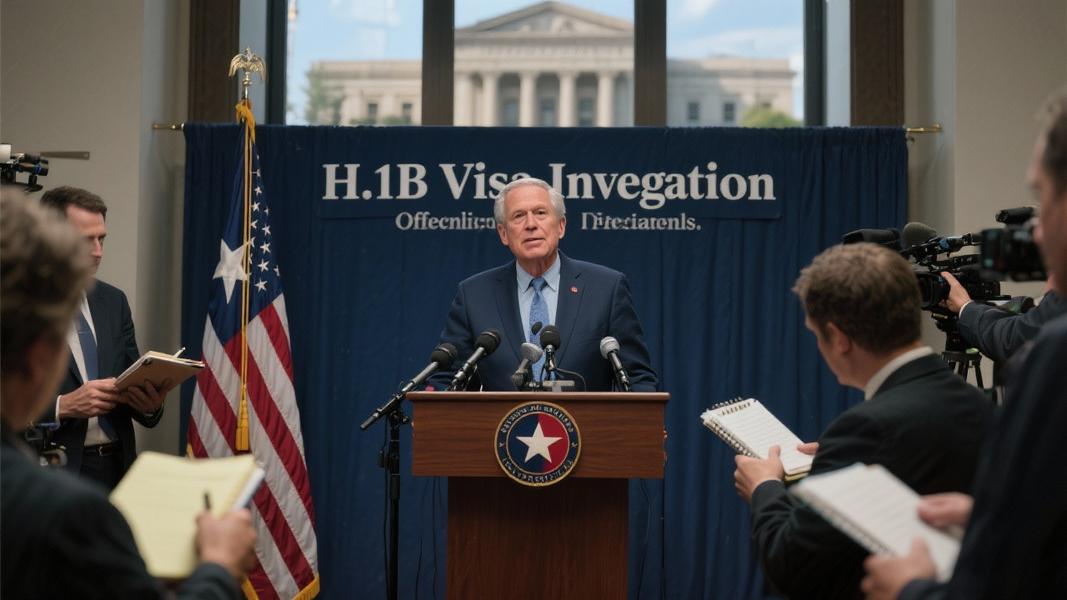
Texas Governor Greg Abbott has slammed the brakes on new H-1B visa applications across all state agencies and public universities, citing concerns over what he describes as potential “abuse” of the specialized worker program.
The sweeping directive, issued January 27, 2026, freezes all new H-1B visa petitions until May 31, 2027 — effectively through the end of the current legislative session — unless organizations receive explicit written permission from the Texas Workforce Commission. “The economy of Texas should work for the benefit of Texas workers and Texas employers,” Abbott declared in the announcement that has sent ripples through the state’s higher education and tech sectors.
Scrutiny and Skepticism
Abbott’s order doesn’t just freeze new applications — it demands accountability. State agencies and universities must now submit detailed reports documenting their H-1B visa usage, including the number of petitions filed in 2025, current visa holders, their job titles, countries of origin, visa expiration dates, and perhaps most tellingly, what efforts were made to hire qualified Texans instead.
“I don’t see any reason why we need any H-1B visa employees in our public schools in the state of Texas. But we’re going to find out if there’s some unique skill set or whatever the case may be,” Abbott stated in comments that suggest a deep skepticism about foreign worker necessity in public education.
What’s driving this sudden scrutiny? The governor’s office hasn’t provided specific incidents that triggered the investigation, but the move aligns with broader national debates about immigration and workforce policies.
Universities in the Crosshairs
Public universities appear to be particular targets of the governor’s concern. Financial records reveal that the Texas A&M University System spent approximately $3.25 million on H-1B visa sponsorships and related costs over roughly five years. By comparison, the University of Texas at Dallas invested about $1.1 million during a similar period, according to Texas Tribune analysis.
The timing puts significant pressure on institutions that rely on international talent, particularly in specialized STEM fields where American candidates can be scarce. Universities often use H-1B visas to recruit researchers and professors with specialized knowledge.
The governor expects an action plan to be delivered later this week from affected state entities, giving them precious little time to assess potential impacts and develop compliance strategies, border business outlets have reported.
Broader Implications
This isn’t just an administrative shuffle. For universities and agencies that rely on specialized international talent, the freeze could potentially disrupt hiring plans, research initiatives, and even classroom instruction depending on how long the restrictions remain in place.
Critics might see the move as politically motivated, coming amid heightened national tensions around immigration policy. Supporters will likely frame it as necessary oversight of taxpayer resources and protection of Texas workers’ interests.
The freeze notably comes at a time when many tech companies have also been reducing their reliance on H-1B visas amid broader industry layoffs and economic uncertainty. But in academia, where specialized knowledge often crosses borders, the impacts could be more immediately felt.
As state agencies scramble to compile their H-1B usage data before the governor’s deadline, the question remains whether this is a temporary audit or the beginning of a more permanent shift in how Texas approaches international talent in its public workforce.
