
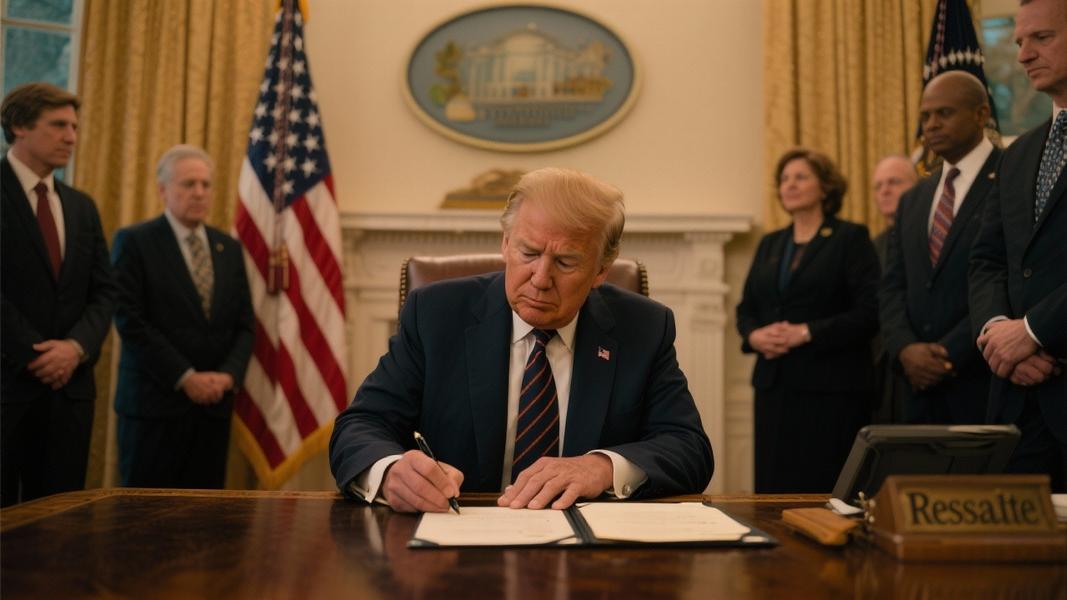
President Biden has signed the National Defense Authorization Act for Fiscal Year 2026 into law, capping months of legislative wrangling and establishing defense priorities for the coming year. The signing ceremony took place at the White House on December 18, 2025.
The sweeping legislation, formally known as S.1071, authorizes appropriations for Department of War programs, military construction, Department of Energy national security programs, and intelligence operations. The bill had been introduced in March by Senator John Cornyn (R-TX) and made its way through Congress along largely partisan lines.
Republican-Led Initiative
S.1071 emerged as a partisan Republican bill, first engrossed in the Senate on August 8, 2025, before navigating the complex conference process between the chambers. The legislation’s journey through the 119th Congress (2025-2026) reflects the ongoing tensions around defense spending priorities.
“This Act may be cited as the ‘National Defense Authorization Act for Fiscal Year 2026’,” states the House amendment to the bill, which underwent significant modifications before reaching the President’s desk.
What’s buried within the massive defense package? Among its many provisions, the legislation contains some unexpected directives, including a requirement for the Department of Veterans Affairs to disinter the remains of Fernando V. Cota from Fort Sam Houston National Cemetery, according to VoteSmart, a non-partisan voter information service.
Legislative Journey
The bill’s path through Congress wasn’t straightforward. After its March introduction, S.1071 passed the Senate by early August, then faced a more contentious process in the House where amendments were attached to the original text.
Defense authorization bills typically serve as vehicles for a wide range of priorities — some related to national security, others addressing specific constituency concerns. The Cota provision appears to fall into the latter category, though details about why his remains are being addressed in national defense legislation remain unclear.
The full text of the bill, now available through government publishing services, runs to hundreds of pages and covers everything from major weapons systems to personnel policies.
Despite partisan divisions that characterized much of the bill’s development, the NDAA has maintained its record as one of the few major pieces of legislation that consistently becomes law each year — a streak now extending more than six decades.
With the President’s signature now securing funding authorizations for 2026, attention will turn to the appropriations process that will actually allocate the money for the programs outlined in the defense blueprint.
