
Two Fort Worth police officers opened fire within days of each other — one on a darkened neighborhood street, another on a busy highway overpass — raising fresh questions about the dangers officers face and the split-second decisions that define modern policing.
Both incidents unfolded in March 2026, and both ended with wounded or dead suspects. Neither involved other civilians being hurt. But the circumstances couldn’t be more different, and together they paint a complicated picture of what Fort Worth officers are encountering on routine calls.
Gunfire on Bonita Drive
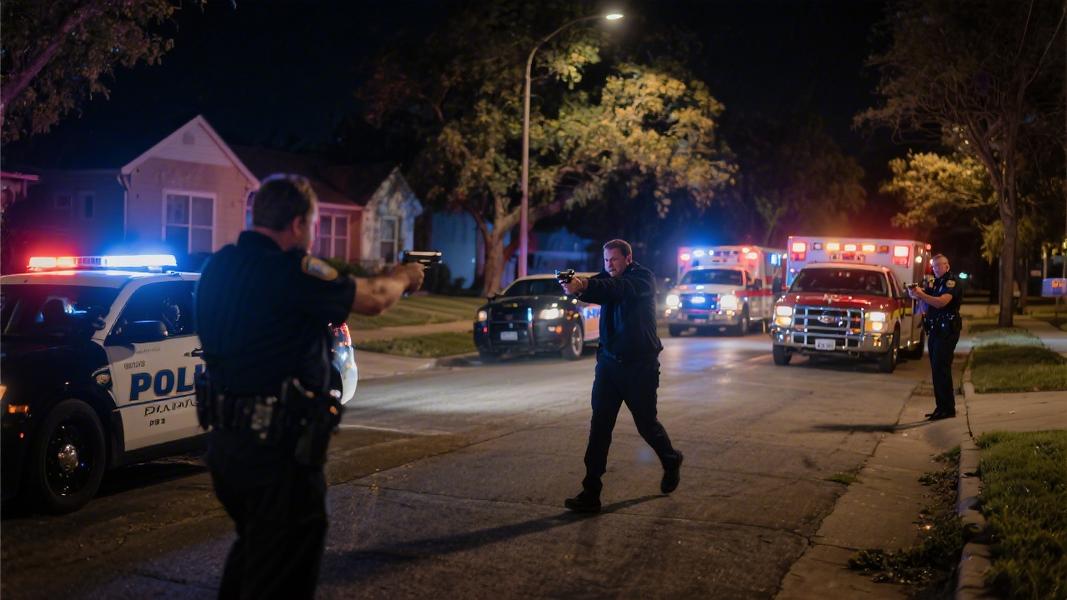
The first shooting happened just after 9:30 p.m. on Wednesday night on Bonita Drive near White Settlement Road, where officers had responded to a domestic disturbance call. What they found when they arrived was already dangerous: a man actively firing a weapon into the surrounding neighborhood, toward homes where people presumably were inside.
Officers ordered him to stop. He didn’t. According to details reported by the Star-Telegram, the armed suspect didn’t just ignore the commands — he kept walking directly toward the officers, gun still in hand. One officer fired. The suspect was treated at the scene and then transported to a hospital in critical condition. No officers or bystanders were injured.
That’s the part that often gets lost in the immediate aftermath of these stories. A man was firing a gun toward homes on a residential street at night, and somehow no one else got hit. Whether that’s good police work, luck, or both — it’s worth noting.
A Bridge, a Broken Bottle, and a Fatality
Then came March 12th. And this one’s harder.
At 4:03 p.m., a Fort Worth officer — a six-year veteran — was driving near the Highway 287 bridge at Maddox when he spotted something alarming: a man standing on the bridge, cutting himself on the neck with a broken bottle. This wasn’t a criminal call. It was a mental health crisis unfolding in plain view on a public overpass.
Fort Worth Police Chief Eddie Garcia described the moment directly. “What he saw was an individual who was cutting himself,” Garcia said, explaining that the officer stopped and tried to help. But before any intervention could take hold, the man ran toward the officer — broken bottle raised, the same one he’d been using on himself.
The officer shot him. Neighbors in the area heard two gunshots and watched from nearby as officers rushed to render aid. It wasn’t enough. The man was pronounced dead at 4:28 p.m. — just twenty-five minutes after the officer first spotted him. The highway was shut down for hours, not reopening until nearly 7:30 that evening.
The Broader Context
Still, both cases will go through the standard review process, as all officer-involved shootings in Fort Worth do. Chief Garcia has been publicly visible in both situations, which is notable in itself — a sign, perhaps, of a department trying to stay ahead of the narrative rather than react to it.
But it’s not that simple, especially in the highway case. The man on the bridge wasn’t threatening anyone but himself — at least not initially. Officers across the country have faced intense scrutiny for how they handle mental health crises, and advocates have long argued that armed patrol officers aren’t always the right first responders in those situations. Fort Worth, like many cities, is still grappling with that question.
Two shootings. Two very different calls. One department under the microscope — and a city left to figure out what, if anything, should change.
