
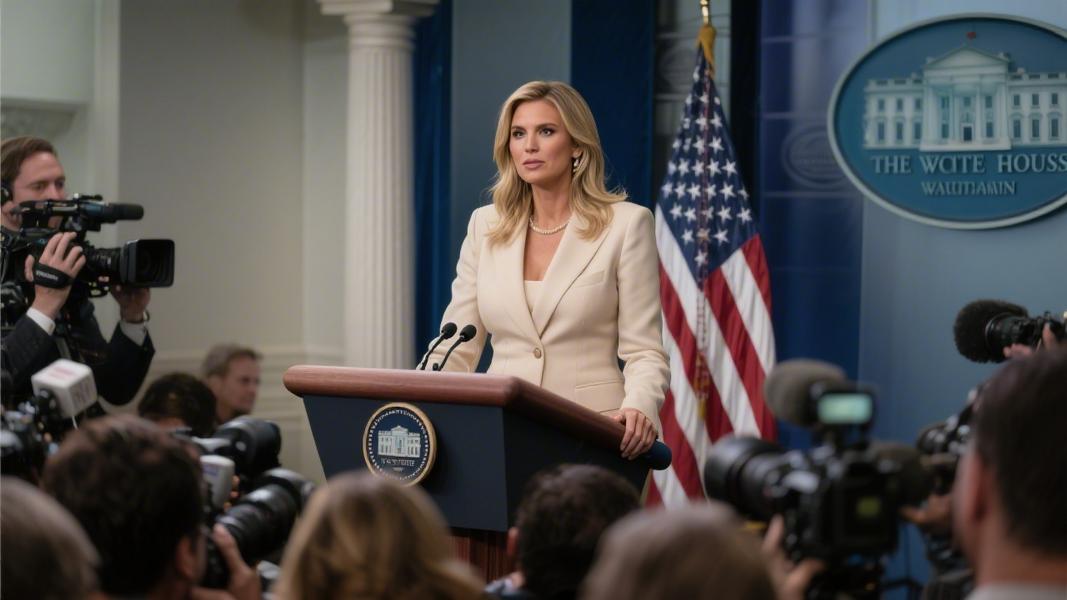
Melania Trump stepped into the spotlight Wednesday in a way few first ladies ever have — standing at the podium of the White House Grand Foyer to personally deny any connection to convicted sex trafficker Jeffrey Epstein.
In a televised address that caught Washington’s attention, the First Lady flatly rejected allegations linking her to Epstein and his associate Ghislaine Maxwell, calling on Congress to hold formal hearings for the victims of Epstein’s abuse. The remarks, delivered April 9, 2026, were striking not just for their content but for the setting: a sitting First Lady, at the White House, addressing one of the most toxic scandals to shadow American public life in recent memory.
A Flat and Unambiguous Denial
She didn’t hedge. She didn’t soften it. “I have never had any knowledge of Epstein’s abuse of his victims. I was never involved in any capacity,” Melania said, according to footage circulated widely after the address. The statement was direct — unusually so, even by the standards of a White House accustomed to carefully managed messaging.
For years, Epstein’s name has hung over figures across politics, finance, and entertainment like a storm that never quite breaks. The First Lady’s decision to address it head-on — publicly, on camera, from the Grand Foyer — signals that the pressure around these associations has reached a level the administration can no longer quietly absorb.
The Call for Congressional Action
Perhaps the most consequential element of Wednesday’s remarks wasn’t the denial itself. It was the demand that followed. Melania called for congressional hearings specifically aimed at giving Epstein’s victims a formal platform — a move that, if it gains traction, could reignite legislative scrutiny of a case that federal prosecutors closed years ago.
Whether Congress acts on that call is another matter entirely. Still, the optics of a First Lady publicly championing victims’ rights in the same breath as denying personal involvement is a calculated move — and one that her team clearly thought through. Fox News broadcast the White House remarks in full, while ABC News aired the key portions alongside analysis.
Why Now?
That’s the question a lot of people are asking. The Epstein case has been a political flashpoint for years, but the release of documents, ongoing civil litigation, and persistent public interest have kept it alive in ways that are difficult to manage through silence alone. The White House appears to have concluded that a direct, on-the-record statement — made formally, not through a spokesperson or a social media post — was the only way to get ahead of a narrative that keeps finding new oxygen.
It’s worth noting what Wednesday’s address was not. It wasn’t a press conference. There were no questions taken. The First Lady spoke, the cameras rolled, and that was it. Controlled. Deliberate. The kind of statement designed to be clipped, quoted, and referenced — which is exactly what happened almost immediately after, as footage spread across platforms within hours.
A Moment That Won’t Be Easily Forgotten
Whatever one makes of the politics behind it, the scene itself was genuinely unusual. First Ladies don’t typically step in front of cameras to address criminal scandals by name. Melania Trump did — and did so with a composure that suggested the address had been prepared long before it was delivered.
The victims she invoked, meanwhile, are still waiting. And that may be the line that lingers longest — not the denial, but the promise attached to it.
