
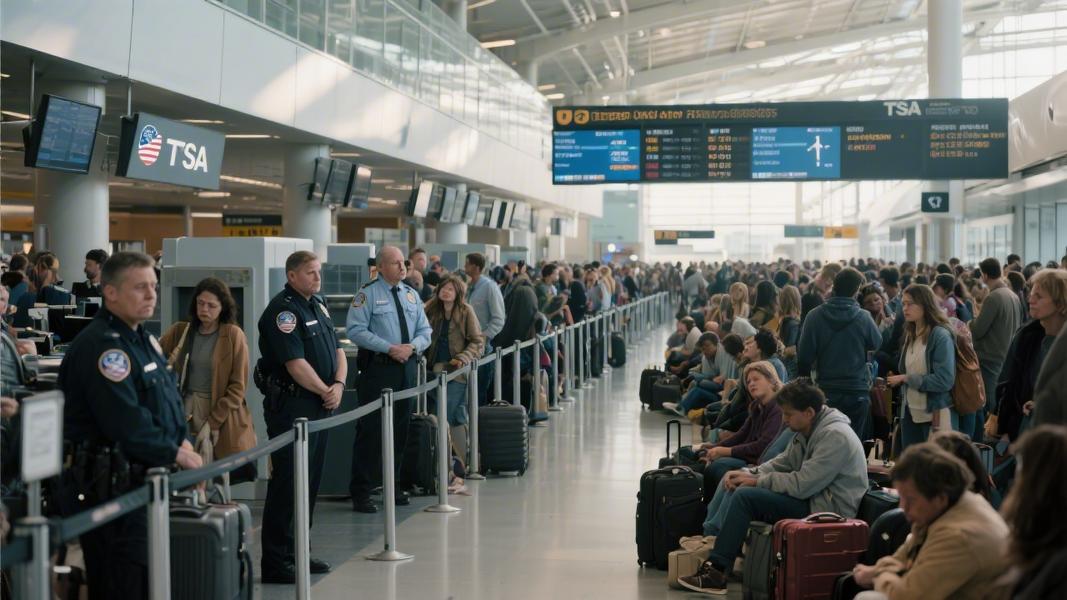
The Senate tried — and failed — again. For the fifth time in as many weeks, lawmakers could not break a political deadlock that’s left airport security in chaos and the Department of Homeland Security without funding for nearly 40 days.
The Republican-backed DHS funding bill went down 47-37 on Friday, well short of the 60 votes needed to advance. It’s a familiar result by now, but the consequences are anything but routine. TSA lines are stretching to breaking point, the U.S. economy has already absorbed an estimated $2.5 billion in losses, and there’s no obvious off-ramp in sight. The shutdown, which began in mid-February, has become one of the most disruptive funding standoffs in recent memory — and Washington, as of Friday, still doesn’t have a way out.
The Stalemate Holds
Democrats have made clear they’re not moving without concessions. The vote collapsed, as previous ones have, amid Democratic demands for reforms to Immigration and Customs Enforcement — pressure that intensified following a string of high-profile shootings in Minneapolis. “Democrats have been very clear what we are asking for here since late January, and our asks have not changed,” Sen. Patty Murray, the top Democrat on the Senate Appropriations Committee, said from the Senate floor Friday, according to reporting by ABC News.
Republicans, for their part, are furious. They’ve framed Democrats as willfully ignoring the real-world fallout of a shutdown they say the minority party is prolonging for political leverage. House Republicans had previously noted with open frustration that Senate Democrats seemed almost serene in dismissing shutdown warnings — even as the pressure mounted week after week.
TSA at the Breaking Point
How bad is it at the airports? Bad enough that Transportation Secretary Sean Duffy disclosed this week that roughly 10 percent of TSA workers are calling out sick — five times the normal absentee rate. Screeners, working without pay, are simply not showing up. The result is longer lines, missed flights, and fraying nerves from coast to coast.
“TSA is reaching a boiling point. We need to reopen it as quickly as possible,” Senate Minority Leader Chuck Schumer warned this week. It’s a striking statement from a Democratic leader whose own caucus has now blocked the funding bill five times — and one that illustrates the peculiar political bind both parties now find themselves in. They all say they want this over. And yet.
The economic toll is accelerating. The DHS shutdown has already cost the U.S. economy an estimated $2.5 billion, with analysts cautioning that airport delays alone are driving a growing share of those losses. Every week this drags on, that number climbs.
Congress Feels the Heat — Literally
There was one moment of bipartisan agreement this week, though it arrived with a sharp edge. The Senate passed a bill to strip members of Congress of their expedited TSA screening privileges — the kind of perks that have let lawmakers breeze past the very lines their constituents are now stuck in for hours.
Sen. John Cornyn of Texas didn’t mince words about why he thought the measure was necessary in the first place. “The only reason I can fathom, other than being completely out of touch, that our Democrat colleagues would do this is not all members of Congress are being forced to experience the same mess of their own making,” he said. The Senate voted to eliminate those privileges entirely — a symbolic, if modest, gesture toward shared sacrifice.
Still, it’s worth noting the irony: the same body that can’t agree on funding the agency responsible for airport security managed to quickly agree on making their own airport experience worse. Progress, of a kind.
What Comes Next
The fifth failed vote marks nearly five weeks of a shutdown with no clear resolution on the horizon. Both sides are digging in. Democrats want ICE accountability measures attached to any deal; Republicans say those demands amount to holding border security hostage. Neither characterization is entirely wrong, and neither side is blinking.
The airports will get worse before they get better. The economic losses will keep mounting. And somewhere in a Senate hallway, a lawmaker who just voted against a DHS funding bill will now have to wait in the same security line as everyone else — which is, at the very least, a start.
