
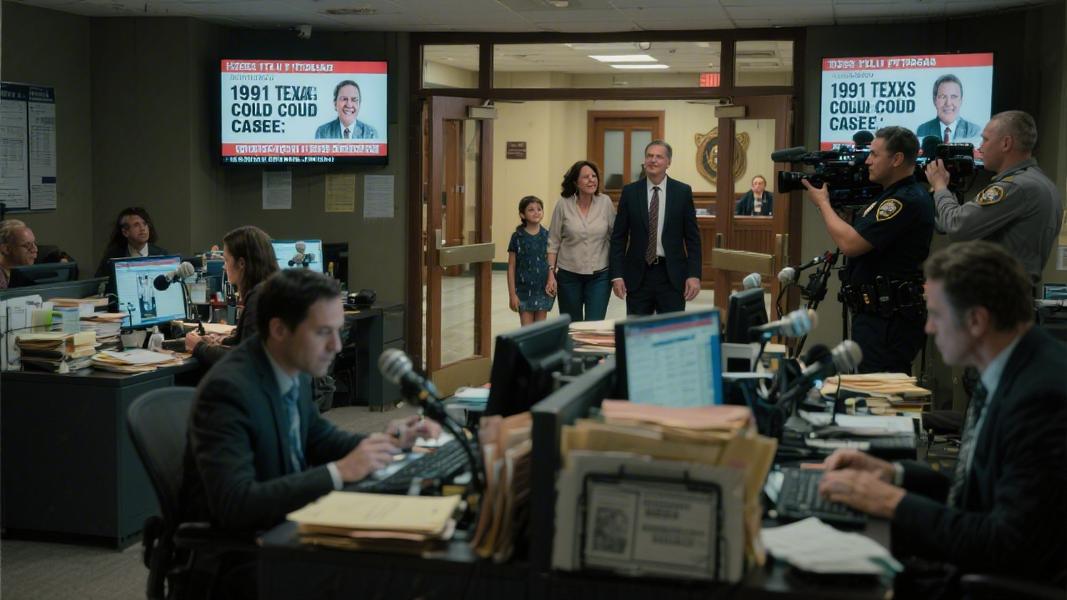
A Texas grand jury has declined to indict a 63-year-old woman in a cold case murder that sat unsolved for more than three decades — a case that only cracked open because a group of college students took a second look.
The Tarrant County grand jury issued a “no bill” last week, refusing to indict Janie Perkins on a capital murder charge connected to the 1991 death of 25-year-old Cynthia Gonzalez. The decision effectively halts what had been a high-profile prosecution — one built, in part, on the work of criminology students at the University of Texas at Arlington. For the Perkins family, it’s a relief. For Gonzalez’s loved ones, it’s another door closing on a case that has never fully been answered.
A Cold Case, Reopened by Students
Gonzalez was reported missing on September 17, 1991, after leaving her Arlington home. She worked as an adult entertainer and had left to meet a client. Five days later, her body was discovered in rural Johnson County — shot multiple times, already decomposing. The case went cold. Decades passed.
Then Arlington Police did something unusual. They partnered with UTA students enrolled in a criminology course, asking them to review the old case files. What the students found — or perhaps more accurately, what they helped investigators see more clearly — reignited suspicion around Perkins. She reportedly lacked an alibi, had failed two polygraph examinations, and had allegedly made incriminating statements over the years.
New witness accounts emerged as well. Those witnesses claimed Perkins had admitted involvement in the murder, offering details that investigators said matched the physical evidence. Police concluded she had either participated in or facilitated the kidnapping and killing.
The Complicated History Between the Two Women
Here’s where it gets personal. Gonzalez and Perkins weren’t strangers — they were friends. And they’d both been romantically involved with the same man: Rocky Sanchez. That connection sat at the center of the investigation’s theory of motive. Sanchez, for his part, told reporters he’s still processing it all. “I don’t even know if I could explain, you know, the feelings, feelings he’s now reliving in Arlington,” he said — a sentence that, tangled as it is, says everything about what this case has cost people emotionally over 34 years.
The Arrest — and the Bond
U.S. Marshals tracked Perkins to Azle, Texas, locating her on November 6, 2025. Two days later, on November 8, she was formally arrested on a capital murder warrant following consultation with the Tarrant County District Attorney’s office. She was released after posting a $150,000 bond.
Still, the legal machinery moved quickly in her favor. The grand jury’s no bill means there will be no trial — at least not on these charges, and not now.
The Defense Responds
Perkins’ attorney, D. Miles Brissette, welcomed the outcome with measured language. “The Perkins family is grateful to the Tarrant County Criminal District Attorney’s Office and to the members of the Grand Jury for taking the time to conduct a thorough, evidence-based review,” he said. It’s the kind of statement that’s designed to say very little while sounding like it says a lot — but the underlying point is real enough. A grand jury looked at the evidence and said it wasn’t enough.
That’s the catch with cold cases. Time erodes more than just physical evidence. Witnesses age, memories shift, and the clean narrative investigators build can unravel under the scrutiny of twelve citizens in a closed room.
What Comes Next
For now, the murder of Cynthia Gonzalez remains technically unsolved. No one has ever been convicted. The UTA students who helped breathe new life into the investigation did their part — and their contribution was genuine, whatever the legal outcome. But a no bill isn’t an exoneration, and it isn’t a conclusion. It’s a pause.
Somewhere in Tarrant County, a family is still waiting for something that looks like justice. Thirty-four years in, they’re still waiting.
