
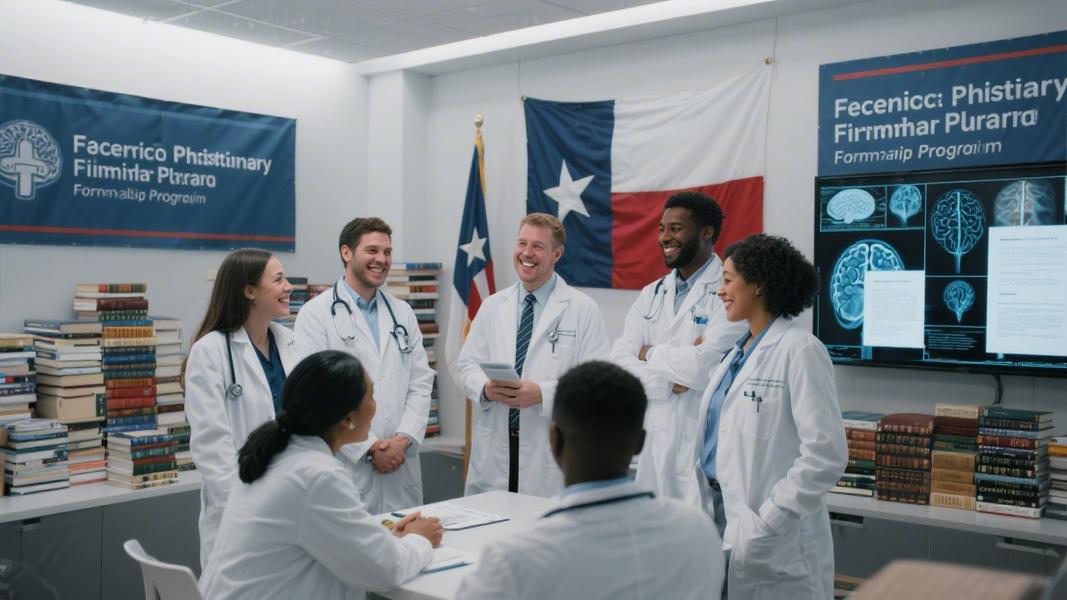
Texas is writing a $5 million check for the next generation of forensic psychiatrists — and nine of the state’s top medical institutions are cashing in.
Governor Greg Abbott announced the grants this week, directing funds to nine Texas medical training centers through the state’s new Forensic Psychiatry Fellowship Program. Each institution receives $555,555 to develop, expand, or administer accredited one-year fellowship programs in the field — a subspecialty that sits at the crossroads of psychiatric medicine and the legal system. The money comes from the Texas Higher Education Coordinating Board, which is administering the program in line with the governor’s broader push to expand mental healthcare access statewide.
Who’s Getting the Money
The list of recipients reads like a who’s who of Texas medicine. Included are Baylor College of Medicine in Houston, Texas Tech University Health Sciences Center in Lubbock, Texas Tech University Health Sciences Center El Paso, The University of Texas at Austin, UT Health Science Center at Houston, UT Health Science Center at San Antonio, UT Health Science Center at Tyler, UT Medical Branch at Galveston, and UT Southwestern Medical Center in Dallas. Geographically, the spread is intentional — from the Panhandle to the Gulf Coast, from the border to the Piney Woods.
Abbott didn’t mince words about the ambition behind the funding. “Texas remains steadfast in increasing access to mental healthcare across our state,” he said. “These grants will create opportunities for our renowned higher education institutions to develop the next generation of healthcare leaders.” He also thanked the Coordinating Board for its continued work — a nod to the administrative machinery that quietly keeps these programs running.
Why Forensic Psychiatry, and Why Now
Forensic psychiatry isn’t exactly dinner table conversation. But it matters enormously — these are the specialists who evaluate defendants’ mental competency, advise courts, assess risk in criminal cases, and treat patients whose mental illness has collided with the justice system. Texas, with one of the largest prison populations in the country, has a particular need for trained professionals in this niche. And for years, the pipeline has been thin.
Higher Education Commissioner Wynn Rosser put it plainly: “All nine recipients highlighted innovative programs and strong collaboration with other institutions in their grant applications, demonstrating a shared commitment to make Texas a national leader in forensic psychiatry.” That’s not just boilerplate. The emphasis on collaboration is notable — fellowship programs in highly specialized fields often struggle in silos, and the Coordinating Board appears to have rewarded applicants who demonstrated cross-institutional thinking.
Part of a Larger Legislative Bet
The forensic psychiatry funding didn’t arrive in isolation. During the 88th Texas Legislative Session, the Coordinating Board received the $5 million allocation alongside a wave of other mental health investments — including a staggering $280 million for the Texas Child Mental Health Care Consortium and $28 million for the Loan Repayment Program for Mental Health Professionals, which helps incentivize practitioners to work in underserved areas of the state. Taken together, the scope of the legislative commitment is significant — even if implementation will take years to show results.
Still, money doesn’t automatically build a workforce. Fellowship programs take time to spin up, accreditation has its own timelines, and recruiting the right faculty isn’t simple in a subspecialty this narrow. The institutions receiving these grants will need to move quickly if the state’s ambitions are going to translate into actual practitioners working in courtrooms and correctional facilities across Texas.
What Comes Next
The THECB will oversee the grants as they’re put to work — a role the agency has played across a range of mental health workforce initiatives in recent years. Whether the fellowships can meaningfully shift the state’s forensic psychiatry capacity will depend on how aggressively the recipient institutions build out their programs, and whether graduates ultimately stay in Texas rather than taking their credentials elsewhere.
That’s the real question, isn’t it? Texas can train them. Whether it can keep them is a different challenge entirely — and one no grant announcement has yet solved.
