
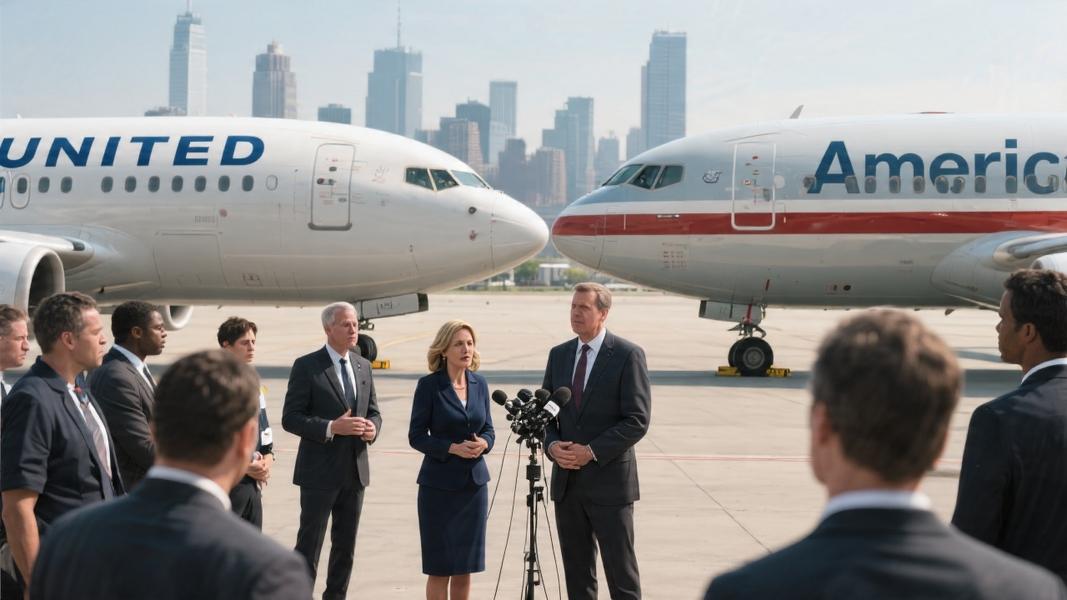
The airline industry is once again staring down the barrel of a megamerger — and almost nobody seems to want it. Almost.
Reports of a potential merger between United Airlines and American Airlines have set off alarm bells across Capitol Hill, consumer advocacy groups, and the traveling public, raising serious questions about what a combined carrier would mean for ticket prices, competition, and the future of commercial aviation in the United States. If it were to happen, the deal would create a mega-carrier described as roughly twice the size of Delta — a stunning consolidation in an industry that’s already been accused of squeezing passengers for years.
Bipartisan Pushback, Rare and Immediate
It’s not often that Senator Elizabeth Warren and Senator Mike Lee agree on anything. But the prospect of a United-American tie-up managed to do it. Both senators came out swinging against the deal, warning that it would gut competition, push fares higher, and undercut workers across the industry. “If United and American were to merge, airlines would face less pressure from rivals to keep the cost of flying down, and airlines across the industry could raise ticket prices and fees even higher,” the senators warned. Their concerns extended beyond consumers — smaller carriers, they argued, could find themselves frozen out of key gates at major airports, further entrenching the dominance of whoever survives the consolidation.
American Airlines, for its part, moved quickly to distance itself from the whole conversation. The carrier said it was “not engaged with or interested in any discussions regarding a merger with United Airlines,” and characterized such a deal as negative for both competition and consumers. A flat denial — though in this industry, those have a habit of aging poorly.
The Antitrust Mountain
Even setting aside American’s denial, the regulatory path here would be brutal. Analysts and watchdogs have been quick to point out that the Biden-era Justice Department blocked the far smaller JetBlue-Spirit merger on antitrust grounds — and a United-American combination would dwarf that deal by every conceivable measure. The overlap between the two carriers spans some of the country’s most trafficked corridors: Chicago, Los Angeles, New York, Washington. Secondary hubs like Philadelphia, Phoenix, and Charlotte would face intense pressure too, with consumers in those markets potentially left with far fewer meaningful choices at the gate.
The numbers are almost hard to process. William McGee, an aviation and travel fellow at the American Economic Liberties Project, put it bluntly. The idea that we would have one airline responsible for four out of 10 flights every day is “beyond horrific,” he told CNN. That’s not hyperbole for effect — it’s a rough approximation of what a combined United-American operation could look like in practice, given the two carriers’ combined domestic footprint.
Loyalty Programs, Credit Cards, and a Data Behemoth
Here’s the part that doesn’t always make the headlines but matters enormously to the economics of the deal: loyalty programs. A merged United-American would instantly become the largest airline loyalty data platform in the world — a treasure trove of consumer behavior that banks and credit card issuers pay billions to access. But that scale cuts both ways. Both carriers have lucrative co-brand credit card partnerships — United with Chase, American with Citi and Barclays — and combining those programs would create serious disruption, likely forcing a renegotiation of deals worth tens of billions of dollars in revenue.
Still, for all the financial complexity, it’s ordinary travelers who are paying the closest attention. Reactions from passengers have been decidedly mixed — some expressing skepticism that a bigger airline would ever translate into a better flying experience, others wondering aloud whether the chaos of a merger would make things measurably worse before they got any better. That’s a reasonable concern. Mergers in this industry have a long track record of turbulence — delayed flights, degraded service, and years of integration headaches — before any promised efficiencies materialize, if they ever do.
What Comes Next
The deal may be hypothetical for now. American insists it’s not happening. But the fact that the conversation has gotten loud enough to prompt a bipartisan Senate response and a formal denial from a major carrier suggests the idea is circulating somewhere with enough seriousness to warrant attention. Regulators, labor unions, and consumer advocates are already signaling they’d fight it hard.
The airline industry has been through this before — the Delta-Northwest deal, the United-Continental merger, the American-US Airways combination that created the current version of American. Each time, the pitch was efficiency, competitiveness, better service. Each time, passengers were left wondering when exactly those benefits were supposed to arrive. That’s the catch — in aviation, consolidation has a way of delivering on its promises to shareholders long before it delivers on anything for the person in seat 34B.
