
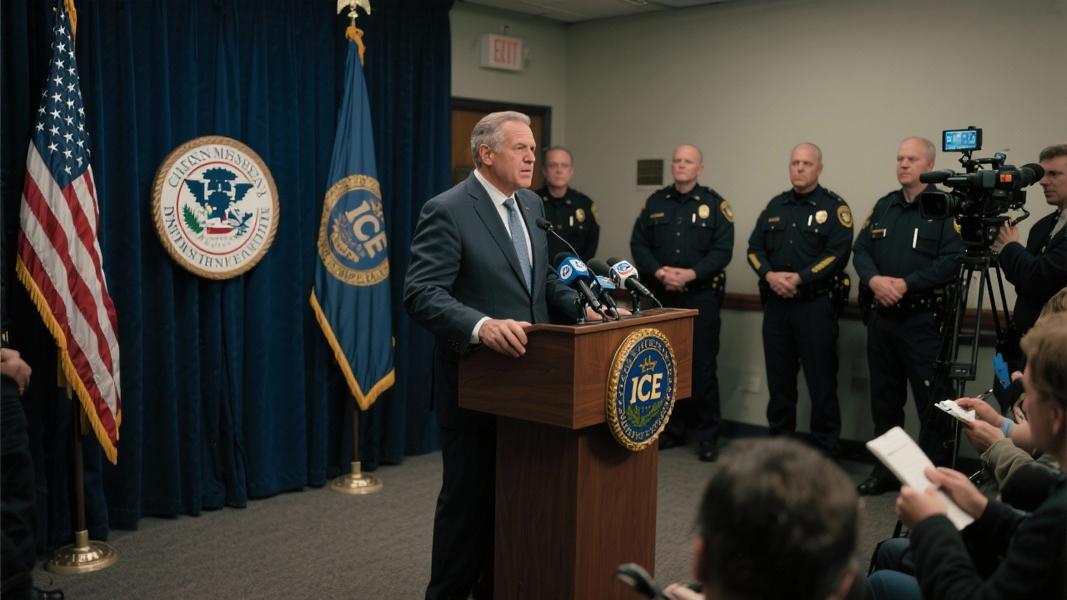
The Biden administration is pulling back federal immigration agents from Minnesota, marking a significant shift in enforcement strategy that could signal a new approach to immigration policy in the northern border state.
Border Czar Tom Homan announced the immediate withdrawal of 700 federal officers from Minnesota, citing unprecedented cooperation with local authorities, according to a report published by Fox 9.
The drawdown includes a mix of ICE, Border Patrol, and Customs and Border Protection agents, effectively reducing the federal headcount in the Twin Cities to around 2,000 from previous surge levels. The move comes after months of heightened federal presence that had drawn both criticism and support from local communities, as confirmed in a recent briefing.
Cooperation as Currency
Why the sudden change? The withdrawal appears to be the fruit of intensive negotiations between federal officials and local authorities. At the center of these talks: a potential legal agreement that would allow Minnesota counties to honor ICE detainers without judicial warrants and hold inmates for up to 48 additional hours — a key priority for federal immigration enforcers, as documented in recent proceedings.
“The withdrawal of law enforcement resources here is dependent upon cooperation,” Homan stated plainly, making clear that this drawdown comes with strings attached. His comments, recorded by ABC News, underscored that access to jails for “safer targeted enforcement” remains a non-negotiable condition of the federal pullback.
The scale of federal presence before this reduction was substantial. More than 3,000 immigration agents had been working throughout Minnesota under what officials dubbed “Operation Metro Surge” — a deployment that raised eyebrows for its intensity in a northern border state, the LA Times noted in their coverage.
A Delicate Balance
For communities across Minnesota, the announcement represents a complex trade-off. The reduced federal footprint may ease tensions in immigrant communities that had reported heightened fear and reduced engagement with local authorities. But the accompanying cooperation agreements between local jails and ICE could mean more consistent enforcement against specific targets.
What remains unclear is whether this approach will become a template for other states. The administration’s willingness to reduce visible enforcement in exchange for behind-the-scenes cooperation could signal a broader strategy shift as the White House navigates the politically charged waters of immigration policy.
For now, Minnesota serves as the test case for what might be called “cooperative enforcement” — fewer agents on the streets, but potentially more systematic coordination behind jail walls.
