
A police officer shot in the neck. Gunfire raking across a federal detention facility. And, tucked inside suspects’ cars, twelve sets of body armor. What unfolded in Alvarado, Texas last July wasn’t a spontaneous outburst — it was, according to federal prosecutors, a carefully orchestrated act of political violence.
At least 21 people now face charges connected to the July 2025 attack on a U.S. Immigration and Customs Enforcement detention facility in Alvarado, Texas, following a series of court hearings that have peeled back the layers of what investigators are calling a premeditated, coordinated assault on federal law enforcement. The Prairieland Detention Center — which holds between 1,000 and 2,000 detainees — became the target of a group whose alleged planning, gear, and ideology point to something far more organized than a protest gone wrong.
A Coordinated Strike, Not a Chaotic Crowd
Between 10 and 12 individuals, dressed head-to-toe in black military-style clothing, descended on the facility under cover of darkness. Some were caked in mud. They fired fireworks at the building, damaged vehicles, and sprayed graffiti — “ICE pig,” “traitor,” and strings of profanity — apparently to draw officers outside. Then the real shooting started.
An Alvarado police officer, later identified as Officer Gross, was shot in the neck by a gunman positioned in the nearby woods. Eleven shell casings were recovered from that shooter’s position alone. Separately, another gunman unleashed 20 to 30 rounds at unarmed correctional officers. Gross, remarkably, is back on duty.
FBI Special Agent Clark Wiethorn told the court the attack was a described “coordinated attack” planned days in advance — backed by evidence pulled from Signal encrypted chat logs, recovered weapons, tactical gear, and anti-government propaganda posters found at the scene and in defendants’ vehicles.
What They Left Behind
The inventory of items law enforcement recovered reads less like a protest kit and more like a tactical loadout. Investigators found a jammed AR-style rifle, two-way radios, spray paint, masks, goggles, gloves, flyers, fireworks — and that flag, the one that noted “Resist Fascism. Fight Oligarchy.” Twelve sets of body armor were seized across the scene and from vehicles belonging to the defendants.
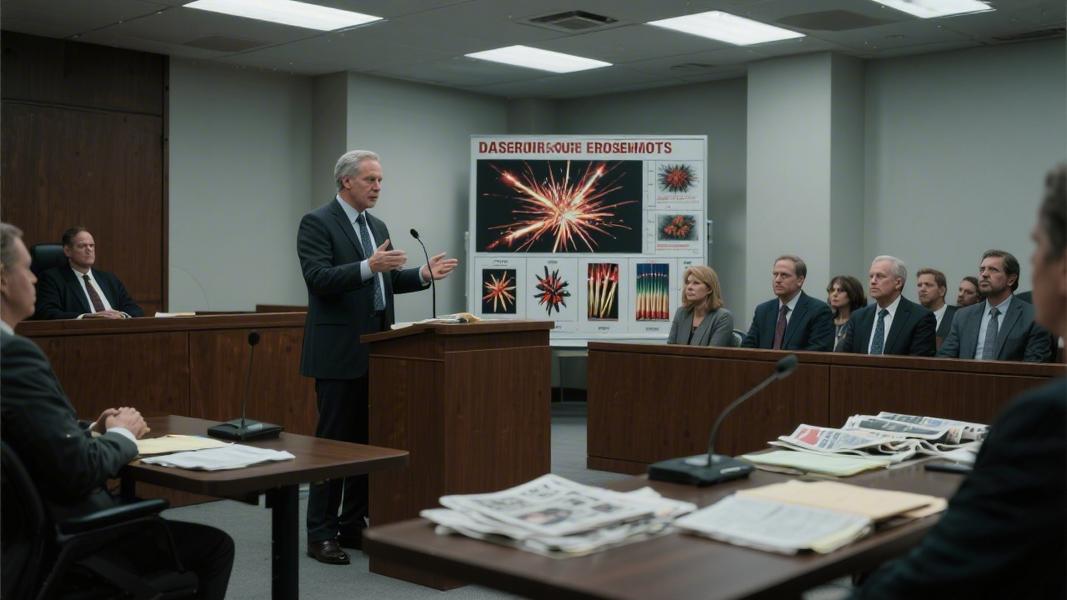
An explosives expert took the stand to address the fireworks specifically, testifying that they weren’t the kind you’d find at a Fourth of July stand. They were, the expert said, called “dangerous explosives” capable of causing a fire. That distinction matters legally — and it matters for understanding just how serious this operation appears to have been.
The Ringleader and the Ideology
At the center of it all, according to the FBI, is a man identified as Song — described by agents as a cult-like leader whose followers embraced antifa and anarchist ideologies. Song’s DNA was reportedly recovered from a green mask found at the scene. Investigators say the group communicated through encrypted messaging apps and operated with a level of discipline that alarmed federal authorities from the moment they began piecing the night together.
Still, it’s worth noting: federal charges are allegations, and defendants are presumed innocent. But the evidence presented at the preliminary hearing was substantial enough that a federal judge sent the case to a grand jury — a signal that prosecutors believe they have the goods.
The Charges
Ten of the defendants face the most serious counts: attempted murder of a federal officer and related firearms offenses, according to the announced Department of Justice charges. The remaining defendants face a range of related offenses tied to their alleged roles in the attack. Federal prosecutors in the Northern District of Texas are handling the case, and by all indications, they’re treating it as a top priority.
The broader proceedings have also raised questions about the detention facility itself — its size, its visibility as a political flashpoint, and whether federal sites like it are adequately protected against organized, armed opposition. Those are questions Congress and DHS will likely be asked to answer in the months ahead.
What Comes Next
With the case now heading to a grand jury and a 21st defendant recently added to the roster, this story is far from over. Prosecutors are still building out the full picture of who planned what, who pulled triggers, and who drove the getaway cars. The showed footage and forensic evidence — shell casings, DNA, Signal messages — suggests investigators have been methodical. Whether that translates into convictions is a question for a jury.
But here’s what’s already undeniable: on a July night in a small Texas town, a group of people showed up armed, armored, and apparently ready to kill federal officers over an immigration policy they opposed. Officer Gross took a bullet to the neck and lived. The next officer might not be so lucky — and that, more than any ideology or banner, is what this case is really about.
