
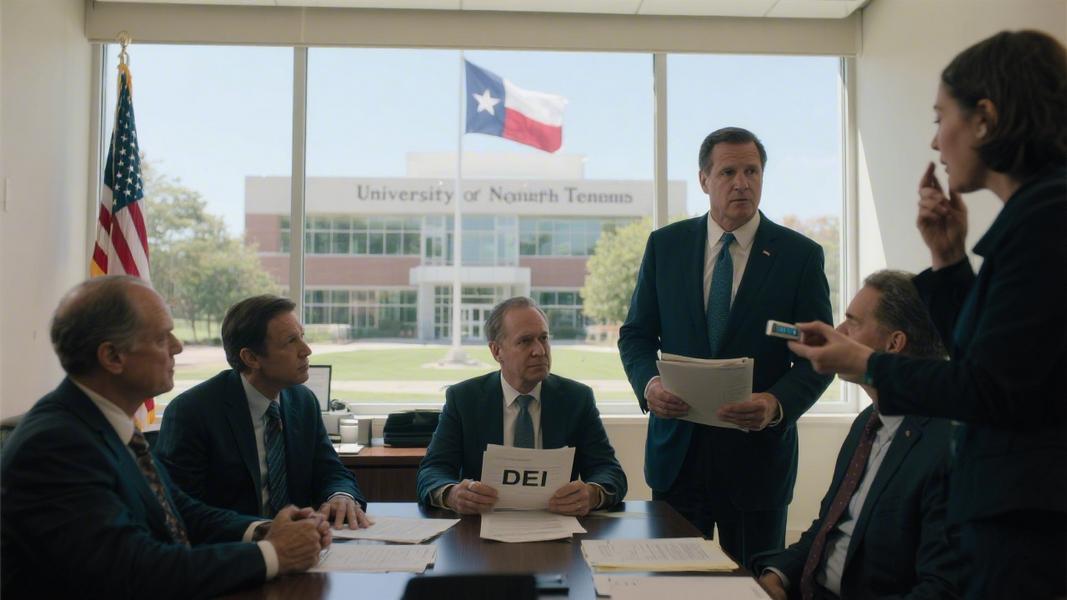
Texas Attorney General Ken Paxton opened an investigation into the University of North Texas after students reportedly celebrated the death of conservative firebrand Charlie Kirk — and what followed was a collision of politics, principle, and more than a little irony.
The probe, launched in the fall of 2025, put UNT squarely in the crosshairs of the state’s top law enforcement official. Paxton’s office zeroed in on the university’s handling of left-wing campus organizations — specifically the Revolutionary Student Union and the American Iron Front — and what he characterized as the school’s failure to hold students accountable for their reaction to Kirk’s death in September of that year. The stakes, at least in Paxton’s framing, were significant: the integrity of Texas’s public university system itself.
Paxton Draws a Hard Line — Then Steps Back
The attorney general didn’t mince words early on. “Groups that promote violence cannot be allowed at Texas universities, and I will pursue every legal option to stop them,” he declared, framing the investigation as a matter of campus safety and institutional accountability. It was aggressive language, the kind that tends to play well in certain political circles — and it set expectations for a confrontation.
But it’s not that simple. Weeks after launching the investigation, Paxton appeared at UNT himself and struck a noticeably different chord. Rather than doubling down on the threat of punishment, he acknowledged the constitutional realities he’d seemed to sidestep earlier. “That’s free speech,” he told the audience, referring to the students’ celebration of Kirk’s passing. “But it’s also sickening.” It was a softer tone — a recognition, perhaps, that the legal ground beneath the investigation was shakier than the initial announcement suggested.
The Free Speech Tension No One Wanted to Say Out Loud
Here’s the uncomfortable part. Kirk, in life, was widely celebrated by conservative leaders as a champion of free expression on college campuses — a crusader against what he and others saw as liberal orthodoxy stifling dissent. So when those same leaders moved to investigate and potentially discipline students for expressing views they found offensive, free speech advocates took notice. Critics were quick to point out the contradiction, and legal experts noted the tension between honoring Kirk’s legacy and pursuing action against speech that, however distasteful, almost certainly falls within First Amendment protections.
It’s a tension that doesn’t resolve cleanly. Celebrating someone’s death is ugly. It’s the kind of thing that makes people recoil regardless of political affiliation. But the legal standard for what a public university can punish — and what a state attorney general can compel it to punish — is a different question entirely, and one that Paxton’s own later remarks seemed to quietly concede.
What Comes Next for UNT
The university, for its part, found itself navigating a situation that no administrator would envy: caught between a politically charged state investigation and the constitutional obligations that govern any public institution. How it ultimately responds — and whether Paxton’s office finds actionable violations — could set a precedent for how Texas handles campus political expression going forward.
The investigation was still ongoing as the attorney general’s speech at UNT made headlines, raising questions about whether the probe had shifted in purpose or scope. A formal inquiry launched with fire and brimstone that later softens into a speech acknowledging First Amendment protections is, at minimum, an unusual arc.
Still, Paxton’s willingness to say the quiet part out loud — that what the students did was protected speech, even if he found it repugnant — may be the most revealing moment in the entire episode. Because it suggests that even in the heat of political grievance, the law has a way of reasserting itself. Whether that’s reassuring or simply the floor of a very low bar is, perhaps, a matter of perspective.
