
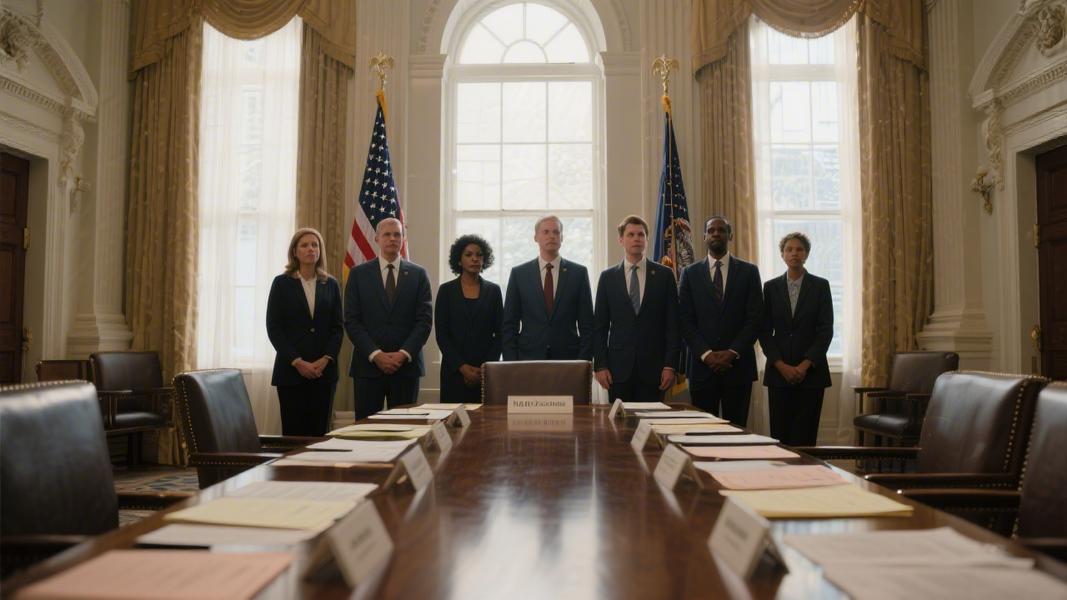
The White House moved quietly but deliberately this week, sending a fresh slate of judicial nominations to the Senate that would fill seats across federal district courts and the District of Columbia’s own Superior Court — a batch of appointments that signals the administration isn’t letting the calendar slow it down.
In total, eight individuals have been put forward for federal and local judicial positions. Six are nominated as Associate Judges in the Superior Court of the District of Columbia, each carrying a 15-year term — the kind of appointment that quietly shapes justice in the nation’s capital for a generation. The remaining nominations span three states: Ohio, Texas, and Florida, each receiving nominees for U.S. District Judge seats in their respective federal districts.
The Full Roster
Leading the D.C. contingent are Michael Christopher DiLorenzo, Craig Edward Leen, Christine Michelle Macey, and John Barlow Timmer — all nominated for Associate Judge roles in the Superior Court. That court handles everything from felony criminal cases to family law matters for hundreds of thousands of D.C. residents, so these aren’t ceremonial posts. The nominations were confirmed in official documentation reviewed by this outlet.
On the federal side, Michael J. Hendershot is tapped for the Northern District of Ohio. Down in Texas, the Southern District would see two new faces if the Senate concurs: Arthur Roberts Jones and John George Edward Marck. And in South Florida — a district notorious for its complex caseload of financial fraud, immigration matters, and high-profile criminal trials — Jeffrey T. Kuntz has been put forward for a district judgeship.
Why It Matters
Eight names. That’s it, on the surface. But federal judgeships are lifetime appointments, and Superior Court seats stretch 15 years — long enough that the political winds that blew someone into office will have shifted multiple times before these judges step down. That’s the quiet power of the confirmation process, and it’s why these nominations, however routine they may appear on a Tuesday news cycle, carry real weight.
The Southern District of Texas, in particular, has been a pressure point for years — handling a disproportionate share of immigration-related litigation that has drawn national attention. Adding two judges there isn’t just administrative housekeeping. It’s a signal, intentional or not, about where the administration sees institutional strain.
Still, nominations are just the opening move. Each of these individuals must clear the Senate Judiciary Committee before a full floor vote — a process that can drag on for months, or in contentious cases, considerably longer. Some nominees sail through. Others don’t.
What Comes Next
So what should we expect? Realistically, the D.C. Superior Court nominees may face a somewhat smoother path than their federal counterparts. Local judicial nominations sometimes attract less partisan heat than district court seats, which can become proxies for broader ideological battles — particularly when the districts in question have been flashpoints in major litigation.
That said, it’s not that simple. D.C. nominations carry their own political complexity, given the city’s unique federal-local governance structure. And with the Senate calendar already crowded, timing could be as decisive as any senator’s vote.
The nominees themselves — DiLorenzo, Hendershot, Jones, Kuntz, Leen, Macey, Marck, and Timmer — now enter a waiting game that is, in many ways, as much a test of institutional patience as it is of their qualifications. Courts don’t run on nominations alone. They run on confirmations. And in Washington, that distinction has never mattered more.
