
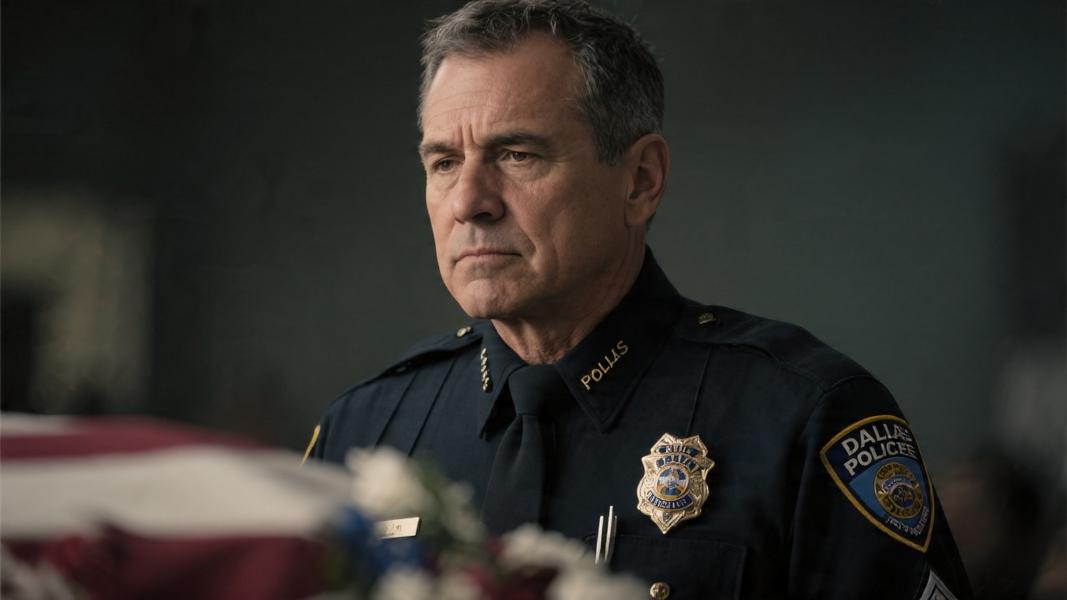
Three public servants and a passenger are dead, and the tragedies keep coming — each one unfolding at altitude, on a tarmac, or somewhere in between, in a grim stretch that has rattled law enforcement and aviation communities across North Texas.
Within the span of just days, Dallas and the broader DFW region lost a veteran police corporal, an airport police sergeant, an American Airlines first officer, and a Kentucky man whose family says a flight crew’s inaction may have cost him his life. The deaths are unrelated in cause, but their proximity in time has made the losses feel cumulative — and for some departments, almost unbearable.
Dallas Police Mourns Senior Corporal Christopher Blow
Senior Corporal Christopher Blow, a Dallas Police Department veteran who joined the force in 2013 and most recently served in the Vice Unit, died following an off-duty in-flight medical emergency. He had spent more than a decade working the streets of Dallas before his life ended somewhere in the air above it.
Dallas Police Chief Daniel C. Comeaux didn’t mince words. “It is with profound sadness that I share the loss of one of our own,” Comeaux said. “This is a devastating loss for our department. Senior Corporal Blow committed his career to serving the people of Dallas, and his absence will be deeply felt by his colleagues, friends, and all who had the privilege of working alongside him.” Eleven years on the job. Gone off-duty, mid-flight, in circumstances no one plans for.
DFW Airport Sergeant Alan Works Dead at 5 Years of Service
Then there’s Sergeant Charles “Alan” Works. He joined the DFW Airport Police Department in 2020, earned a promotion to sergeant just two years later, and by all accounts was exactly the kind of officer a department builds around. On Saturday, he suffered a medical emergency while on duty at the airport. He didn’t recover. By Tuesday, he was gone — five years into what should have been a long career.
DFW Airport Police Chief Brian Redburn remembered him plainly and warmly. “Sergeant Works was a committed public servant and a trusted leader within our department,” Redburn stated. “He served with integrity and humility and cared deeply about the people around him.” The department, still processing the loss, asked for privacy for Works’ family as they grieve.
American Airlines First Officer Collapses in the Cockpit
How do you process news like that — and then hear more? On Wednesday, American Airlines First Officer William “Mike” Grubbs, a Dallas-based pilot, collapsed in the cockpit of Flight 1353 as it prepared to land in Albuquerque, inbound from Dallas. He died from a medical emergency at the controls — or just beside them — during what should have been a routine final approach.
An airline spokeswoman offered condolences in the careful language corporations use in moments like this: “We’re taking care of first officer Grubbs’ family and colleagues, and our thoughts and prayers are with them during this time,” she noted. The flight landed safely, which is something. But Grubbs didn’t walk off that plane.
A Passenger’s Death — and a Lawsuit Over What Didn’t Happen
Still, perhaps the most troubling case is the one that may end up in a courtroom. John Cannon, 62, of Kentucky, suffered a syncopal episode — a sudden loss of consciousness — on a flight from Louisville to Dallas. That alone might have been manageable. But on his connecting Envoy Air flight (operating as American Airlines Flight 4896) from Dallas to Durango, things spiraled fast: sinus bradycardia, then ventricular fibrillation arrest — his heart essentially seizing mid-air.
According to a lawsuit filed on behalf of his family, the flight crew delayed requesting medical assistance — waiting, the suit alleges, until after the plane had landed and passengers had deplaned before acting. Cannon died. His family wants answers, and they want accountability. That’s the catch with in-flight medical emergencies: the outcome can hinge not just on biology, but on whether the right people act — and act fast enough.
A Region Left to Reckon With Loss
None of these four deaths are connected by cause or circumstance — a police corporal, an airport sergeant, a commercial pilot, a passenger from Kentucky. But they’ve all landed in the same news cycle, in the same region, in the same brutal week. And for the families and colleagues left behind, the geography of grief doesn’t much care about coincidence.
Chief Comeaux said it best, even if he was only speaking about one of them: the absence, he said, will be deeply felt. That turns out to be true four times over.
