
From a Texas prison cell to a federal courtroom, and from a North Texas suburb to a New York City campaign trail — a wave of threats, hoax weapons, and alleged terror plots is putting a harsh spotlight on violent extremism with deep Lone Star State roots.
In recent weeks, federal prosecutors across the country have moved against a string of defendants tied to Texas, each facing serious charges that range from mailing white powder to judges to allegedly supplying bomb components to individuals believed to be ISIS operatives. Taken together, the cases paint an unsettling picture of a threat landscape that is both geographically dispersed and disturbingly varied in motive.
Dallas Man Convicted for Threatening Federal Judges, Sending Hoax Bioweapon
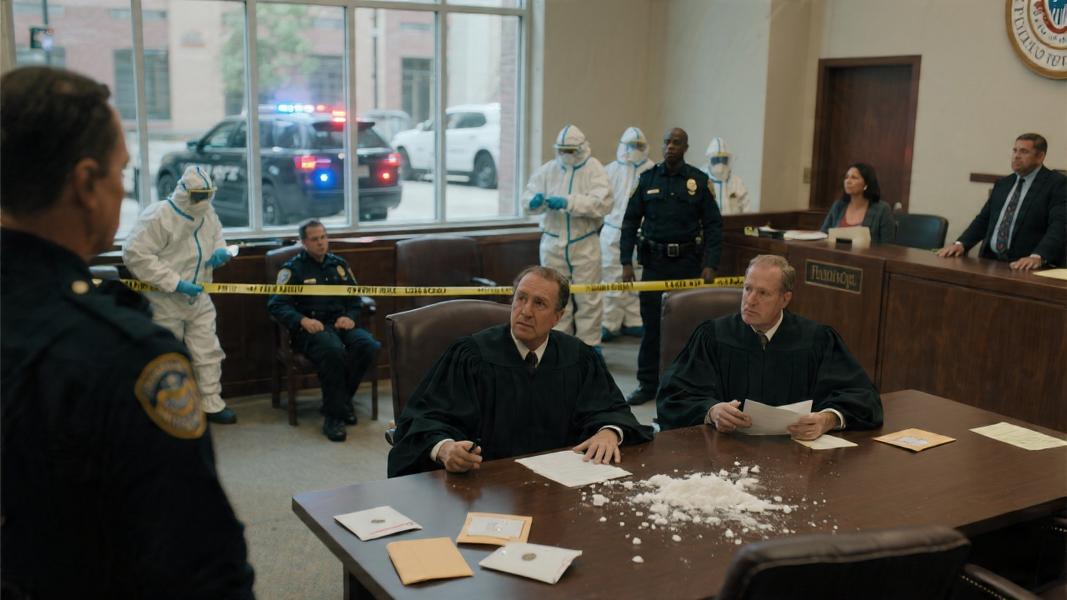
Start with the most clear-cut verdict. A Dallas federal jury convicted Donald Ray McCray, 67, on three counts of mailing threatening communications to sitting U.S. District Court judges and one count of sending a hoax biological weapon. The jury didn’t take long to see through it.
McCray, writing from inside a Texas state prison in March 2025, sent letters packed with white powder to federal courthouses in Fort Worth and Amarillo. The letters threatened to kill judges and court employees. In Fort Worth, the threat was serious enough to trigger a full hazmat shutdown — the kind of response that empties hallways, locks down buildings, and costs thousands in emergency resources. All for powder that turned out to be a hoax. That doesn’t make it any less of a crime.
U.S. Attorney Ryan Raybould made the government’s position plain: “Threats and disruptions to the orderly functioning of our federal courts will not be tolerated,” he said in a statement following the verdict.
What makes McCray’s case particularly grim is the pattern. This wasn’t a first offense, or even close to one. He had already been convicted in 2019 in Texas state court for threatening a state judge under nearly identical circumstances. He was in prison for that crime when he allegedly decided to do it again — this time targeting federal judges. Sentencing is scheduled for August 19, where McCray faces up to 10 years per threat count and 5 years for the hoax biological weapon charge, plus a potential fine of up to $250,000. The investigation involved the FBI, U.S. Marshals Service, U.S. Postal Inspection Service, and local law enforcement partners.
Plano Man Accused of Islamophobic Death Threats Against NYC Mayoral Candidate
Then there’s the case out of Plano — a quiet suburb north of Dallas that few outside Texas would recognize. Jeremy Fistel, 44, was arraigned on a 22-count indictment for allegedly leaving a barrage of Islamophobic voicemails threatening to kill Zohran Mamdani, the progressive New York City mayoral candidate, from June into July 2025.
The messages were not subtle. One transcribed voicemail read: “ZOHRAN MAMDANI GO ON AND START YOUR CAR. SEE WHAT HAPPENS. YEAH. AND KEEP AN EYE ON YOUR HOUSE AND YOUR FAMILY.” That’s not political speech. That’s a threat — the kind that forces a candidate to travel with security and look over their shoulder at every public appearance.
Fistel’s arraignment was documented by local media. The 22-count indictment suggests prosecutors believe this was sustained, deliberate conduct — not a single moment of unhinged rage. Twenty-two counts means twenty-two separate instances they’re prepared to argue in court.
Midlothian Man Charged With Attempting to Aid ISIS With Bomb Materials
How does it get worse? Ask federal prosecutors in the Northern District of Texas.
John Michael Garza, Jr., just 21 years old and from Midlothian, Texas, was charged with attempting to provide bomb-making materials and funding to individuals he believed were members of ISIS. According to the Justice Department, Garza met with an undercover agent in December 2025, allegedly handing over components he thought would be used to build a bomb for the terrorist organization. He was, of course, wrong about who he was dealing with — but not wrong about his own intentions, prosecutors argue.
The charge carries severe federal penalties. At 21, Garza is facing the prospect of spending the majority of his adult life behind bars if convicted. The case is a reminder that domestic terrorism recruitment and radicalization don’t always look the way people expect — and that undercover operations remain one of the most effective tools law enforcement has to disrupt plots before they become tragedies.
Dallas Machete Killing Reignites Immigration Enforcement Debate
Still, not every case fits neatly into a terrorism framework. The death of a Dallas-area victim at the hands of Yordanis Cobos-Martinez, a Cuban national charged with capital murder following a machete killing, has ignited a separate and politically charged firestorm over immigration enforcement.
Cobos-Martinez had previously been arrested and released from ICE custody on January 13, 2025 — just days before the change in presidential administration. That timing has become central to the political debate. President Trump, who had made immigration enforcement a cornerstone of his campaign, vowed a crackdown in the wake of the killing, according to reporting that quickly amplified the story nationally. Critics of the prior administration’s immigration policies seized on the case. Defenders countered that release decisions are complex, governed by legal constraints, and that a single case — however horrific — doesn’t indict an entire system.
That’s the catch. It rarely does. But in an election-year political environment, the distinction between policy critique and exploitation of tragedy is a line that gets crossed early and often.
A Pattern That’s Hard to Ignore
Taken individually, each of these cases has its own facts, its own defendants, its own legal trajectory. But zoom out, and something harder to dismiss comes into focus: a concentrated run of violent threats and alleged plots, many with Texas connections, targeting judges, political candidates, and abstract ideological enemies thousands of miles away.
Law enforcement agencies — the FBI, U.S. Marshals, the Postal Inspection Service, and local departments — are clearly stretched across multiple active investigations simultaneously. That’s not a crisis, necessarily. But it is a workload.
And for the judges who opened envelopes full of white powder, for a mayoral candidate checking his car before he starts the engine, for a community in Dallas mourning a violent death — the abstraction of a “threat landscape” becomes something far more immediate and personal.
As McCray’s sentencing date approaches and the other cases wind through the courts, one line from the federal prosecutor keeps echoing: threats to the orderly functioning of justice will not be tolerated. The question the country keeps having to ask itself is why, exactly, there are so many people willing to test that.
