
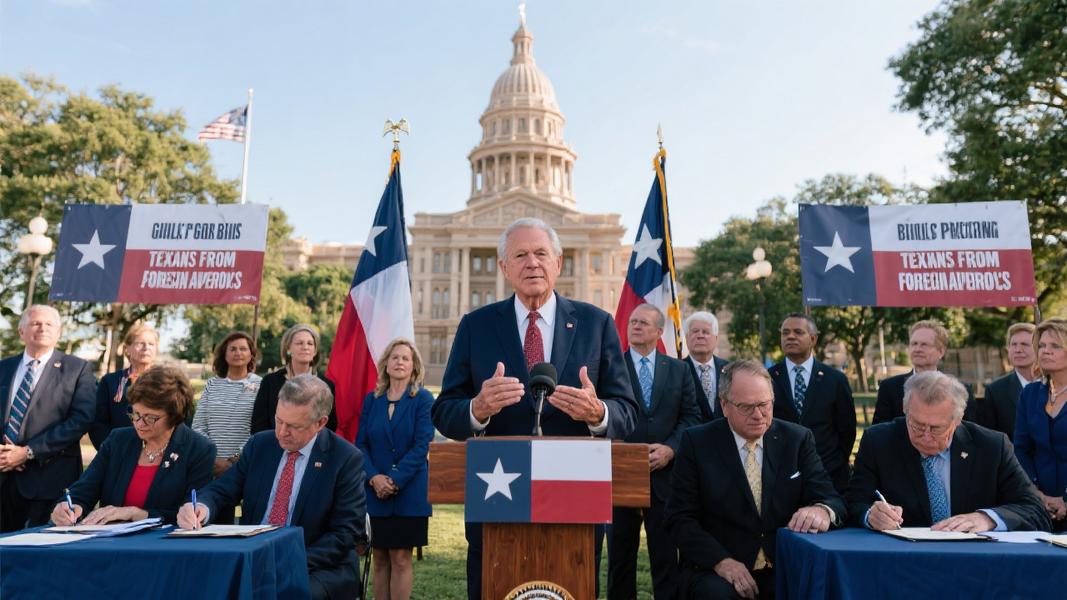
Texas has dramatically expanded its protections against foreign adversaries, with Governor Greg Abbott signing a trio of bills aimed at barring countries like China, Russia, Iran, and North Korea from owning land or influencing policy within the state.
“It is very simple. Hostile foreign adversaries like China, Russian, Iran, and North Korea, as well as foreign terrorist organizations like Tren de Aragua, must not be allowed to own land in Texas,” Abbott declared after the signing ceremony. “They should not be allowed access to our critical infrastructure, and they may not be allowed to exploit our border. Stiff, criminal penalties will be inflicted on those who violate these laws.”
Sweeping New Restrictions
The package of legislation, which goes into effect September 1, 2025, includes Senate Bill 17, perhaps the most controversial measure, which bans certain countries, individuals, and organizations from purchasing real property in Texas. The Texas House amended the bill to give the governor extraordinary power to determine and expand the list of restricted countries beyond those designated as national security threats by U.S. intelligence agencies.
House Bill 128 prohibits sister-city agreements between Texas governmental entities and foreign adversaries, while actively encouraging such partnerships with U.S. allies. Meanwhile, Senate Bill 1349 establishes criminal penalties for transnational repression and creates a new training program for law enforcement on detecting and preventing such activities.
Why now? The legislation follows Executive Order GA-48, which Abbott issued in November 2024 to shield Texas’ sensitive infrastructure from entities the U.S. Department of Commerce has designated as foreign adversaries, including Venezuela under Nicolás Maduro’s leadership.
Constitutional Questions Loom
Legal experts have raised concerns about whether these measures will withstand judicial scrutiny. The new property restrictions are part of a growing national trend but represent “more aggressive forms” of state-level security measures that face constitutional challenges, according to analysis from law firm Morgan Lewis.
Critics point to potential conflicts with federal authority over foreign relations and questions about equal protection guarantees. The broad powers granted to the governor to expand the list of restricted countries have particularly alarmed civil liberties advocates.
The Texas Department of Public Safety has been vocal about what it sees as growing threats, warning that “Texas faces a broad and increasing threat from hostile foreign adversaries seeking to undermine and harm US national security” through theft of protected information, compromise of infrastructure, and influence over public policy.
Far-Reaching Impact
The ripple effects of these measures extend beyond property rights. Even educational institutions have implemented new requirements in response to the governor’s executive order. The University of Texas at Austin now requires faculty, staff, and student employees to disclose any personal travel to designated foreign adversary nations.
Is this about security or politics? That question hangs over the legislation, as critics suggest the measures may be more about scoring political points than addressing genuine national security threats. Supporters counter that states have a responsibility to protect themselves when they perceive federal efforts as insufficient.
As implementation approaches, legal challenges seem inevitable. The fate of these measures will likely be decided in courtrooms, where judges will weigh state security interests against constitutional protections — a balancing act that will determine just how far Texas can go in building its own foreign policy bulwark against perceived enemies abroad.
