
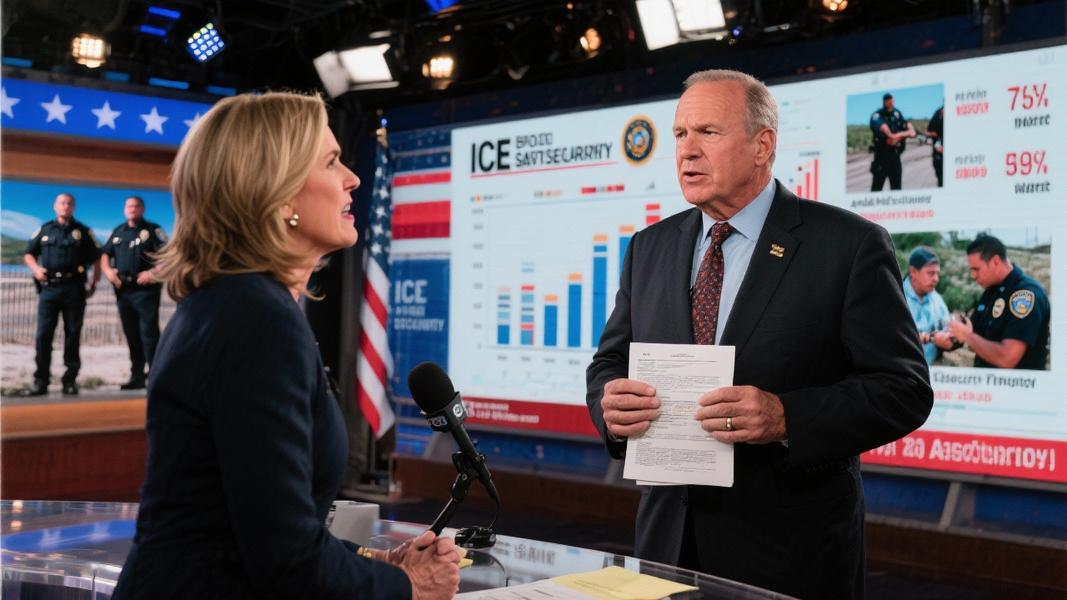
ICE’s ambitious new daily arrest quota under Trump’s border czar has ignited controversy and fear in immigrant communities nationwide, with officials promising to “flood the zone” in sanctuary cities.
Tom Homan, the former acting ICE director now serving as Donald Trump’s border advisor, has outlined plans for a dramatic escalation in immigration enforcement, setting a target of 3,000 arrests per day across the country — a figure that would represent a massive increase from current operations.
“We’d have to arrest 7,000 a day every day for the remainder of this administration just to remove those the Biden administration released into the country illegally,” Homan stated. “The initial goal is to hit 3,000 arrests per day.”
Enforcement Surge Already Underway
The effects of this ramped-up enforcement are already being felt. In Washington state, ICE arrests jumped 35% in the first five months of Trump’s presidency compared to the previous year, with federal agents arresting 782 people between Inauguration Day and late June, according to data compiled by the Deportation Data Project.
Similar or even more dramatic increases have been reported elsewhere, creating widespread anxiety in immigrant communities and spurring advocacy groups to strengthen their rapid response networks.
Sanctuary cities appear to be receiving particular attention in this enforcement push. Homan has made no secret of targeting these jurisdictions, where local authorities limit cooperation with federal immigration enforcement.
“I look at the numbers every morning, and about 70% of everybody ICE arrests is a criminal,” Homan told Boston 25 News. “It’s what I promised would happen, that we’re going to flood the zone of sanctuary cities to target and arrest public safety threats and national security threats.”
Debating the Numbers
But who exactly is being swept up in these operations? That’s where the controversy intensifies.
While Homan consistently emphasizes that the vast majority of those arrested by ICE are criminals, the agency’s own data tells a more nuanced story. According to ICE figures, 46% of currently detained immigrants have no criminal record, a statistic that was highlighted during Homan’s recent appearance on “The Takeout.”
This discrepancy has led to heated exchanges between Homan and journalists. During an appearance on MSDNC’s “Morning Joe,” host Mika Brzezinski repeatedly demanded “to see that data” after Homan claimed that 70% of ICE arrests involve criminals, while asserting that the remainder consists of national security threats or gang members who often lack criminal histories, according to White House communications.
Immigration advocates argue that the discrepancy between Homan’s statements and official data raises serious questions about who is actually being targeted in these operations. They point to reports of collateral arrests — detentions of undocumented immigrants encountered during operations targeting others — as evidence that the enforcement net is being cast much wider than officials suggest.
Community Impact and Response
For immigrant communities, the aggressive enforcement posture has created a climate of fear that extends far beyond those with criminal records. Legal aid organizations report surging demand for “know your rights” workshops and emergency planning sessions for families concerned about potential separation.
The scale of the planned enforcement — potentially resulting in over a million arrests annually if the 3,000-per-day target is met — would strain detention facilities and immigration courts that are already facing significant backlogs.
Immigration attorneys are advising clients to prepare emergency plans, including arrangements for childcare and power of attorney documents, while community organizations are bolstering rapid response networks to provide legal assistance when raids occur.
As enforcement intensifies, the twin narratives of public safety and humanitarian concerns continue to clash, with Homan firmly defending the administration’s approach as necessary for national security while critics warn of devastating impacts on families and communities that extend far beyond those with criminal histories.
